
Vienna, Austria travel guide: watching Tosca at the Vienna State Opera
Since we were spending five full nights in Vienna, the City of Music,
one of the world’s three most famous opera houses
felt like a must.
So we planned to see an opera at the Vienna State Opera.
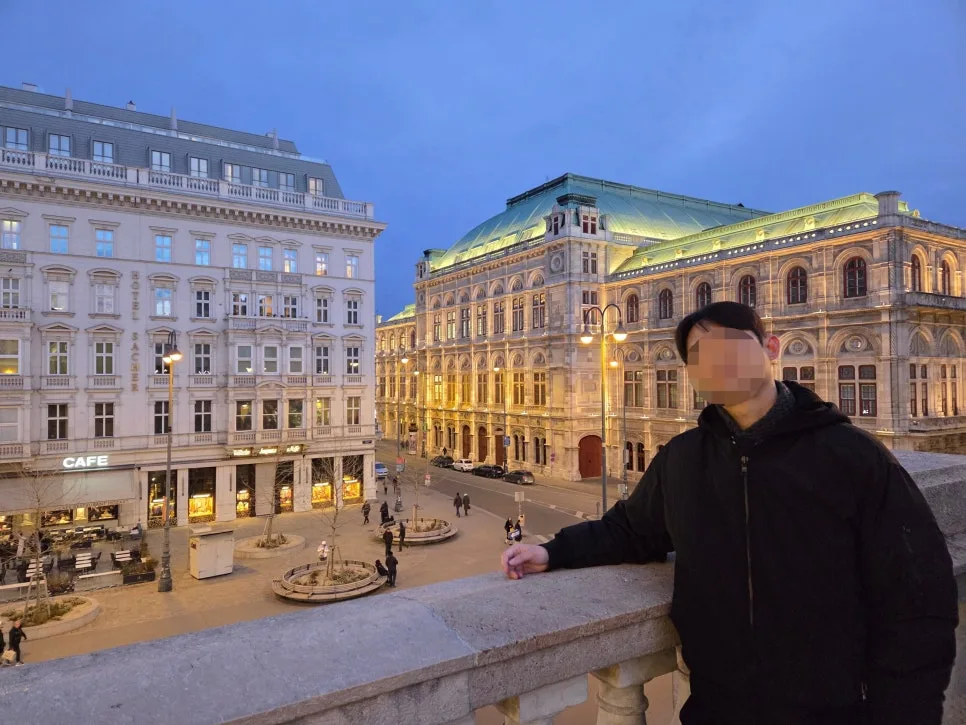
The best part? Our hotel, Hotel Sacher, was basically
right across the street from the Vienna Opera House.
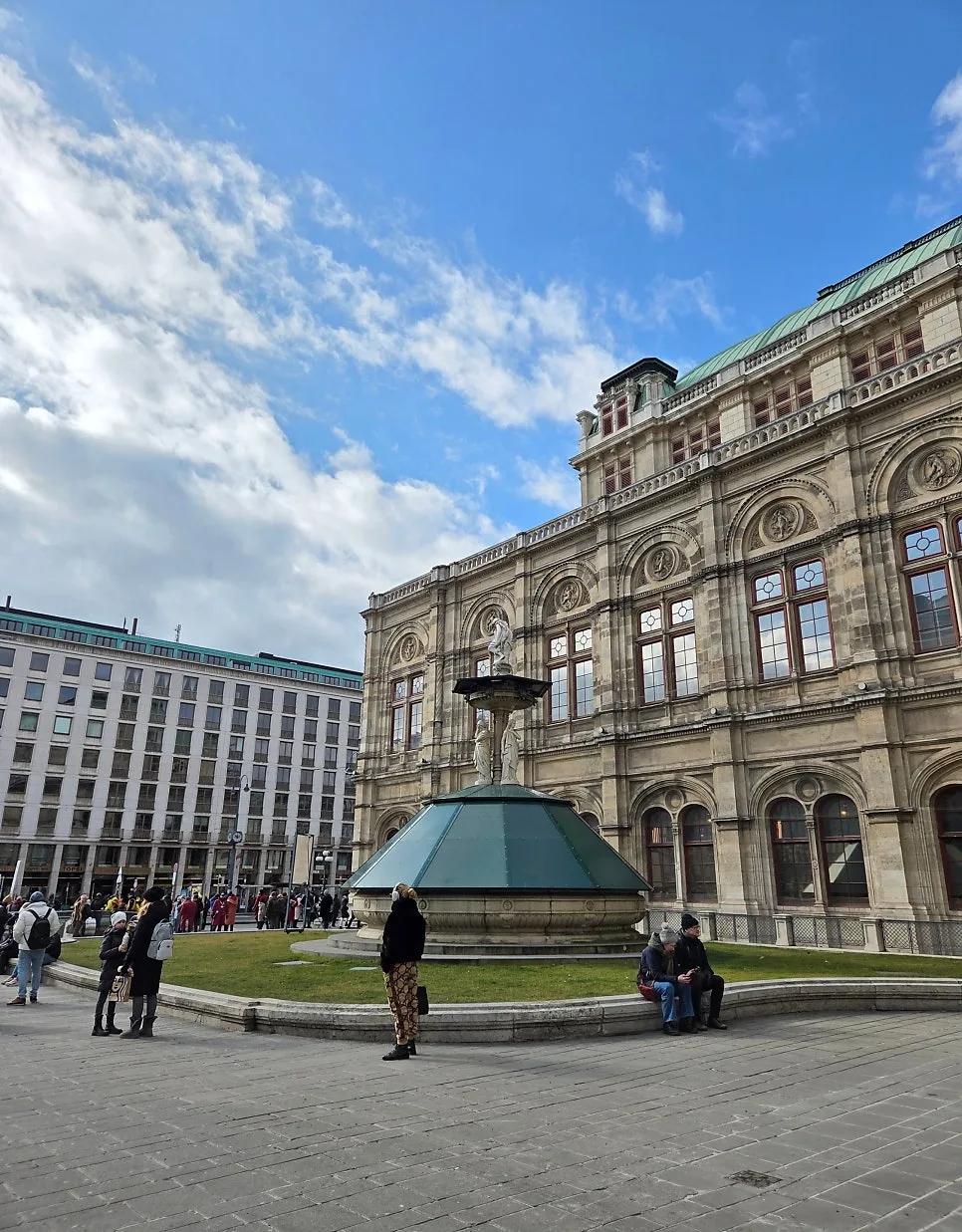
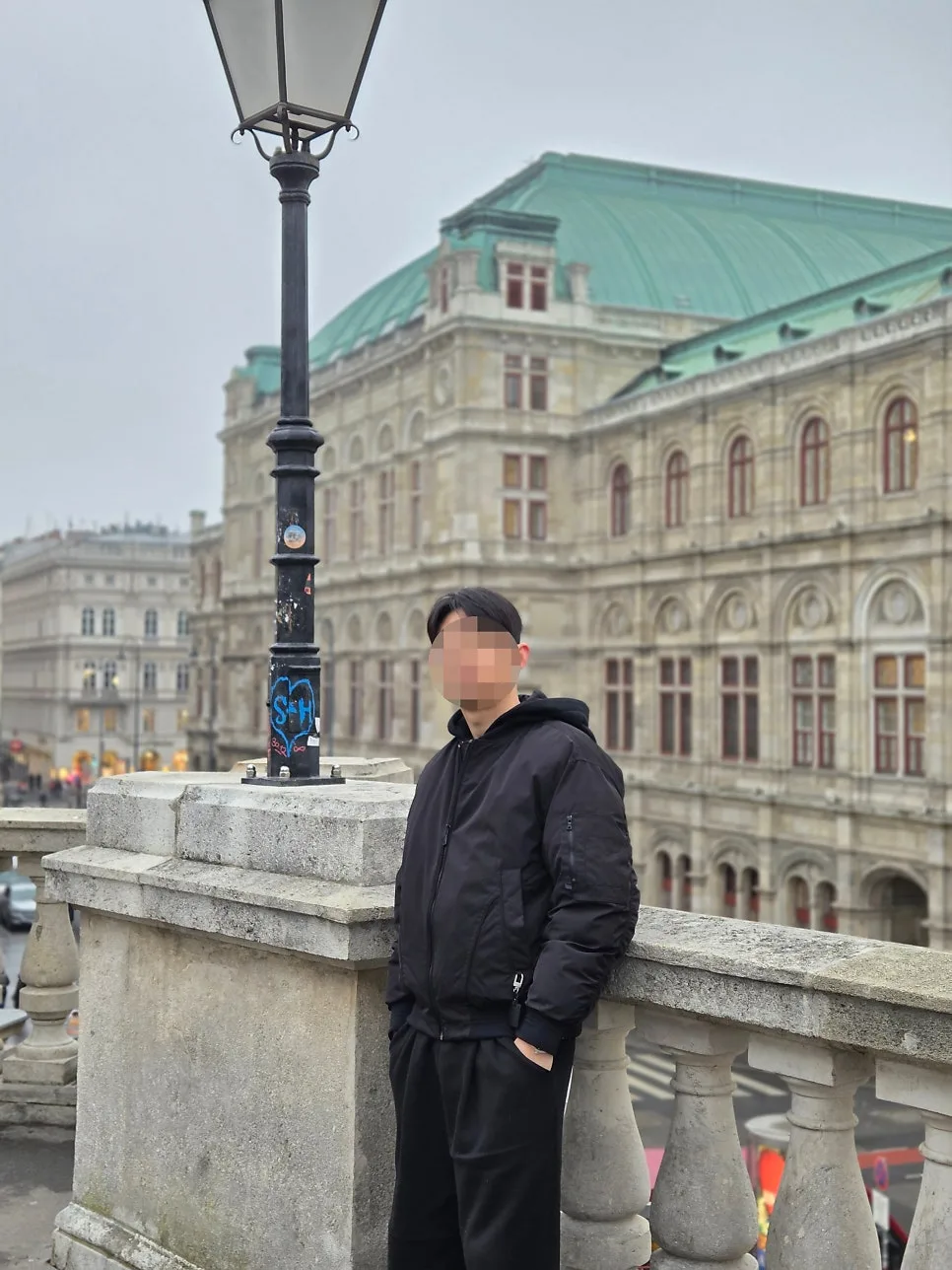
So every time we walked to and from the hotel,
we got to admire the building as much as we wanted.
The exterior is gorgeous, and honestly, the inside is even better.
How to Book Vienna State Opera Tickets
You can book directly through the official website,
and it supports both German and English, so switch it to English first.
From the calendar, check the performance type and time
for the dates you’ll be in Vienna,
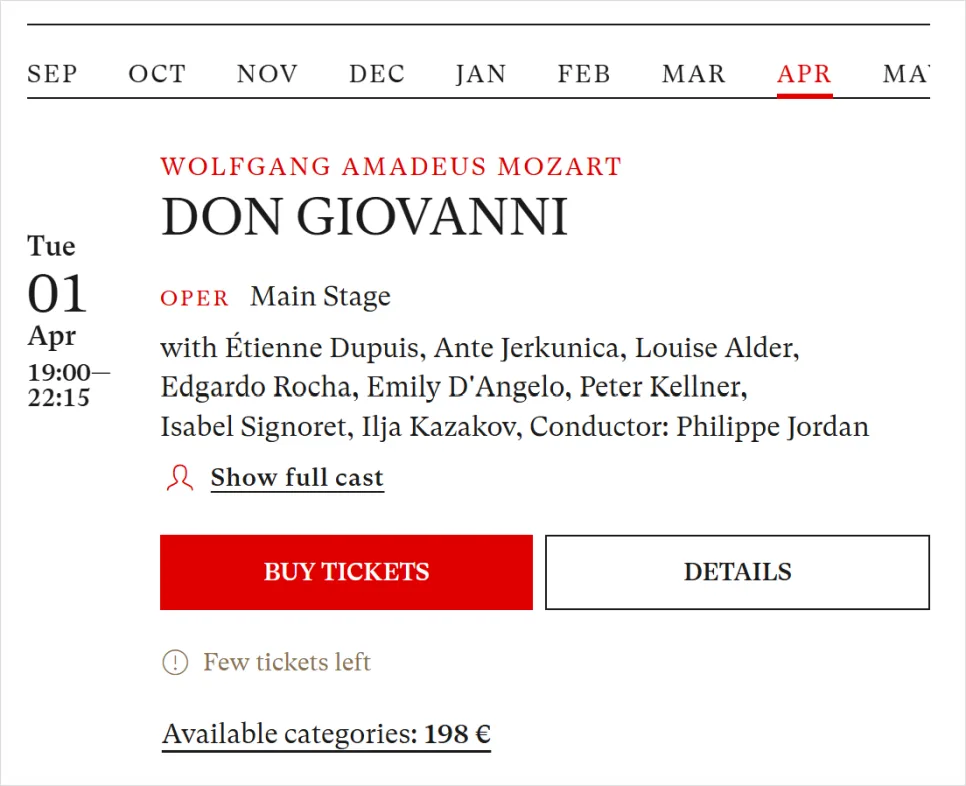
then click through to buy tickets.
It’s not just opera, either—there are also ballets, concerts, and other performances,
so make sure you’re looking at the right event.
Popular performances can sell out months in advance,
so if there’s something you really want to see,
it’s worth booking as early as possible.
That said, even if it’s sold out, keep checking daily for canceled tickets.
A few seats do pop up here and there.
That’s exactly how we scored ours—the day before the performance, no less.
And if you still can’t get a reservation, there are a few backup options too.
Vienna State Opera Seating Chart and Ticket Prices
Using the seating chart image from the official website below,
you can check both the layout and the ticket prices.
Category 1 is the most expensive, and prices go down through Category 9.
Even within the same category, prices vary depending on the view,
and when you select your seat during booking,
the system automatically calculates the exact price for that seat.
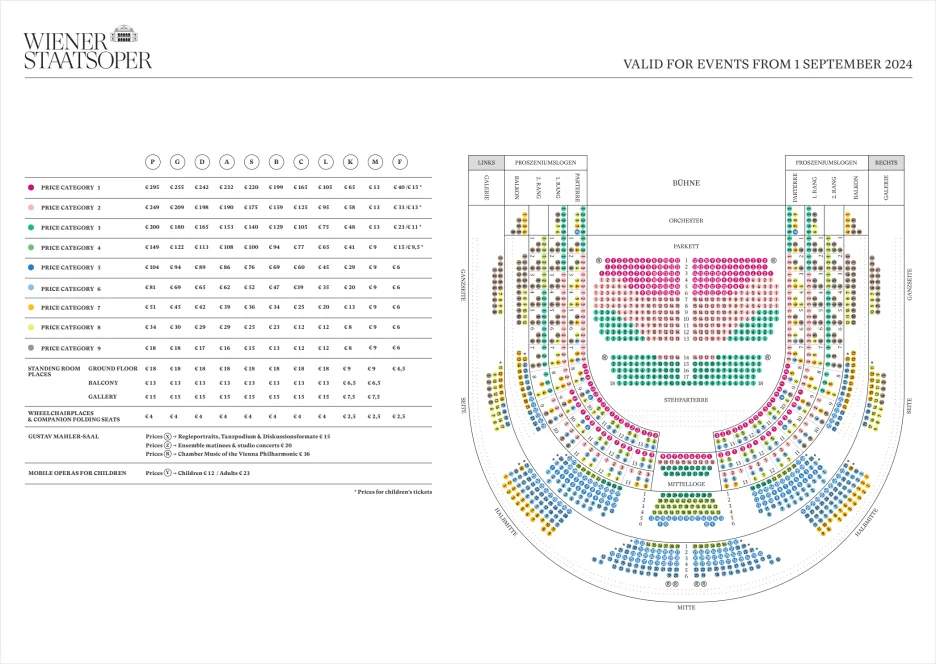
The most expensive ticket was 450,000 KRW, or about $330,
while the cheapest seat was just 9,000 KRW, around $7.
My guess is that those super-cheap Category 9 seats
barely have any view of the stage if you stay seated
(I’ve heard that even with a seat ticket, people end up standing most of the time).
Standing room is divided into
parterre, gallery, and balcony sections.
Visibility is best in that order—parterre, then gallery, then balcony—
and the prices rise accordingly.
For popular performances, even the parterre standing tickets sell out fast.
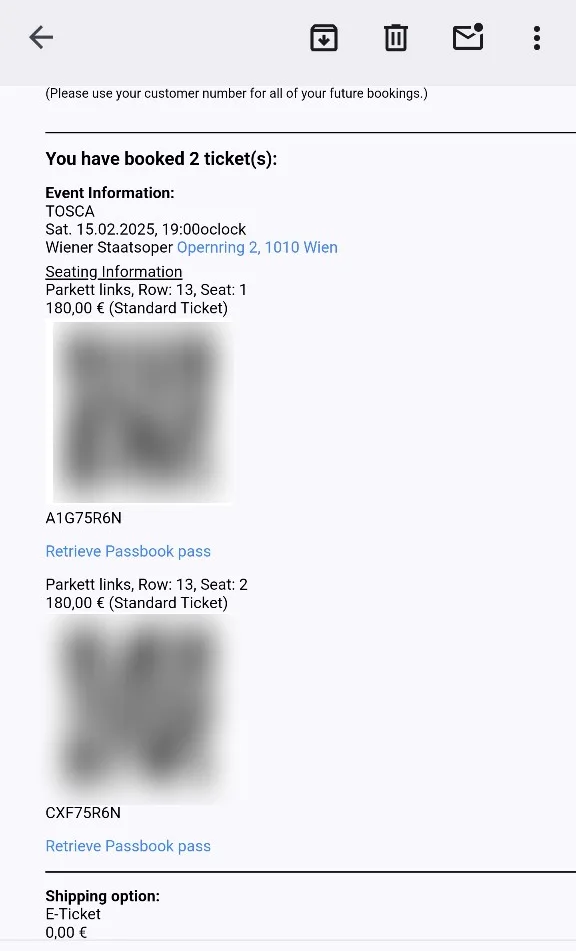
My husband checked the site every single day,
and we finally managed to grab two seats together.
They were Category 3 with G visibility, and they were 180 euros each.
So yes, we paid about 270,000 KRW per person—roughly $195 each—to see the opera.
Vienna State Opera Seat Views by Section
I obviously didn’t sit in every section,
but I did walk around and peek at a few, so here’s a quick comparison.
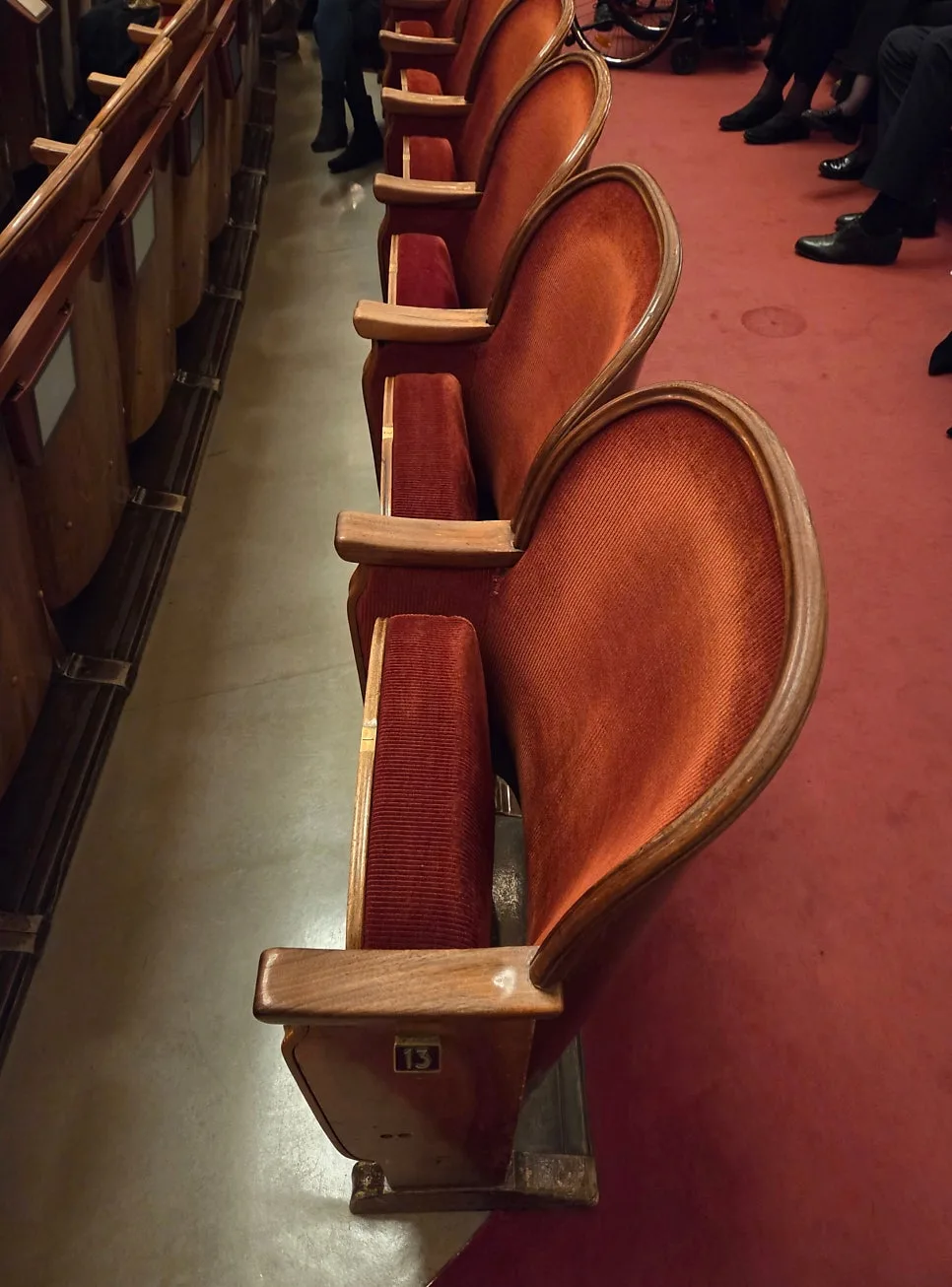
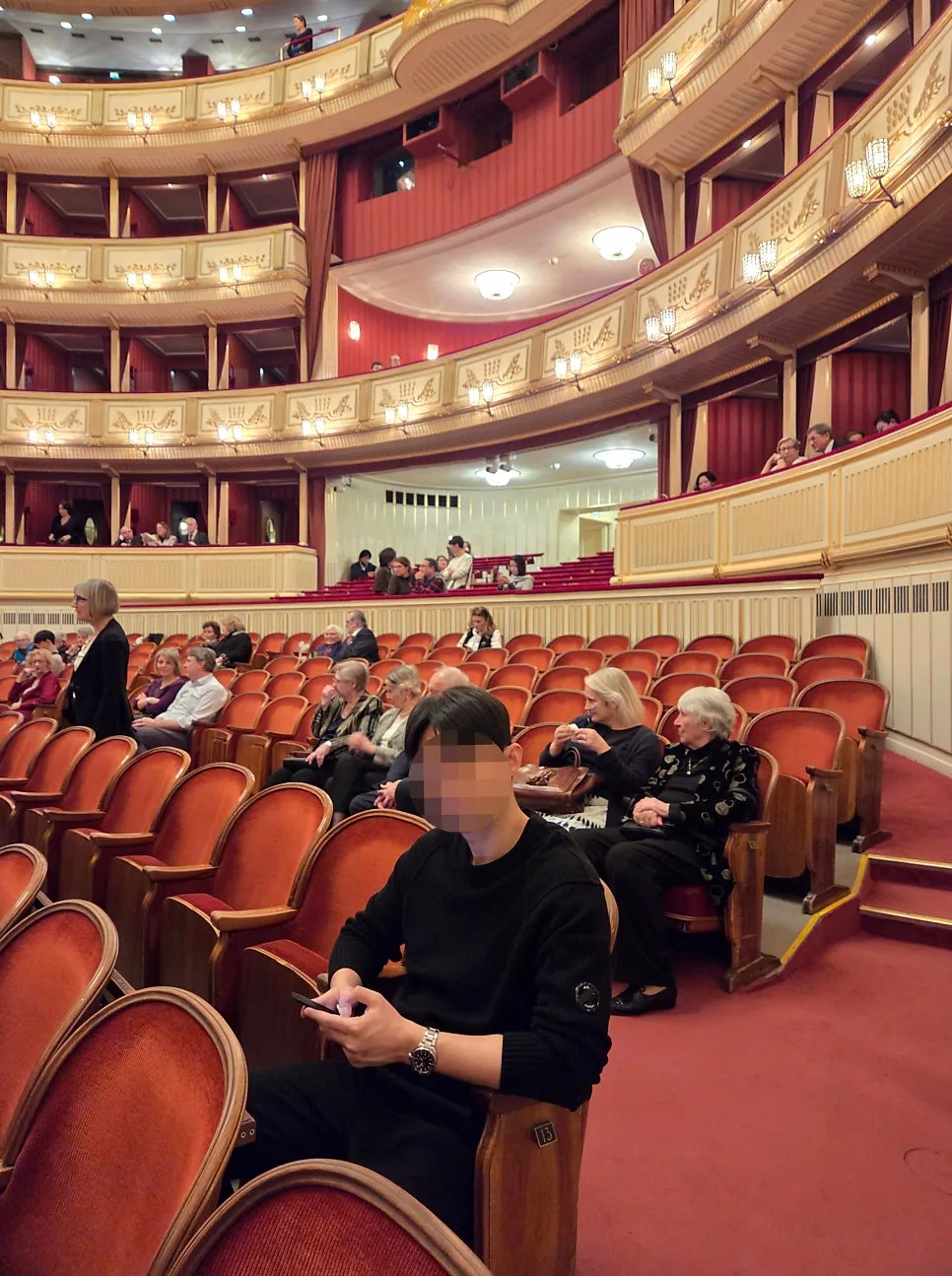
These were our seats: Row 13, Seats 1 and 2 on the main floor.
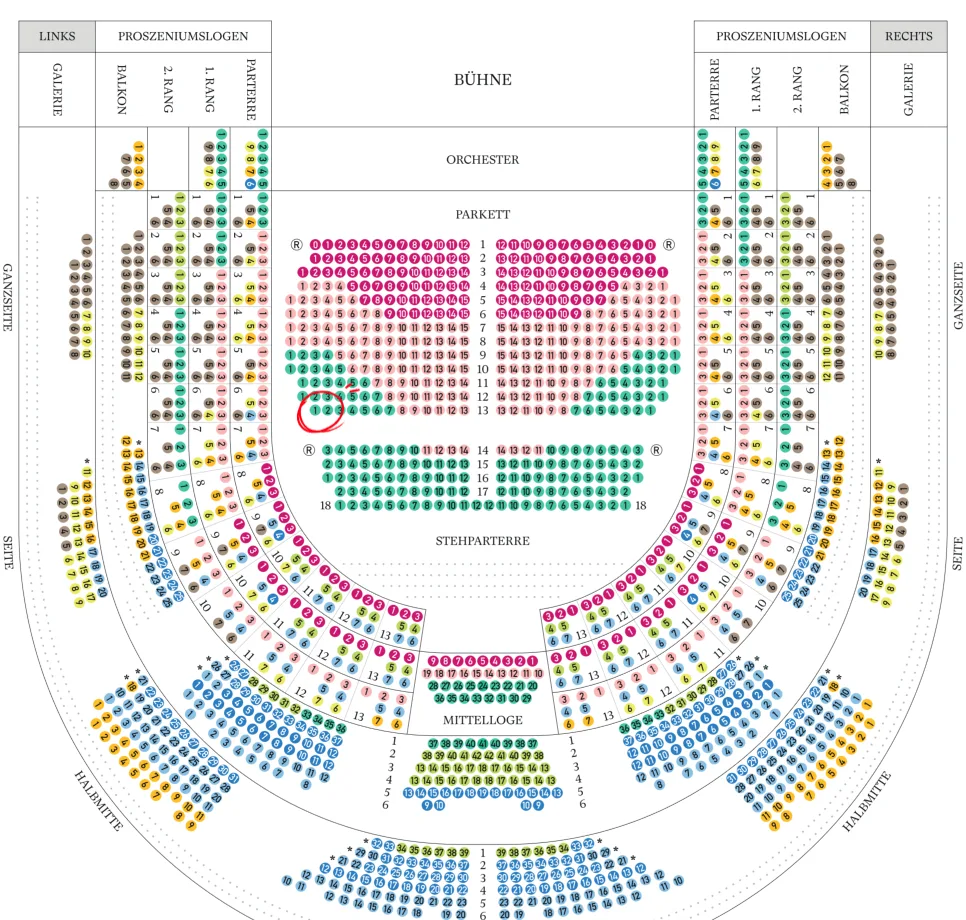
On the seating chart, they were around here.
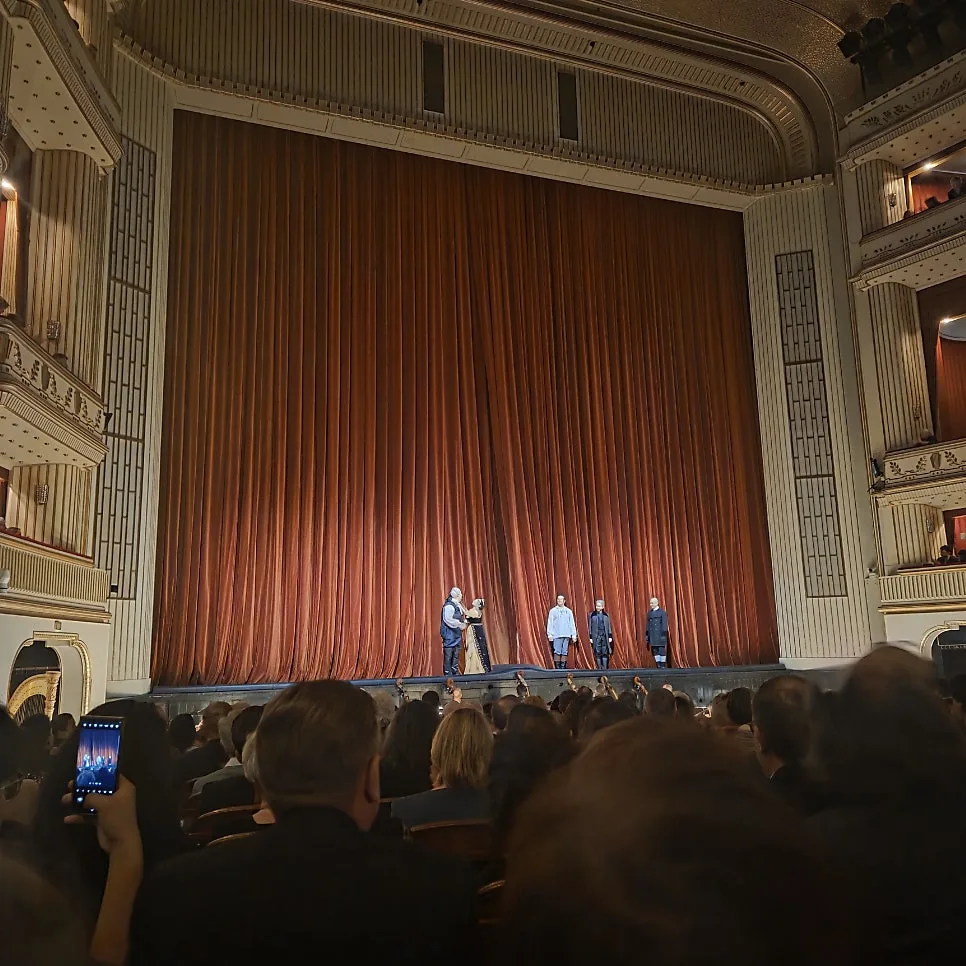
The view was actually pretty good. It looks farther away in photos than it did in real life.
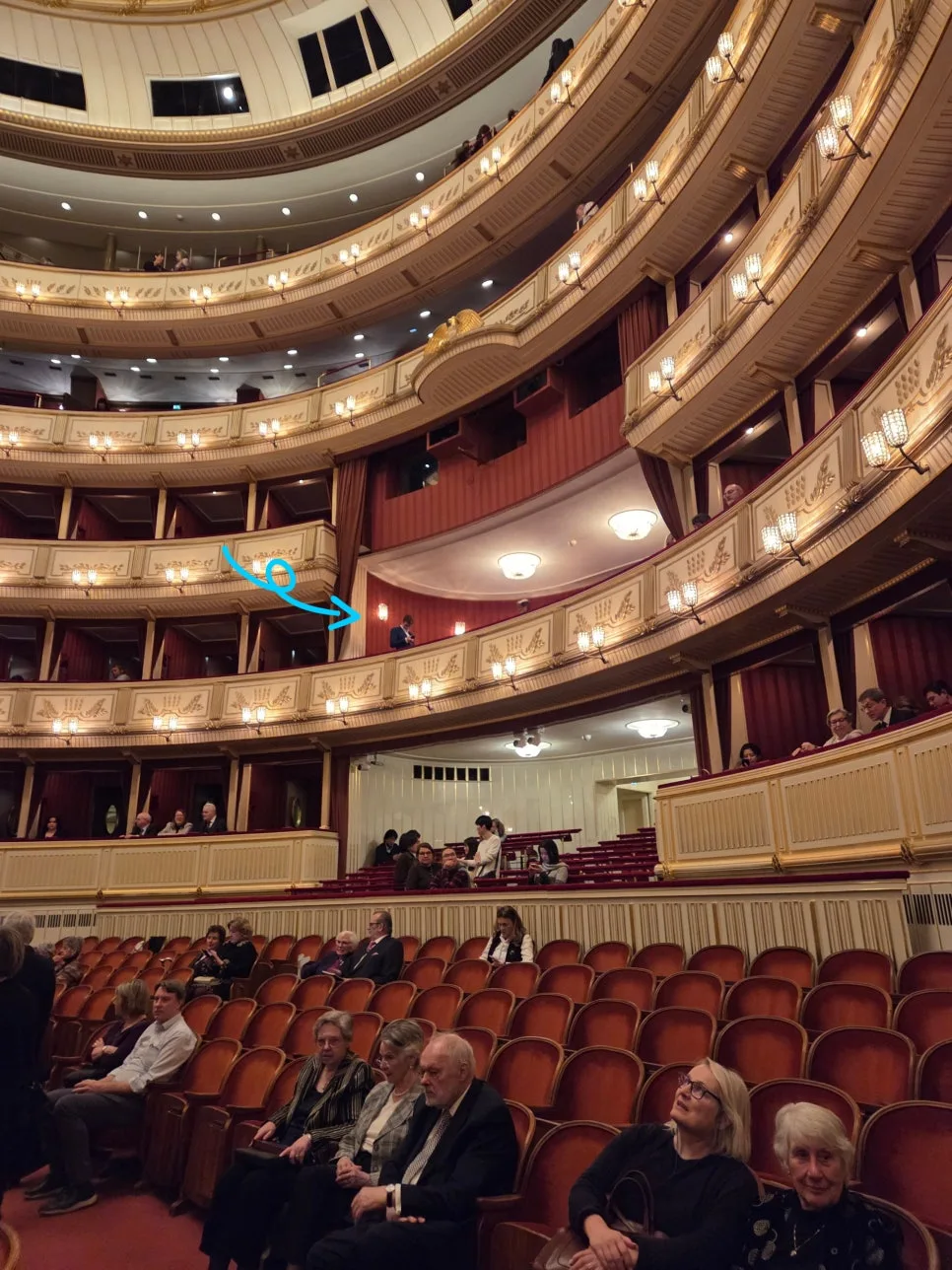
The absolute royal seats are the center seats on the second level.
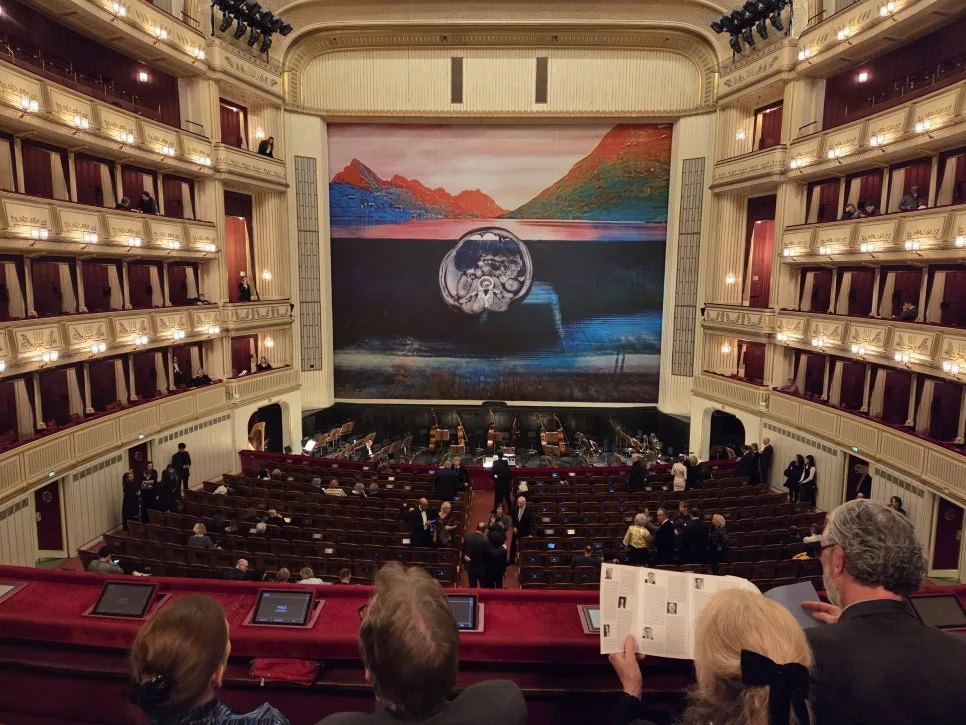
From there, you can see both the orchestra and the stage beautifully,
and in person it feels even closer than it looks here.
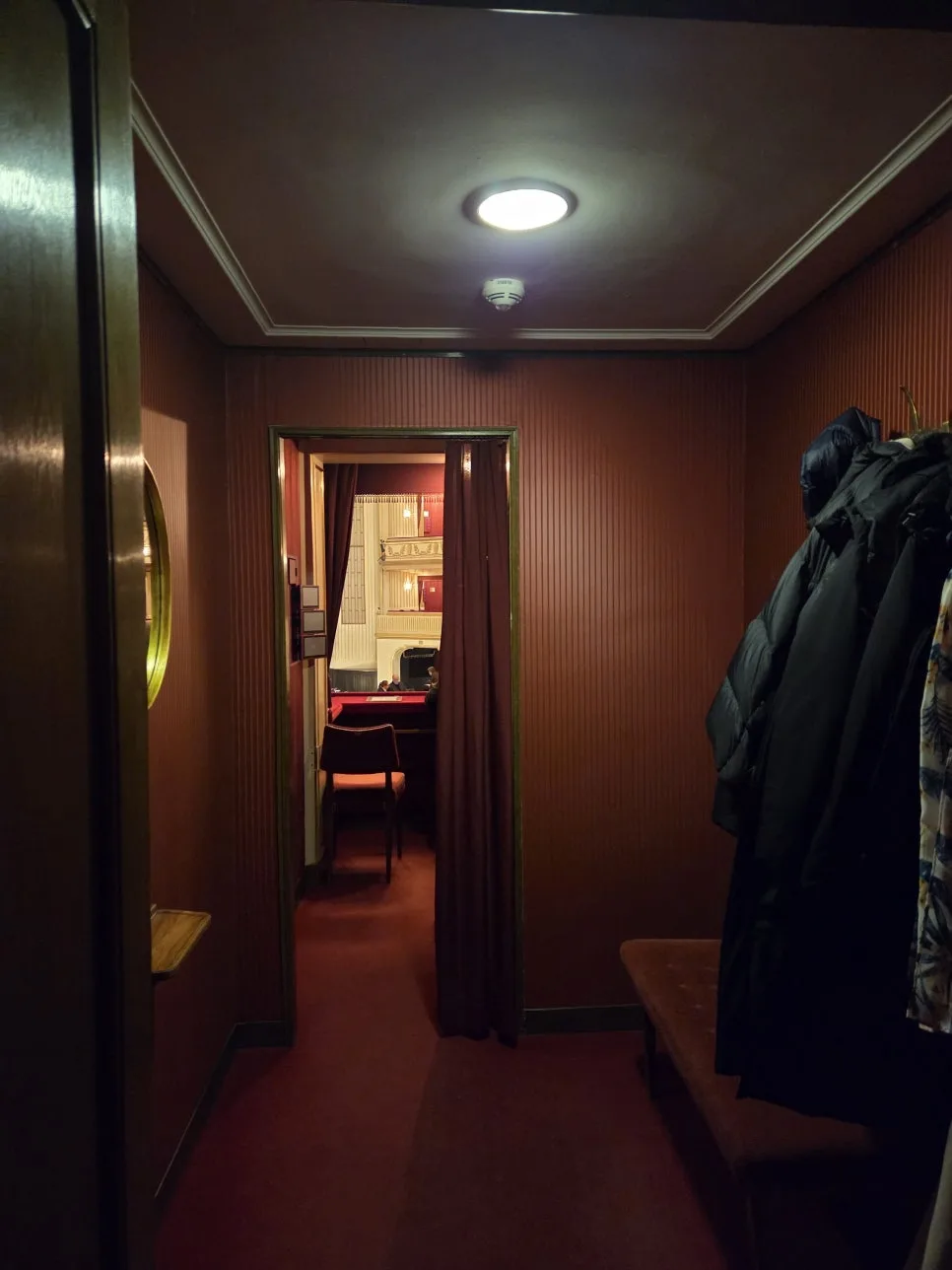
I also stepped into one of the second-floor box seats.
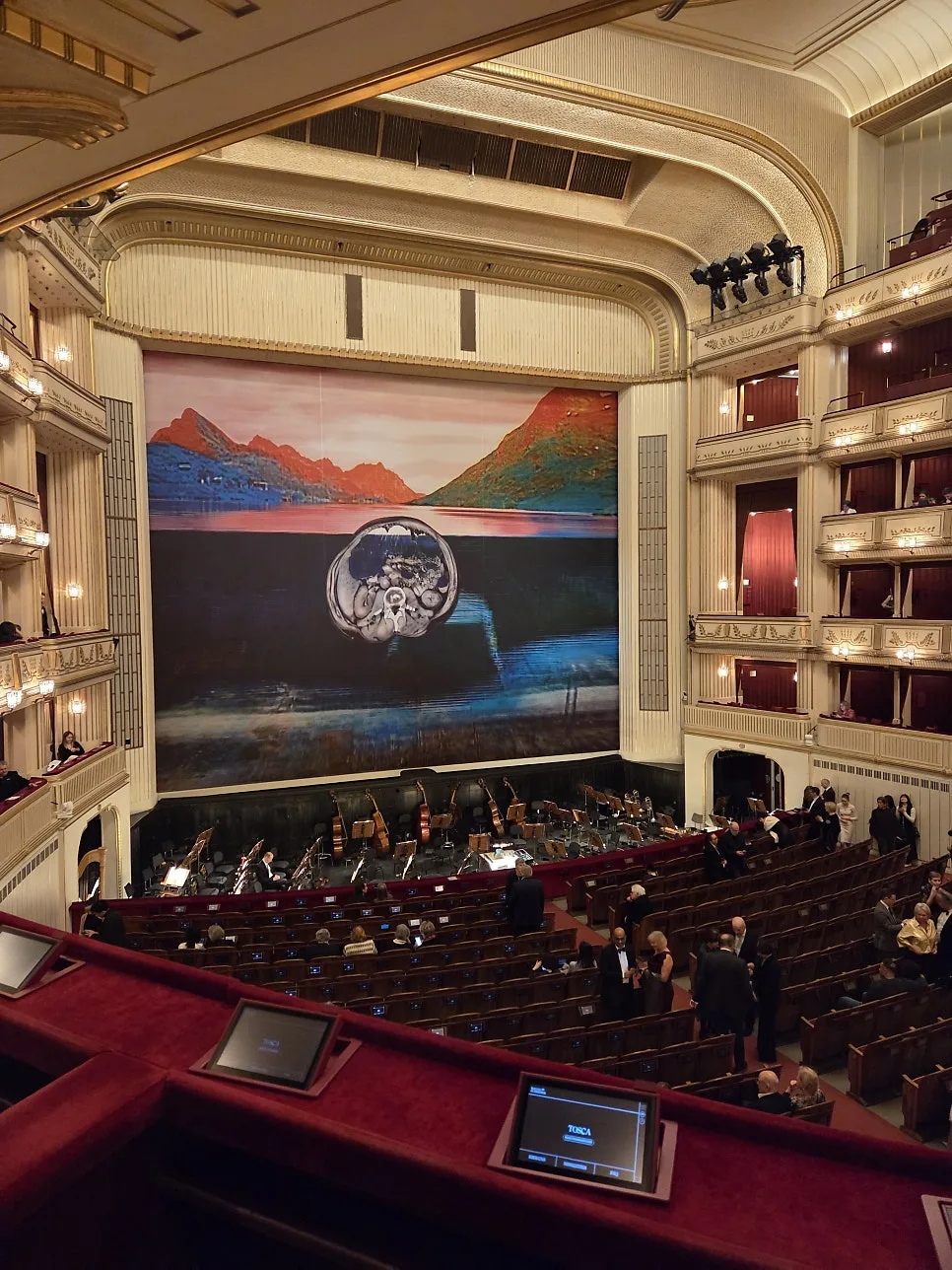
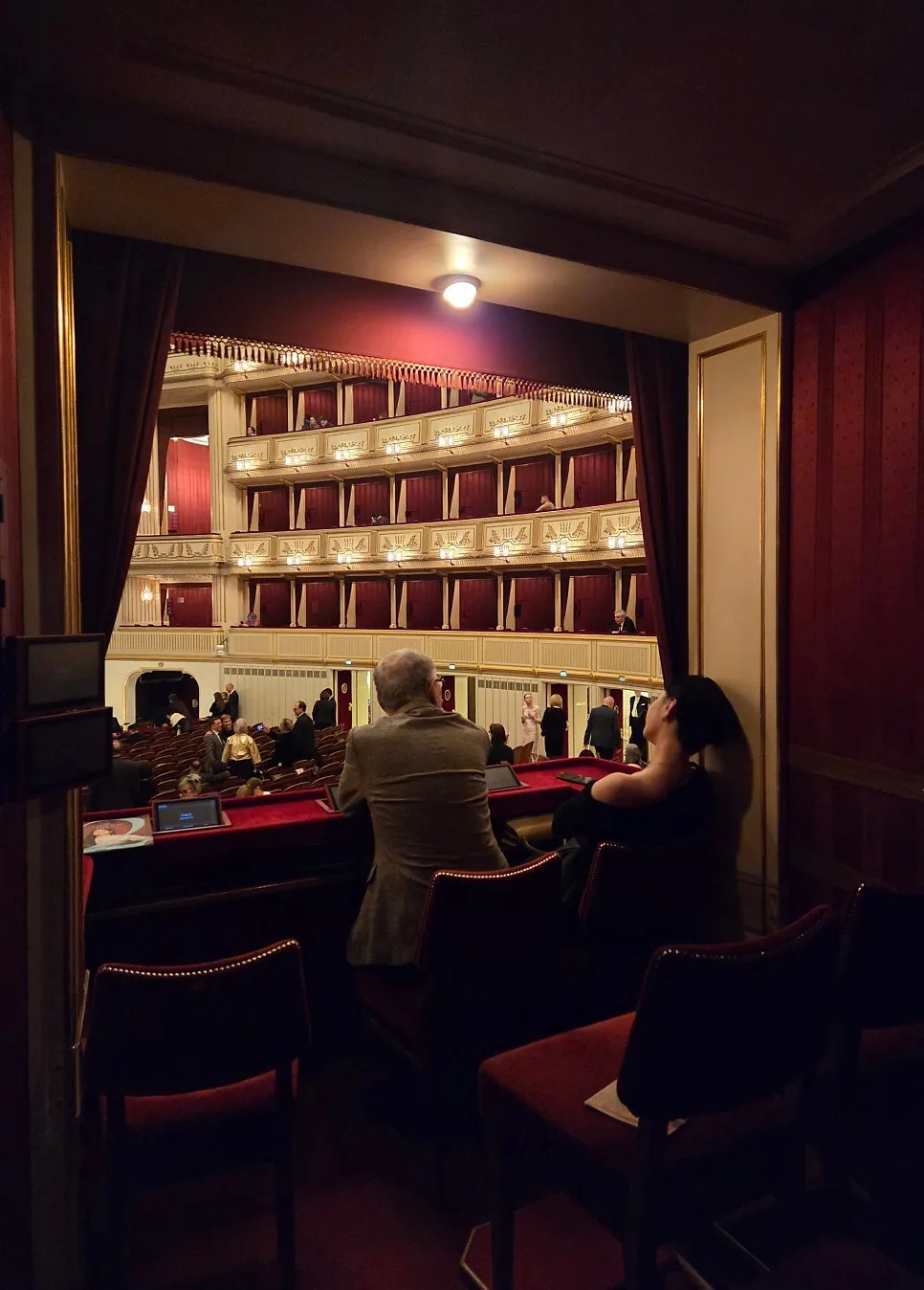
The first row of a box seat has a good view (left photo),
but from the second row back, I think you’d have to stand to see properly.
So personally, I wouldn’t recommend anything past the first row in a box.
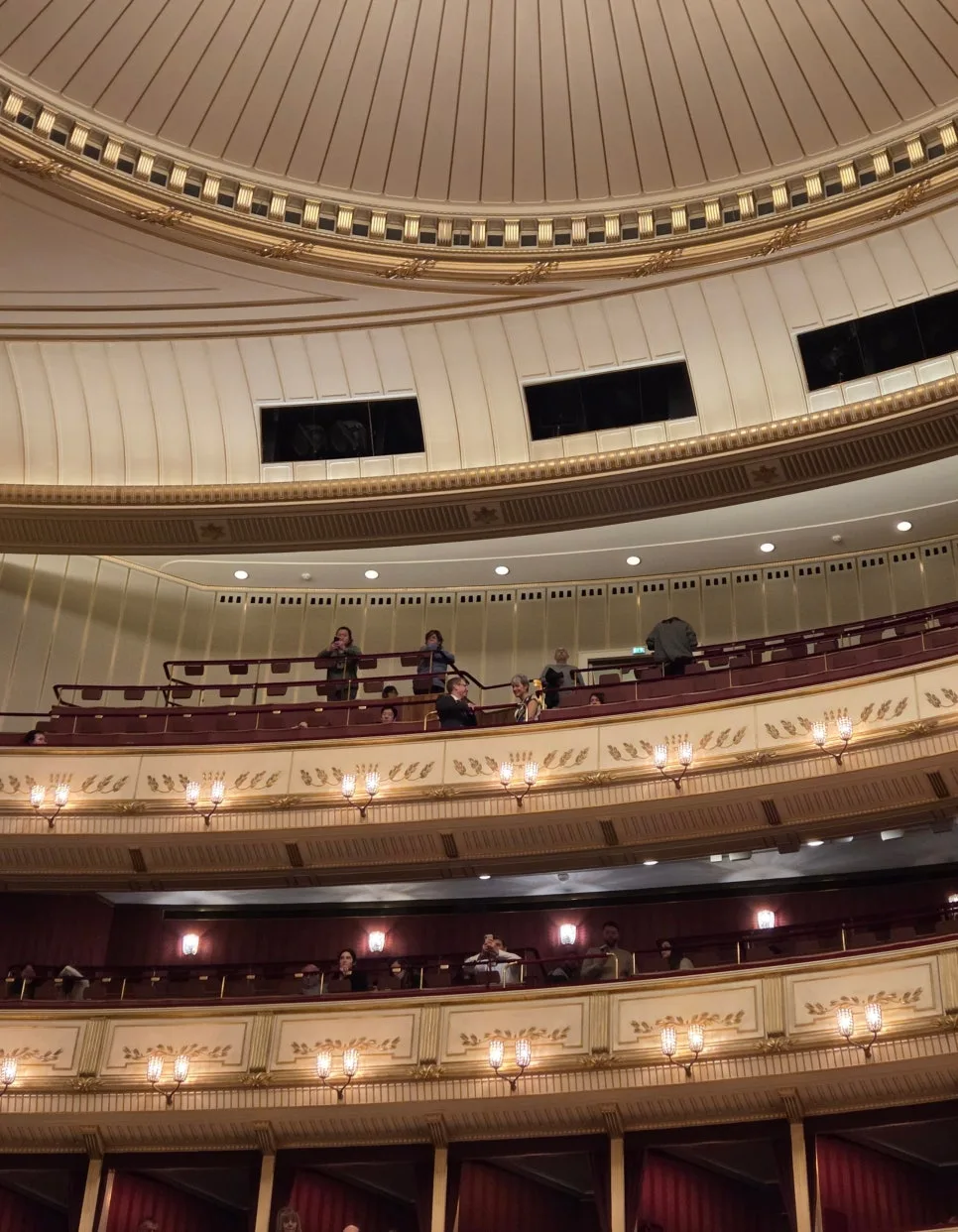
And that area way up there is the gallery standing section.
There’s a rail you can lean on, but you still have to stand for the entire performance, so I’ve heard your legs really feel it.
Still, since it’s cheap, it seems totally worth it if you just want the experience.
Vienna State Opera Guided Tour
If a performance doesn’t fit your travel schedule,
the opera house also offers interior tours,
so instead of just walking past the exterior,
I’d definitely recommend doing at least the indoor tour.
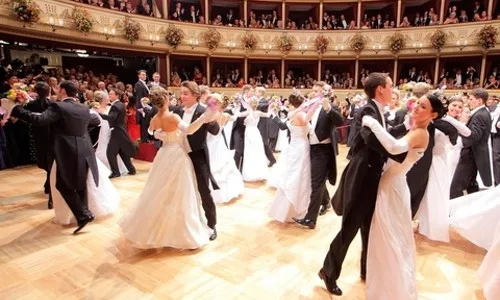
There are three guided tours a day (13:15 / 14:15 / 15:15),
and each one lasts about 40 minutes.
You can see spaces that aren’t accessible during a performance,
like dressing rooms and private rooms.
Especially in July and August, when there are no performances,
the guided tour is the only way to see the inside.
Watching Tosca at the Vienna State Opera: My Experience
The performance started at 7 p.m., so before that
we quickly grabbed dinner and arrived around 6:40.
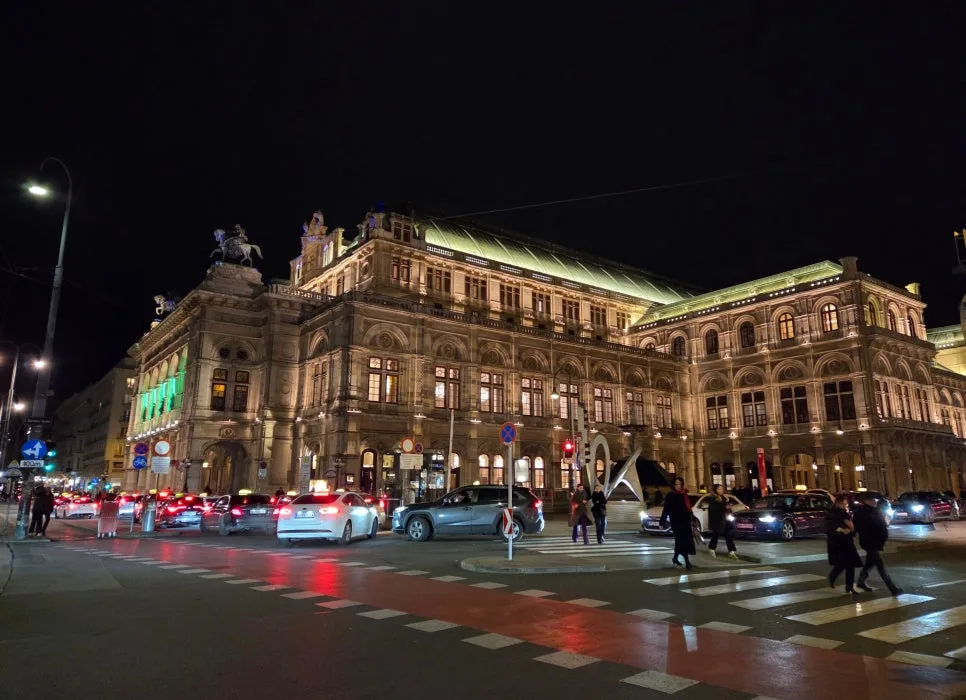
The Vienna Opera House looks even more stunning at night.
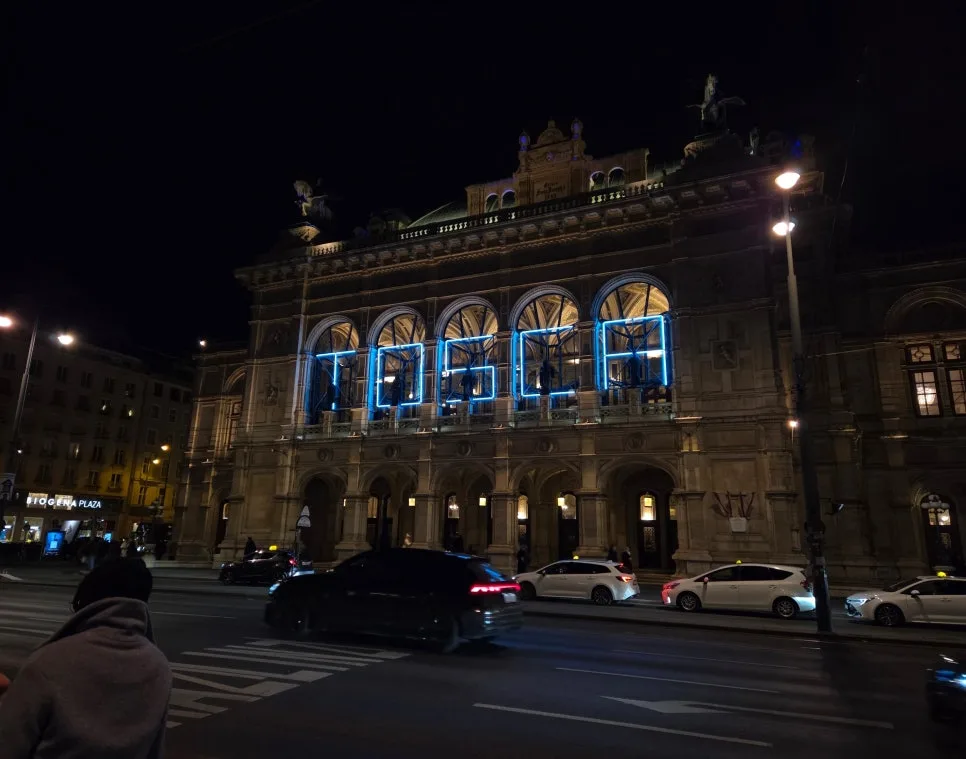
The name of that day’s performance
is displayed in neon on the outside wall like this.
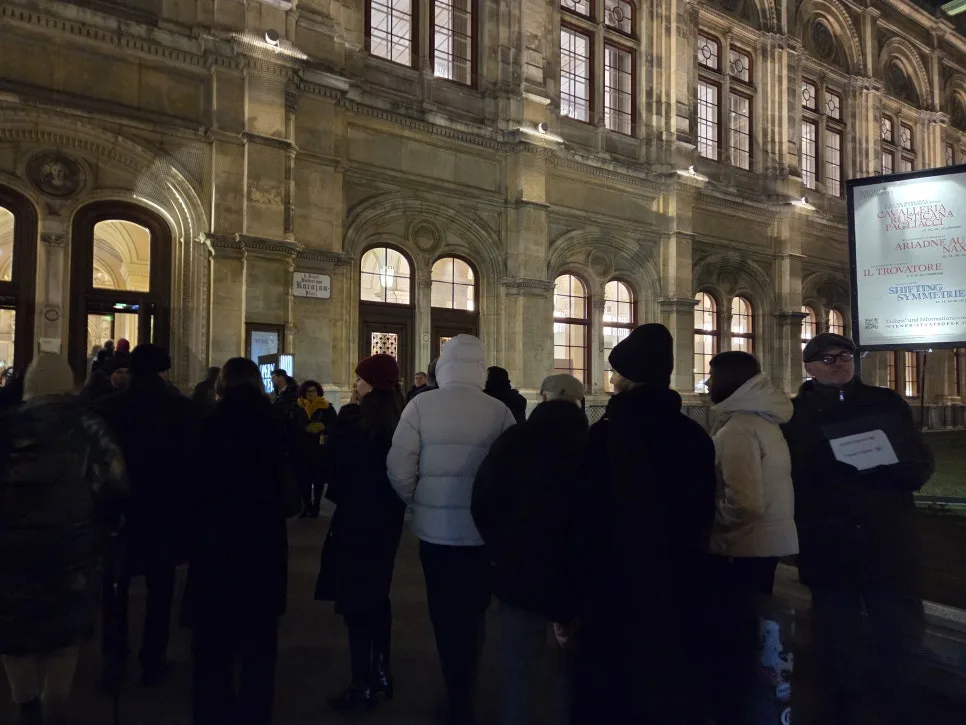
As showtime gets closer,
the area in front of the theater goes from quiet to absolutely packed.
If you’re desperate for a ticket, this is also the time to keep an eye out for resellers nearby.
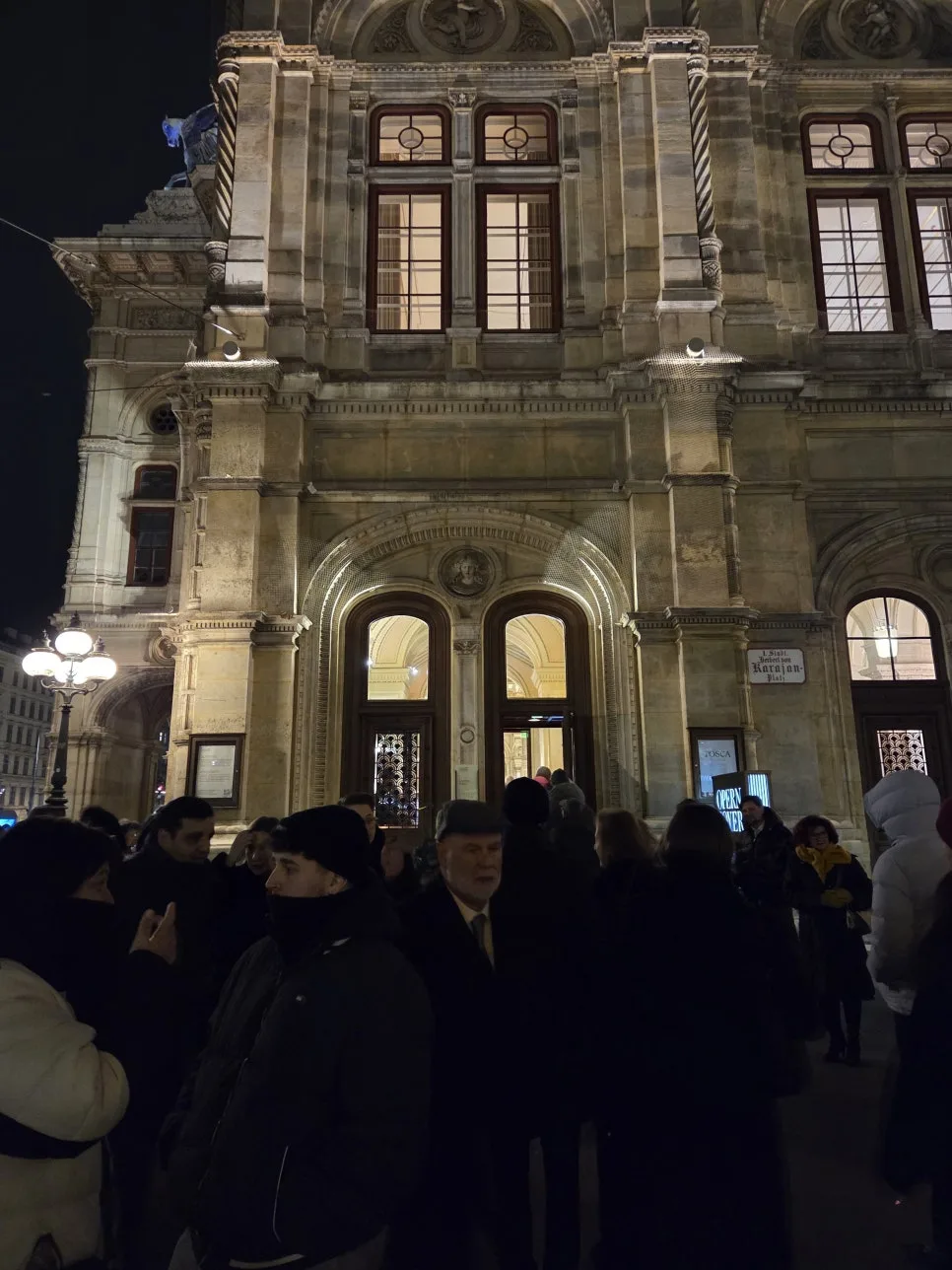
Elegant men and women dressed to the nines
started streaming inside.
There were suits, gowns, and plenty of glamorous looks,
but since we were traveling,
bringing full formalwear just for this wasn’t realistic.
So we went with neat, simple outfits instead.
Me: black turtleneck, black cardigan, long knit skirt
My husband: black knit sweater, black slacks
That felt polished enough without looking too casual,
so I really don’t think you need true formalwear.
Even in summer, I think dressing tidy and put-together would be enough.
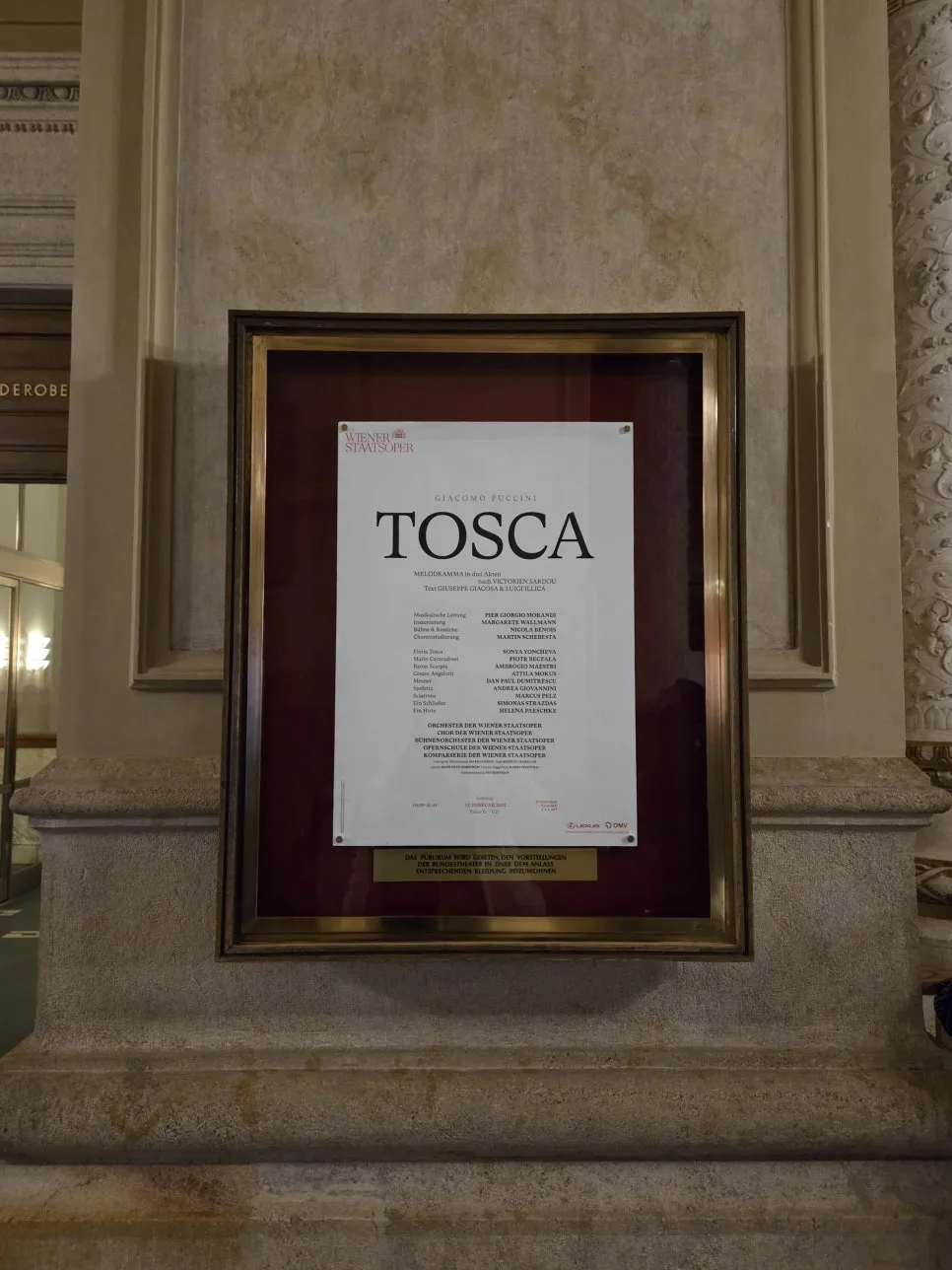
My husband normally has zero interest in the arts,
so this was actually his first opera.
We got lucky and ended up seeing Tosca,
which is such a famous work, so that felt extra special.
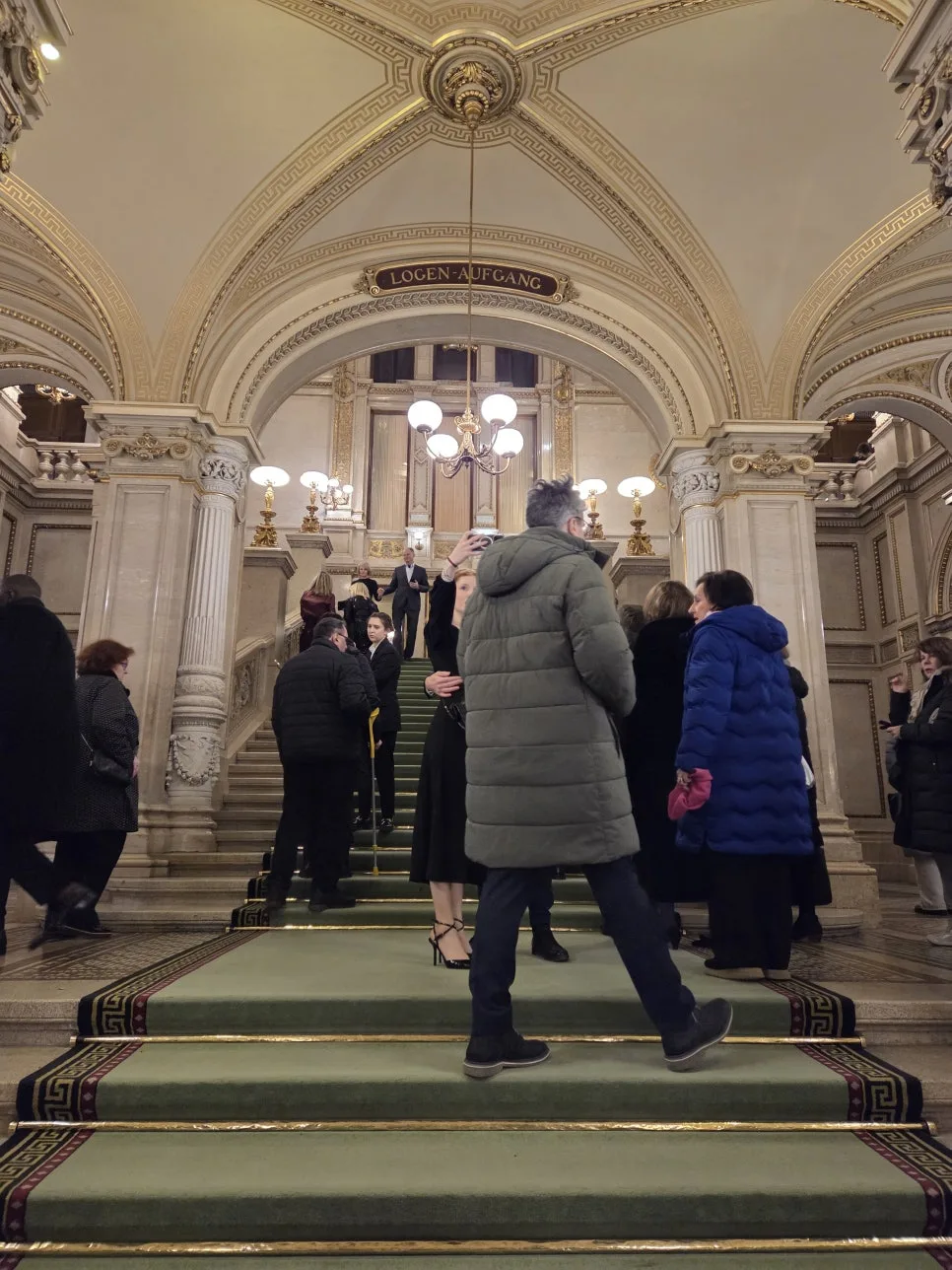
Once you enter the opera house,
you’re greeted by a gorgeous central hall and grand staircase.
A lot of people take photos here,
but right before the performance it gets so crowded that it’s hard to shoot anything.
If you want those dreamy photos, get there really early.
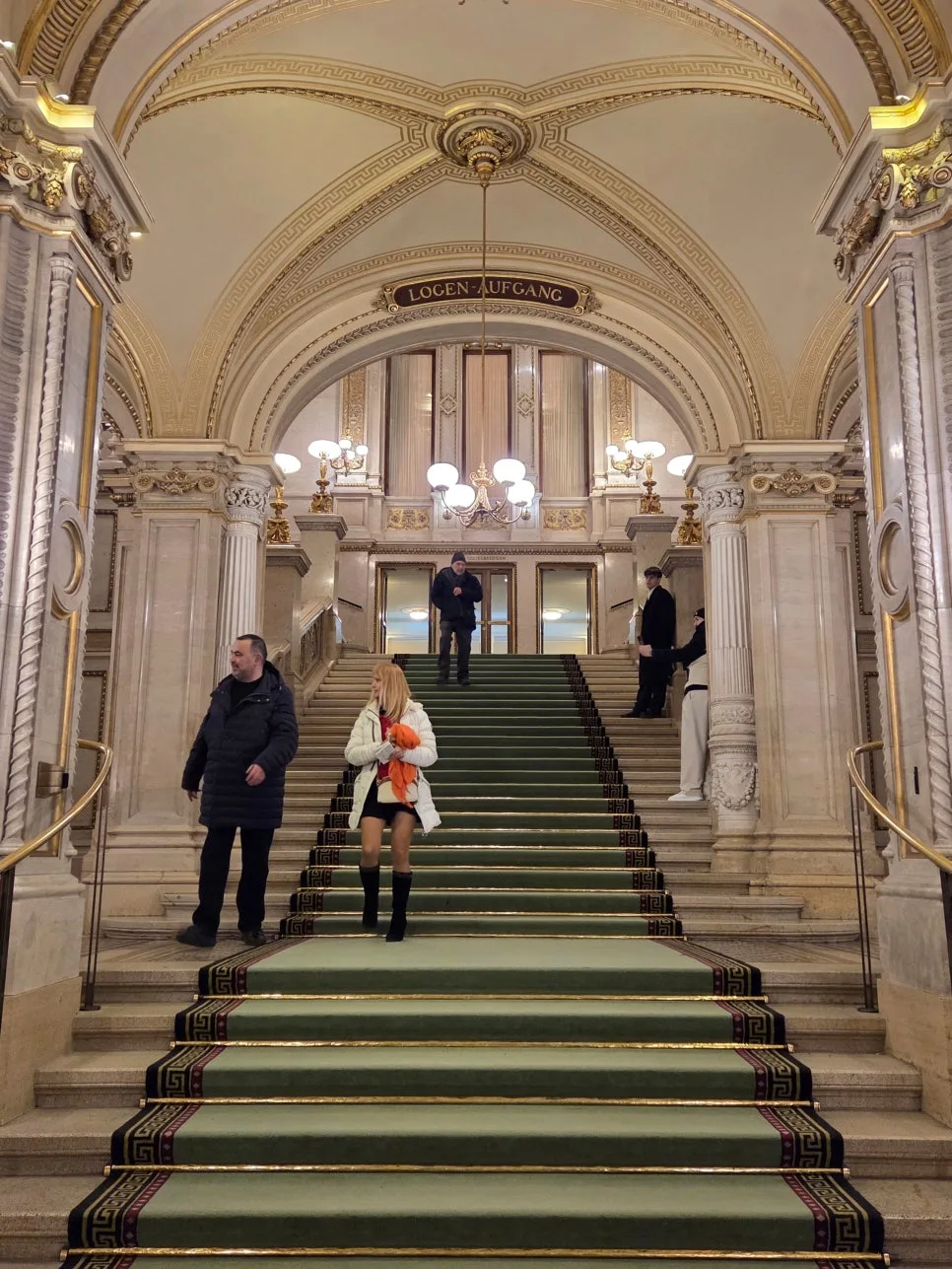
I think this one was taken after the performance ended.
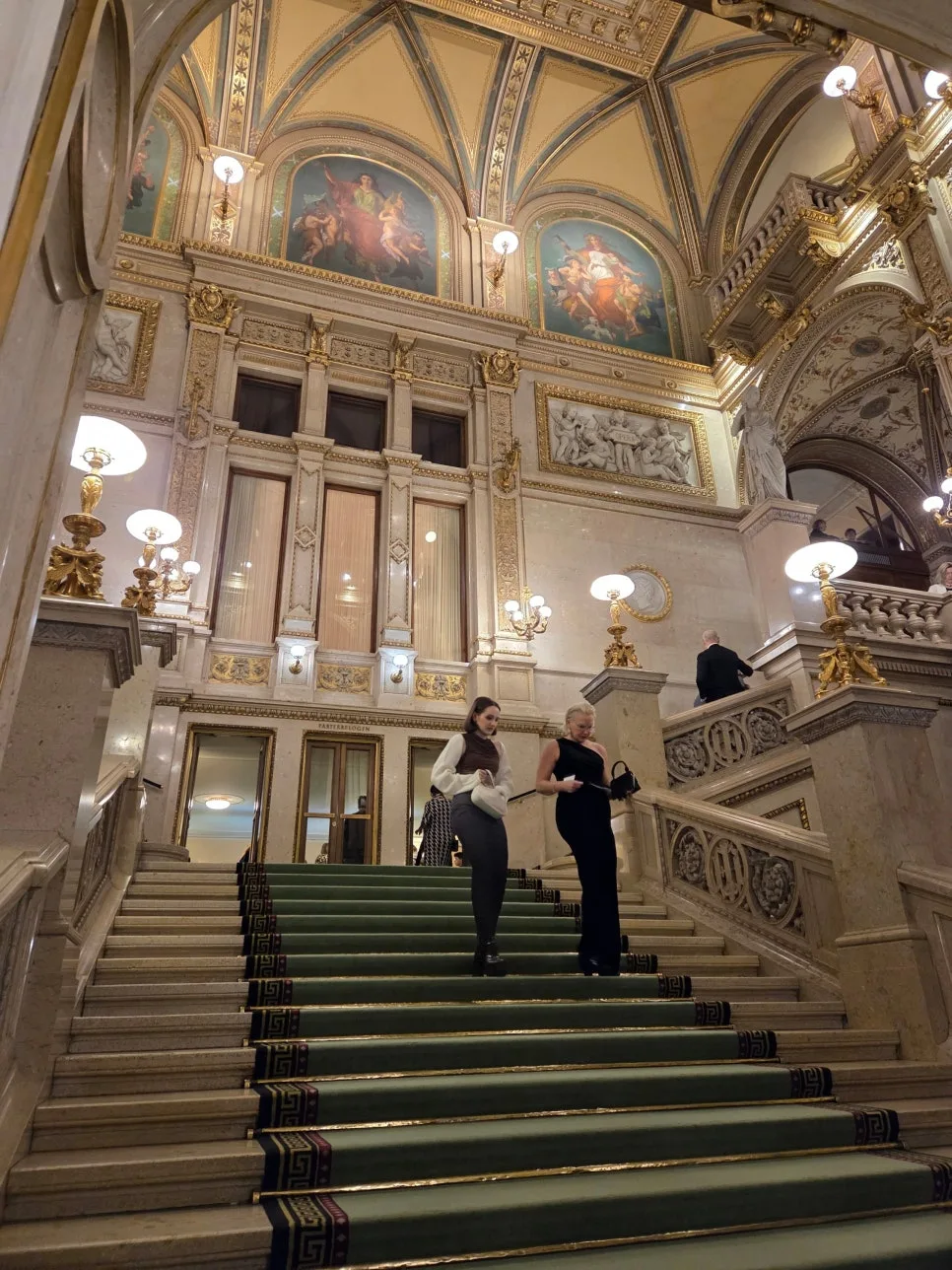
From farther inside, it looks like this.
Seriously, how beautiful is that?
I wish I’d taken more photos of myself here,
but as a couple, we’re weirdly bad at taking portraits of each other.
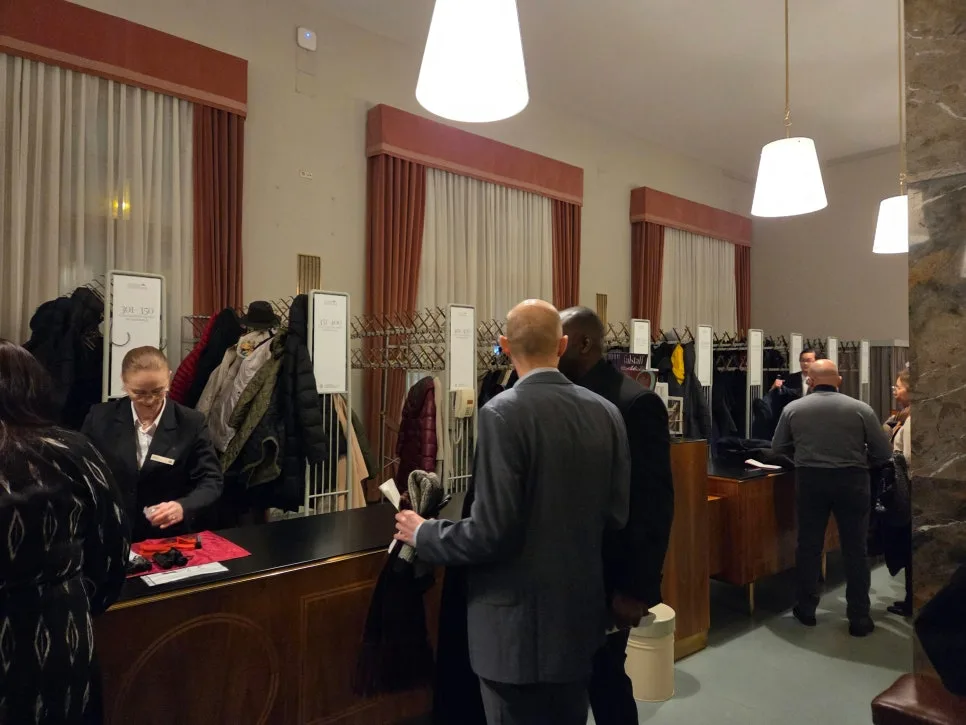
Since it was winter, everyone arrived in heavy coats,
but you’re required to check them before entering (for free).
Checking your coat isn’t optional,
and if you try to go in wearing a bulky coat, they’ll stop you at the entrance.
Food and drinks—including water—are also not allowed inside.
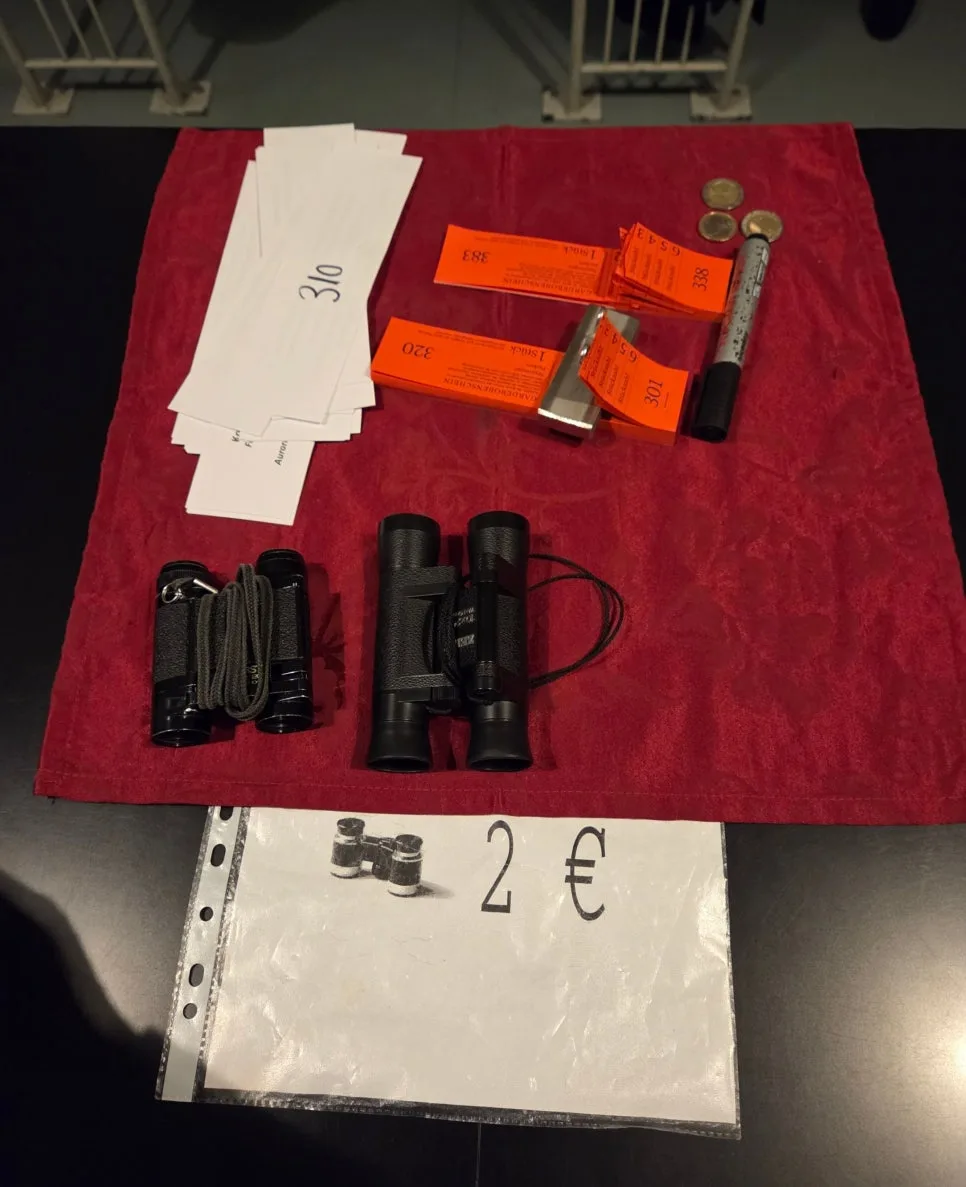
At the coat check, besides storing your outerwear,
you can also rent opera glasses for 2 euros.
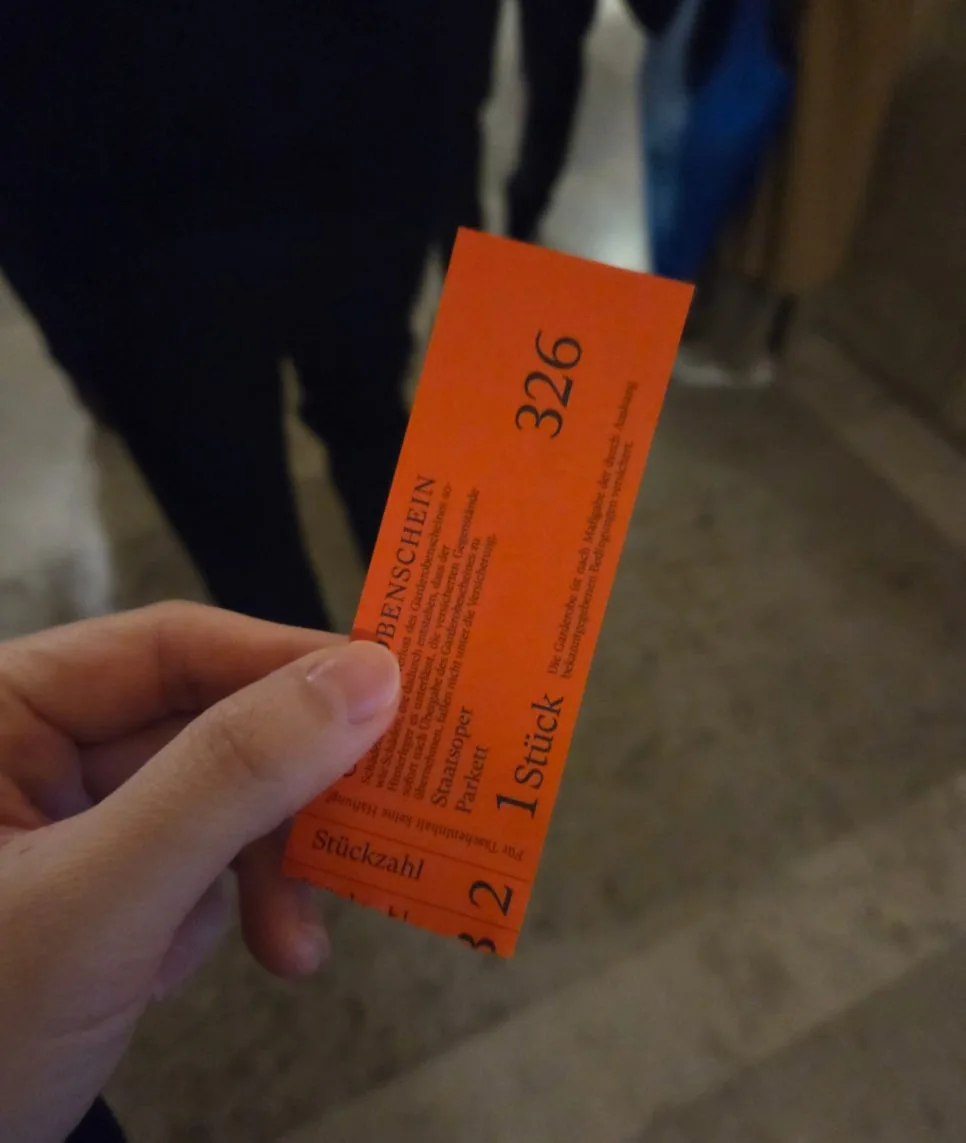
When you check your coat, they give you a ticket like this.
Keep it safe if you want your coat back after the show.
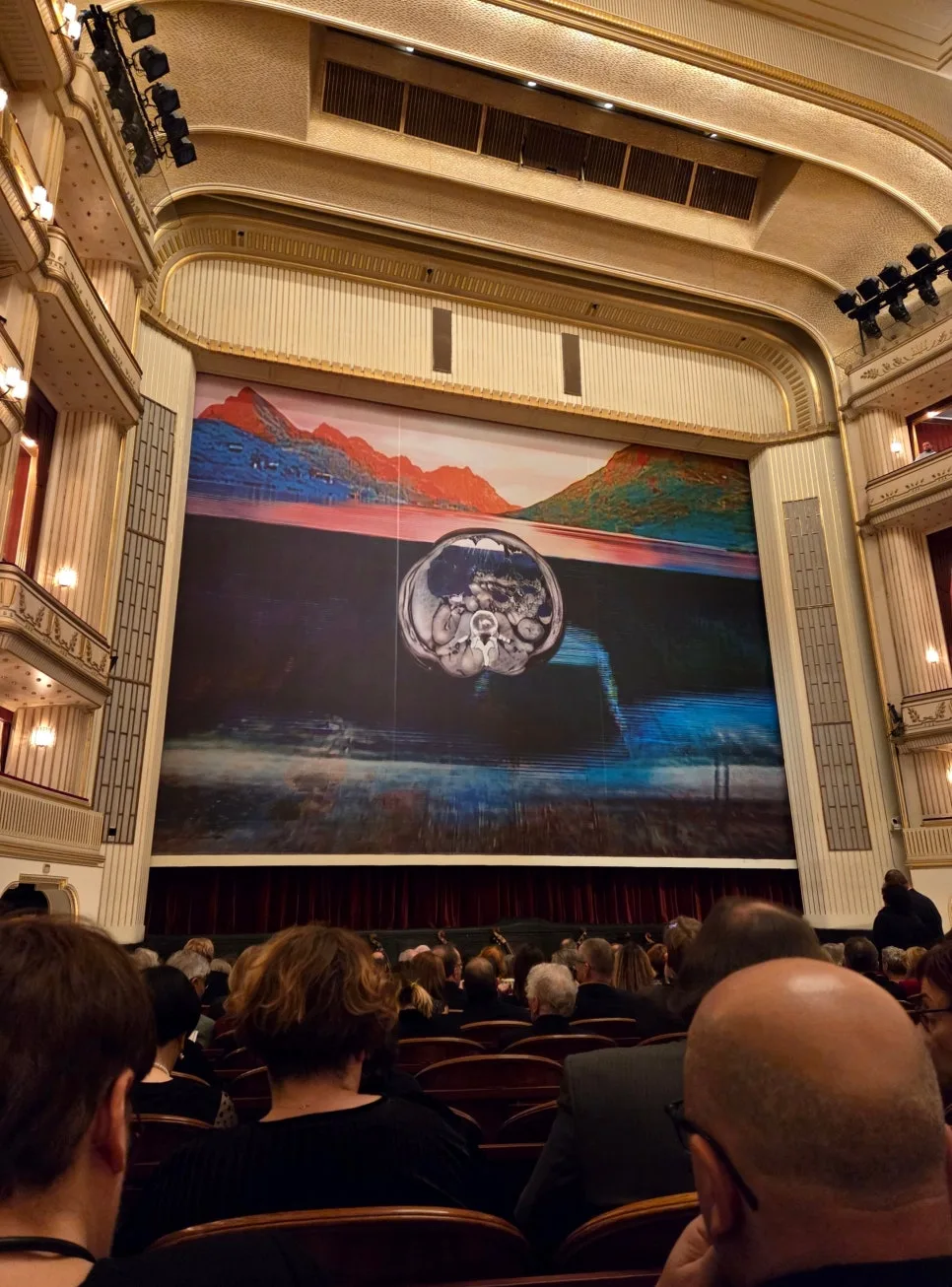
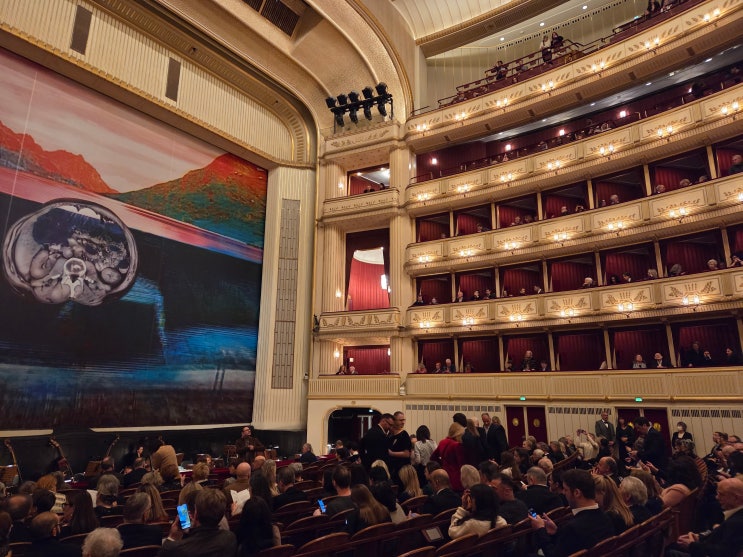
About 10 minutes before the performance, everyone starts settling into their seats.
I posted this on Instagram Stories, and one of my friends looked at the photo and asked,
“Why is there a CT scan hanging in front of the stage?”
Honestly… I had no idea what that artwork was supposed to mean either.
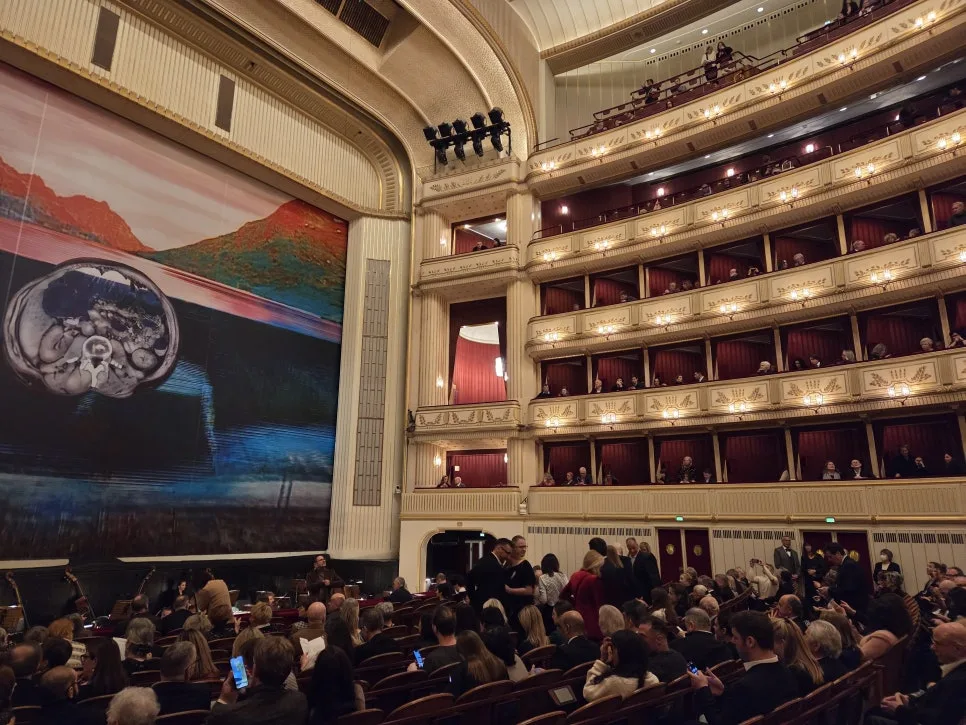
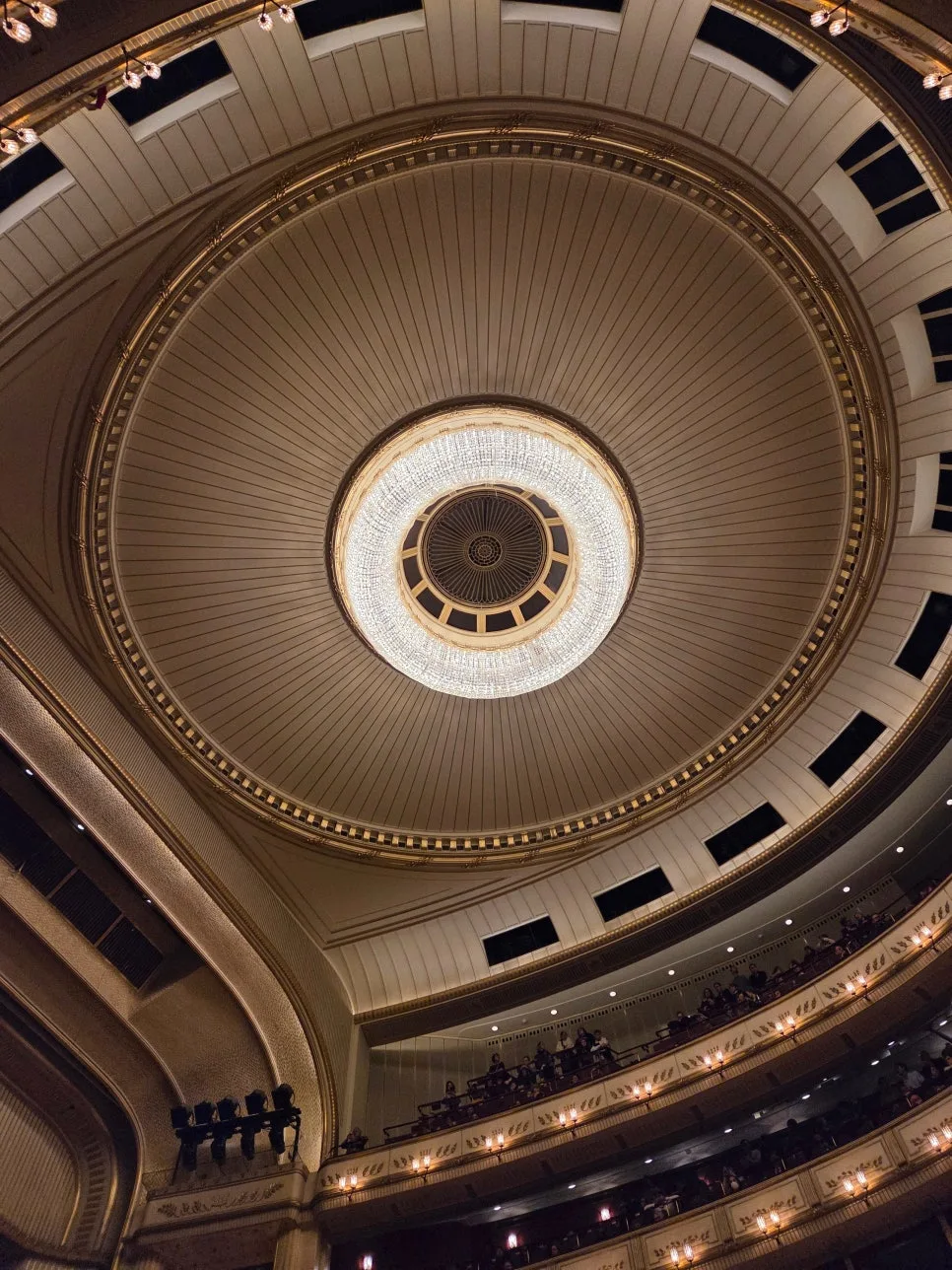
Anyway, while I was taking photos around the auditorium,
the German grandmother sitting next to me told me the ceiling was beautiful too
and said I should photograph the lights overhead.
A quick mood check in video form.
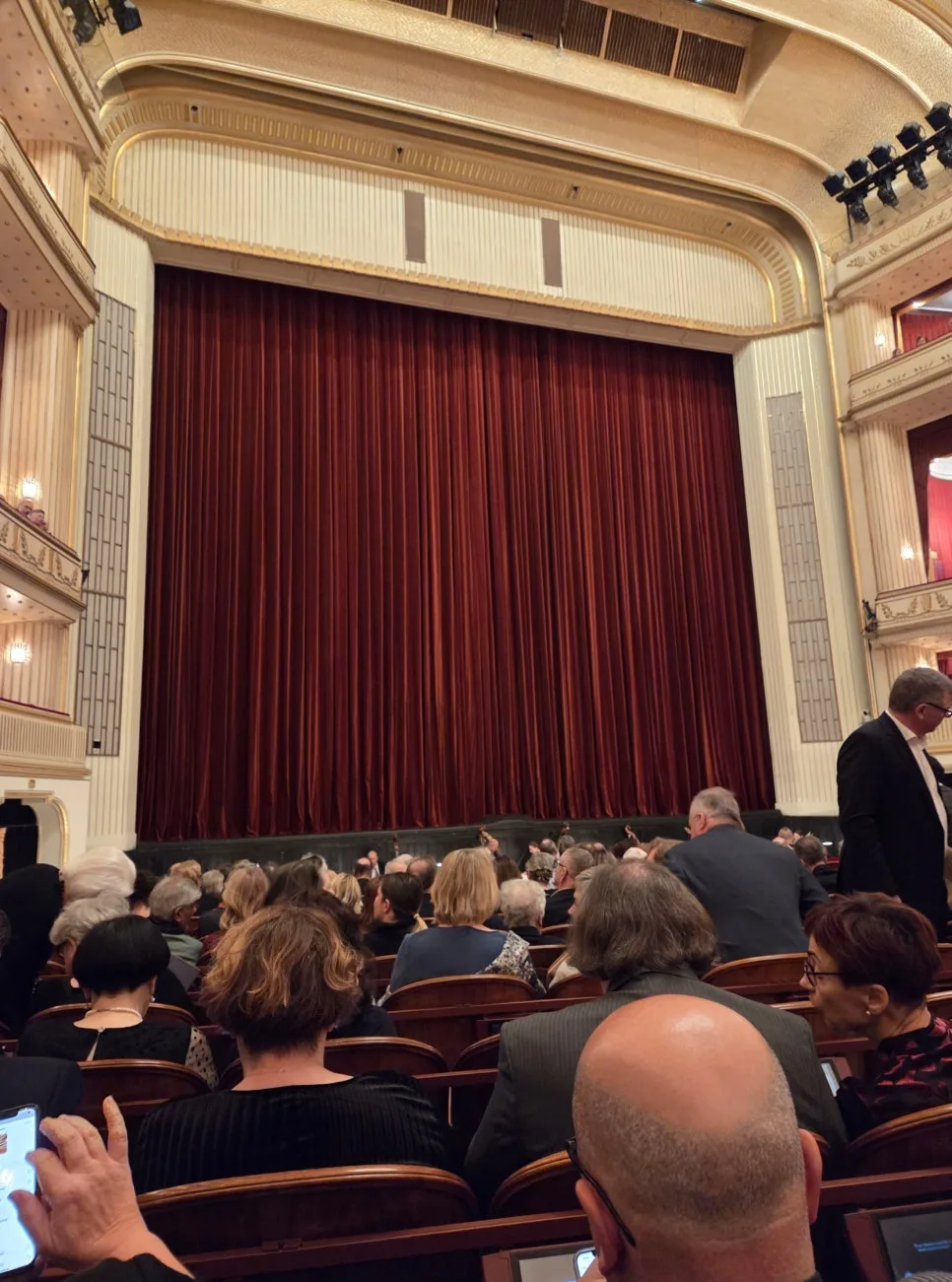
Then the CT-scan-looking blind (?) lifted,
and finally the red curtain appeared.
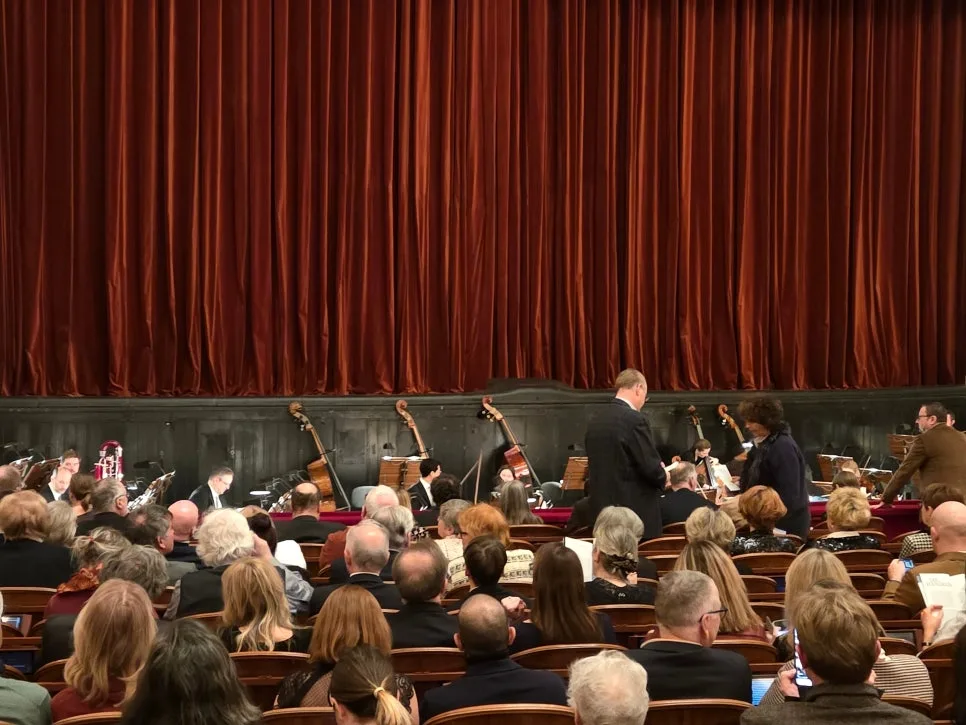
We also got to hear the orchestra tuning their instruments.
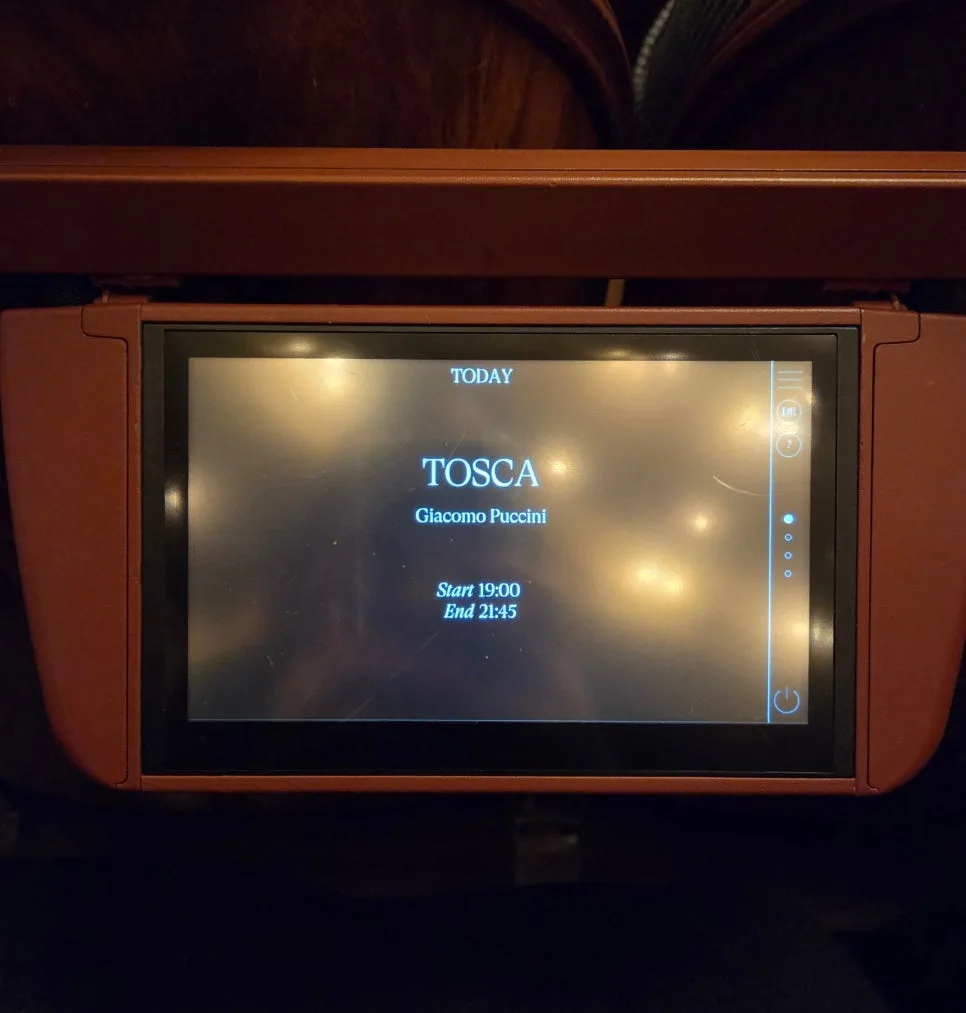
Each seat has a tablet like this,
where you can check information about the performance.
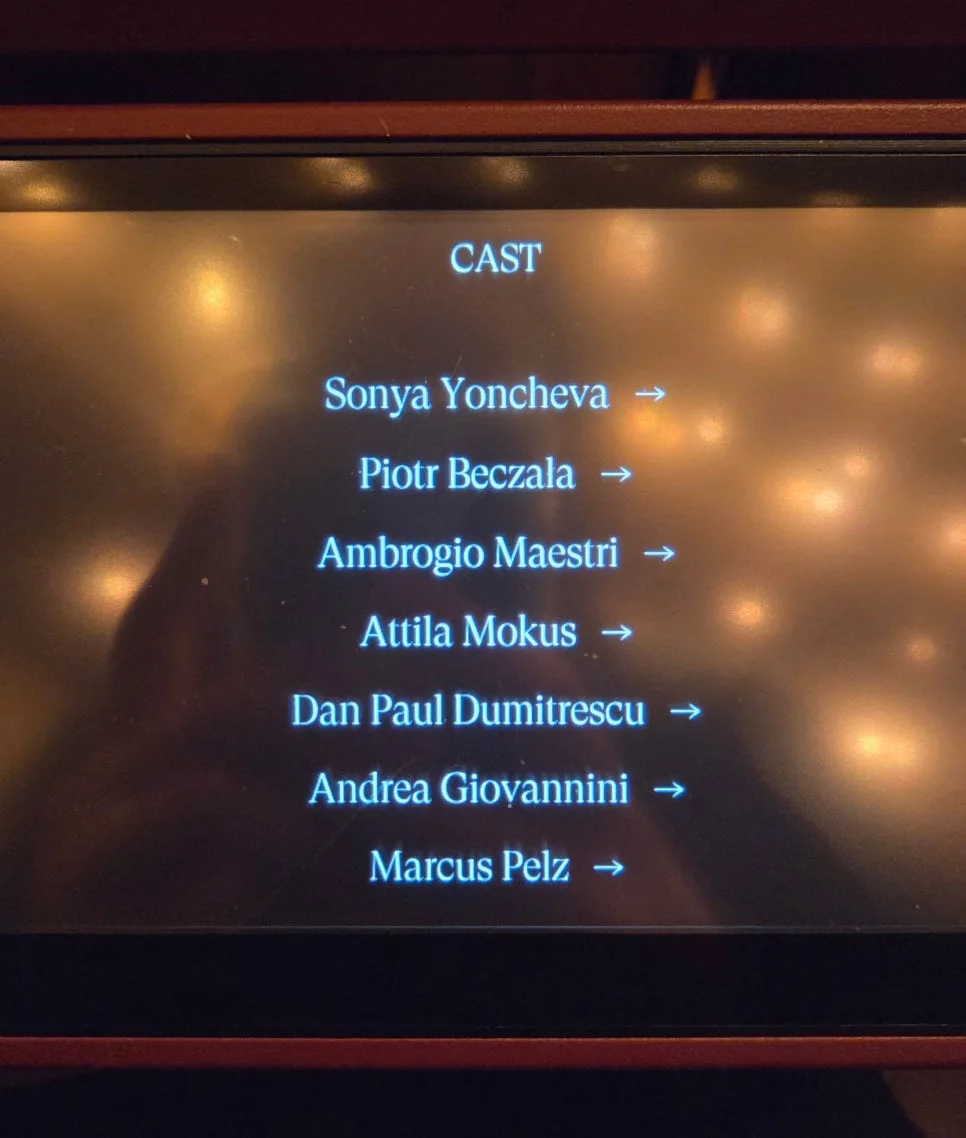
That night’s cast included Sonya Yoncheva as Tosca
and Piotr Beczała as Cavaradossi.
The older woman next to me was a huge fan of tenor Piotr Beczała
and had come all the way from Germany just to see him.
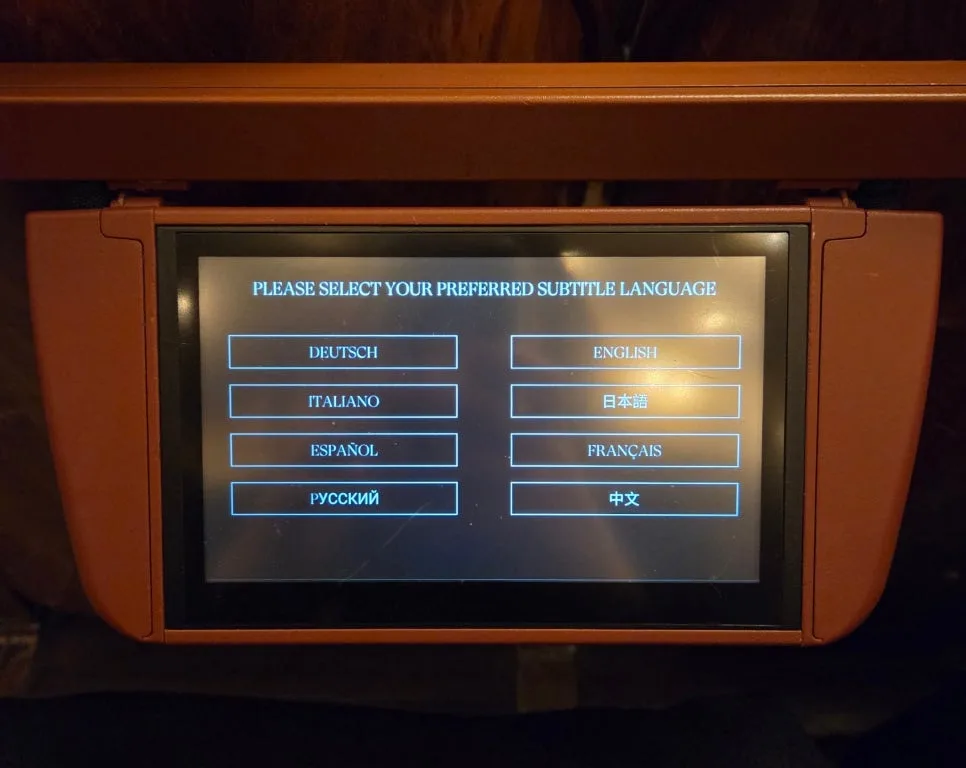
Since the opera is sung in Italian,
subtitles are essential.
There’s no Korean subtitle option, but there are
German, English, Italian, Japanese, Spanish,
French, Russian, and Chinese.
Come on, Korea… one day, hopefully.
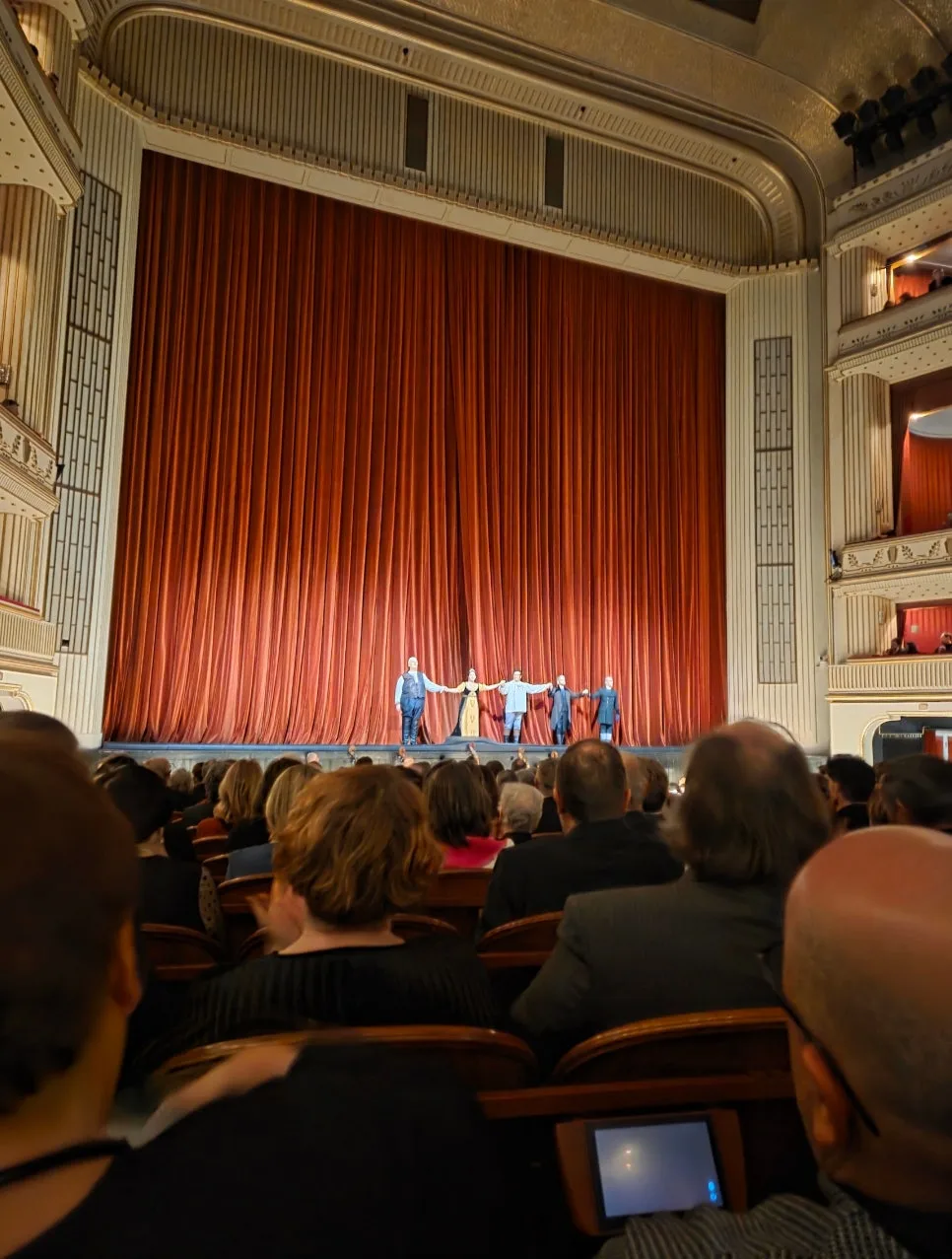
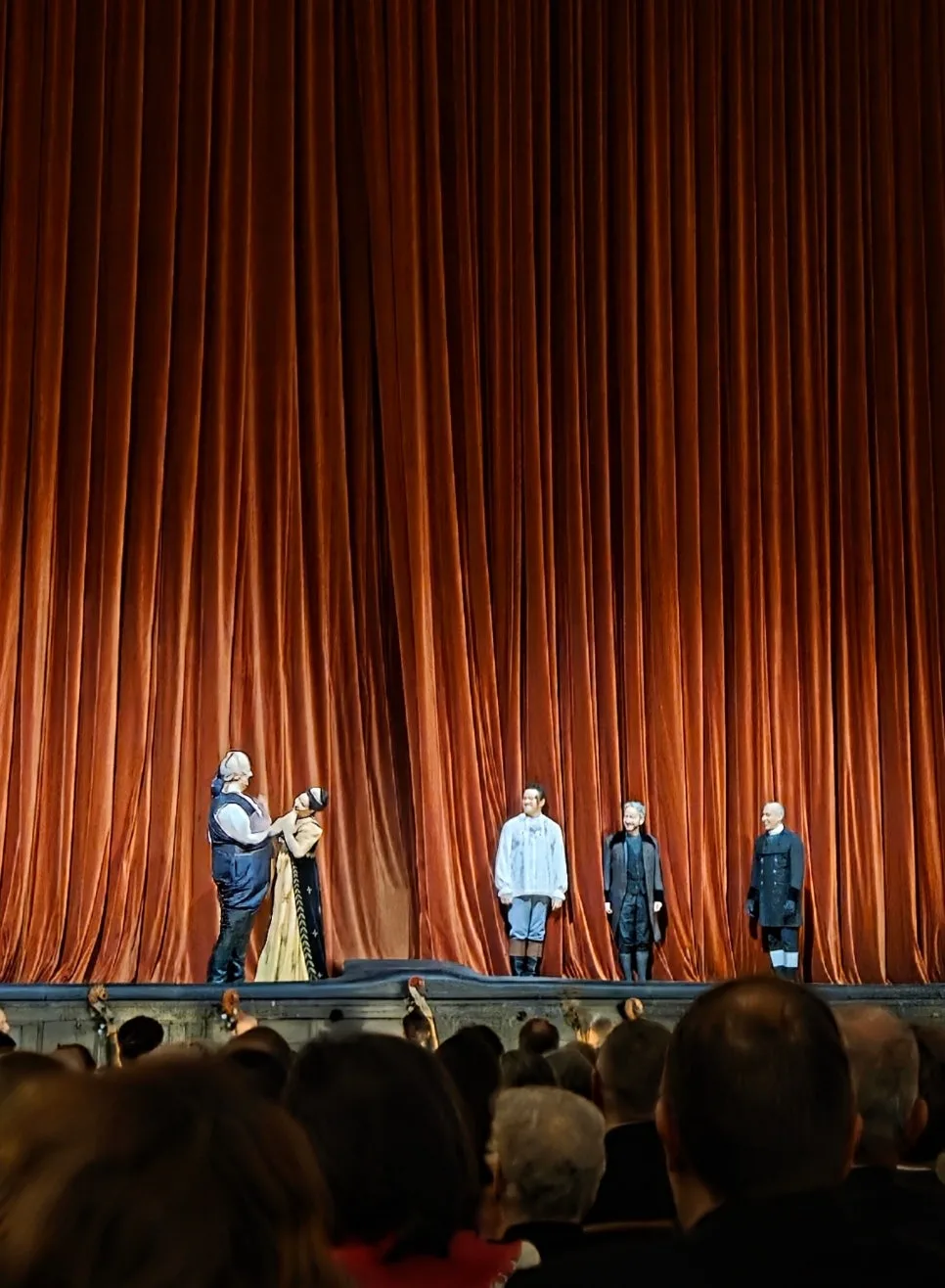
You can’t take photos or videos during the performance,
but during the curtain call, photos like these are allowed.
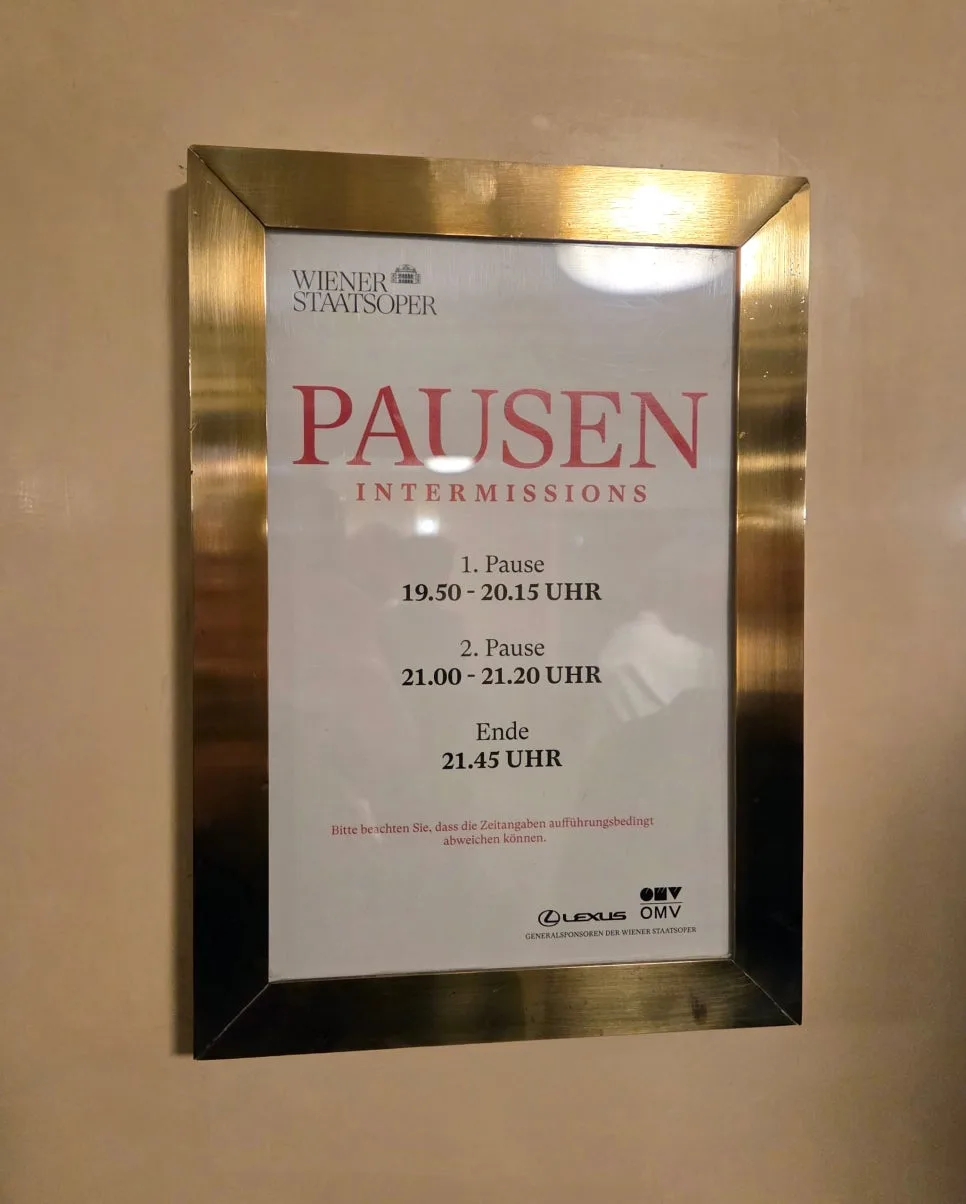
For Tosca, there were three intermissions in total,
and the schedule was posted around the venue.
Once the performance starts, you can’t enter until the current act ends,
so make sure you’re inside on time.
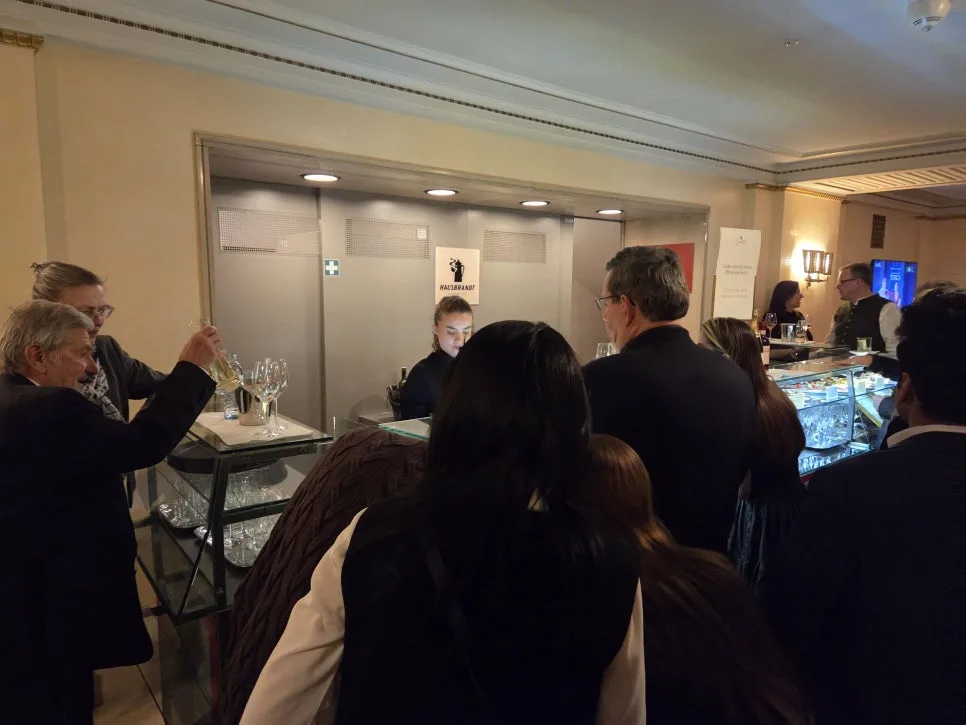
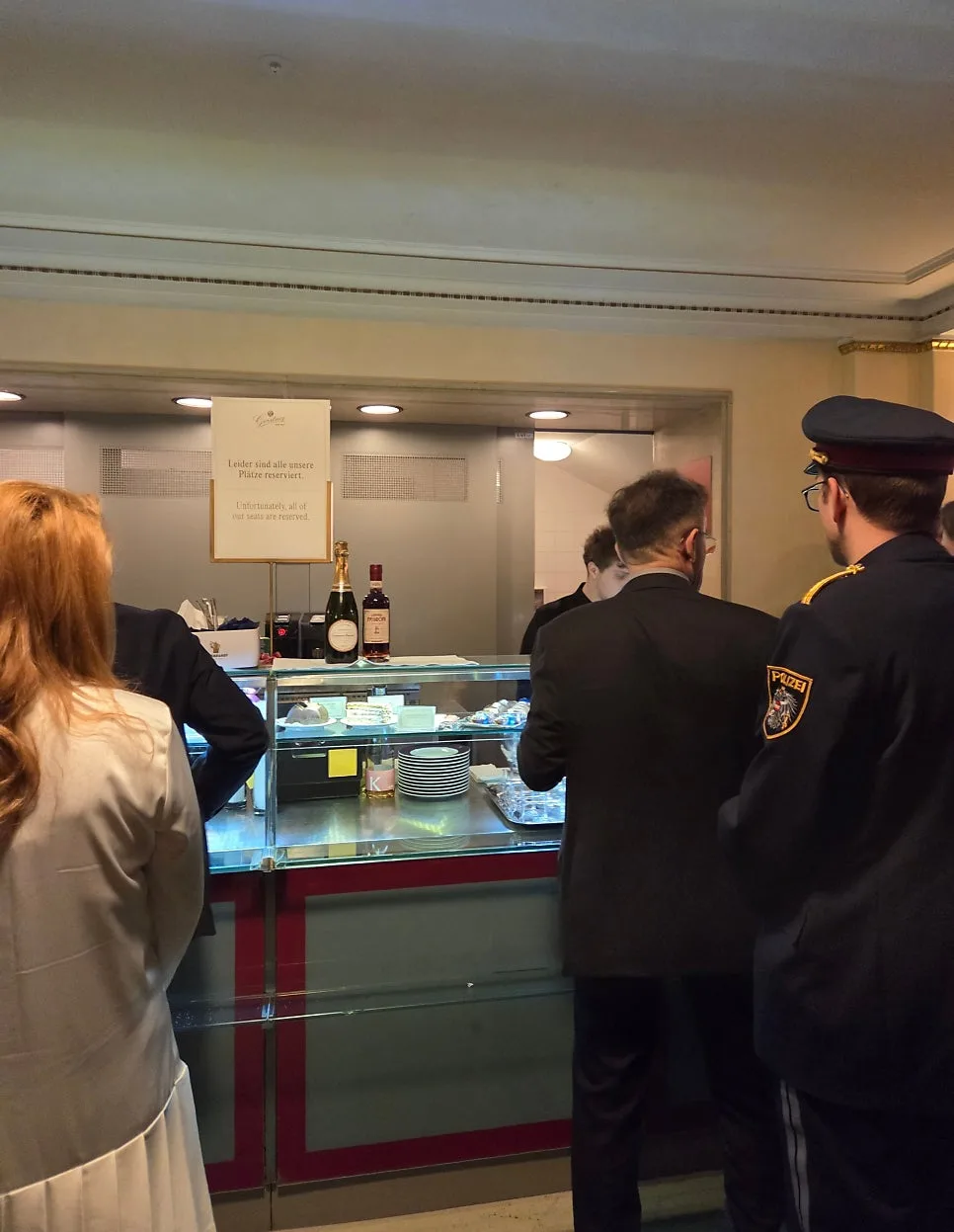
During intermission, you can order drinks or snacks at the café,
so we checked it out too.
I’ve been carrying a water bottle everywhere lately,
but since you can’t bring it into the theater, I was so thirsty.
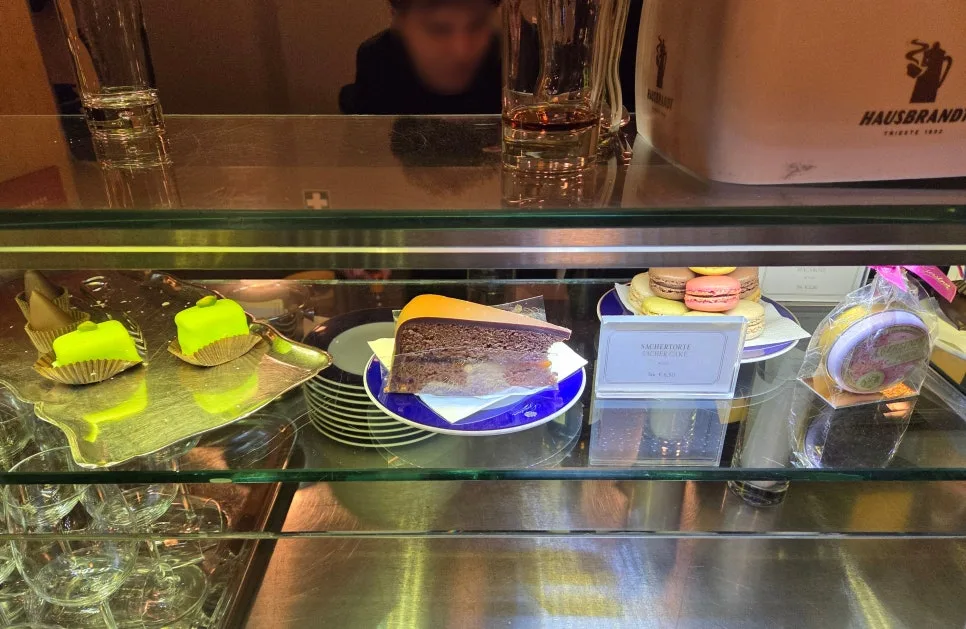
The snack selection leaned heavily sweet.
Europe really does love its desserts.
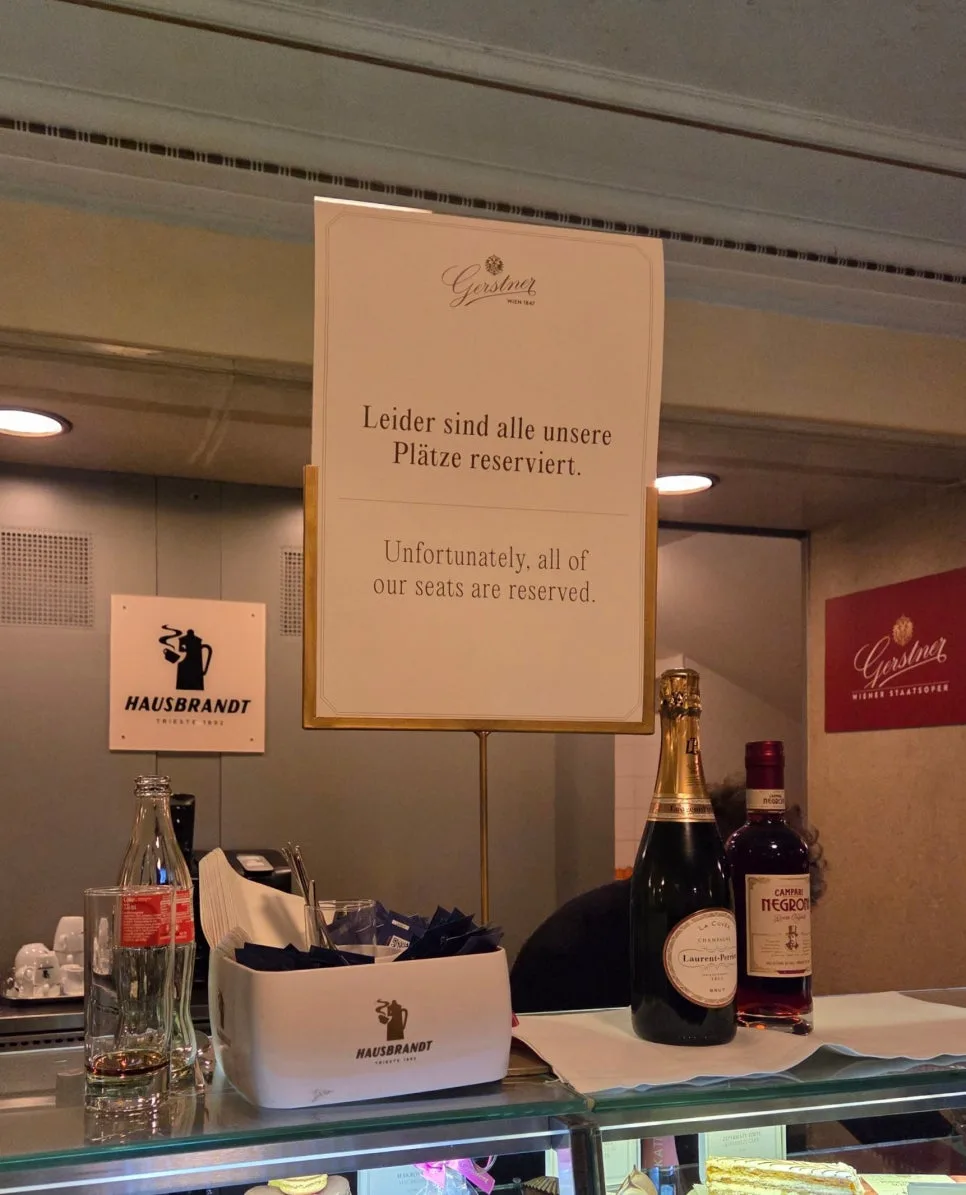
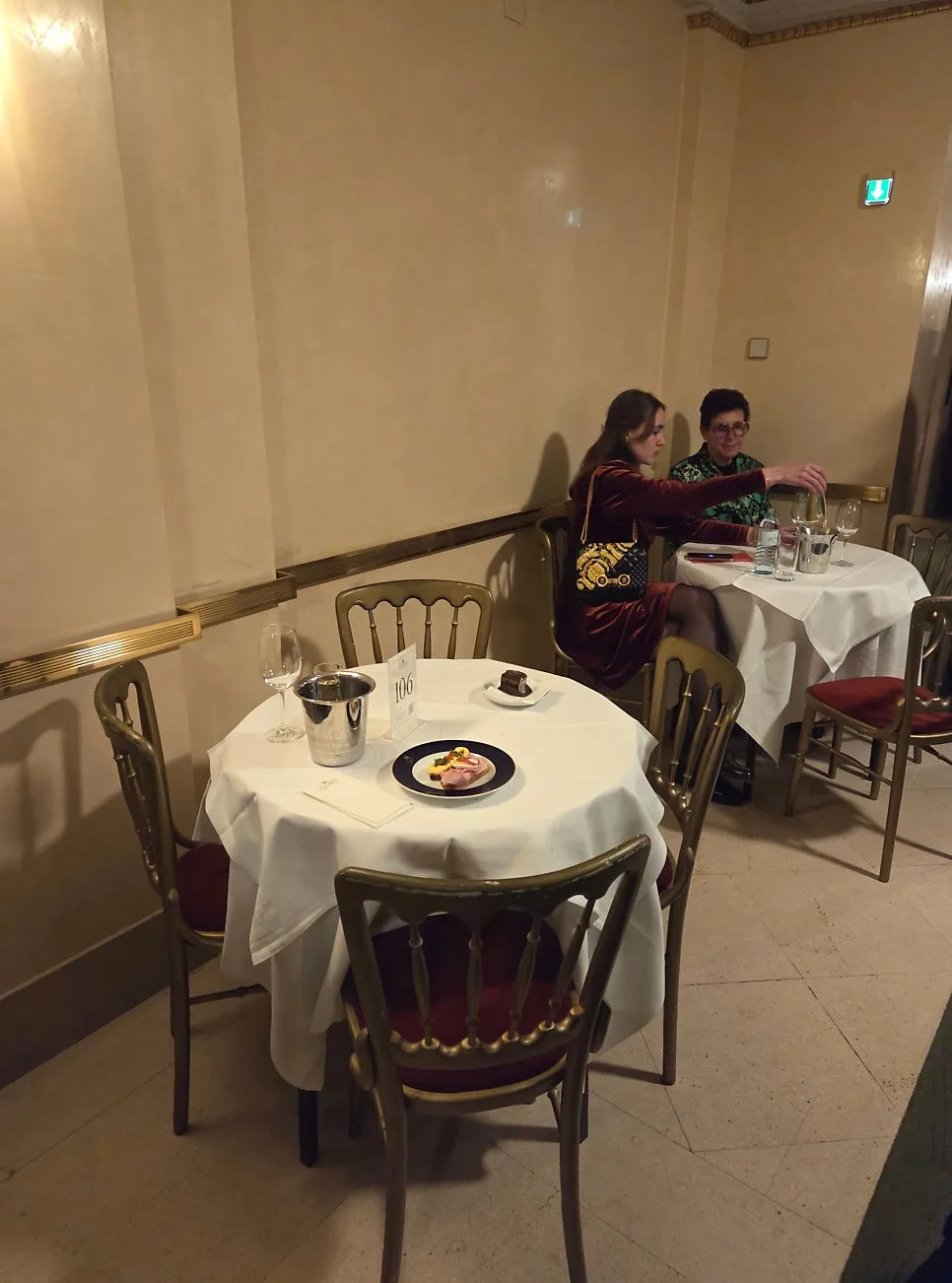
All of the tables were apparently reserved,
but since intermission isn’t that long anyway,
it was totally fine to just stand for a bit and eat or drink.
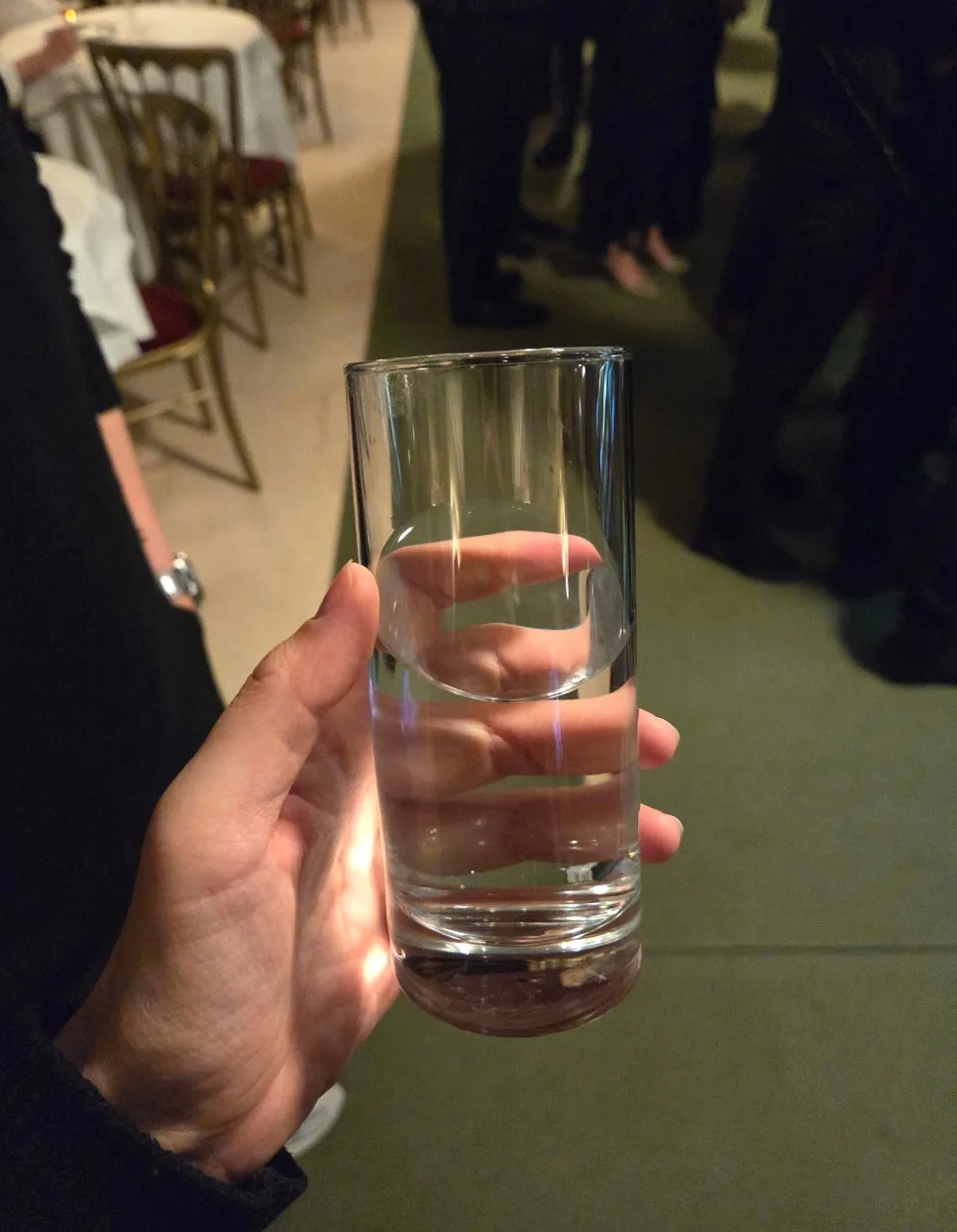
We just ordered a bottle of still water,
and they served it with a glass.
A lot of people were drinking champagne too.
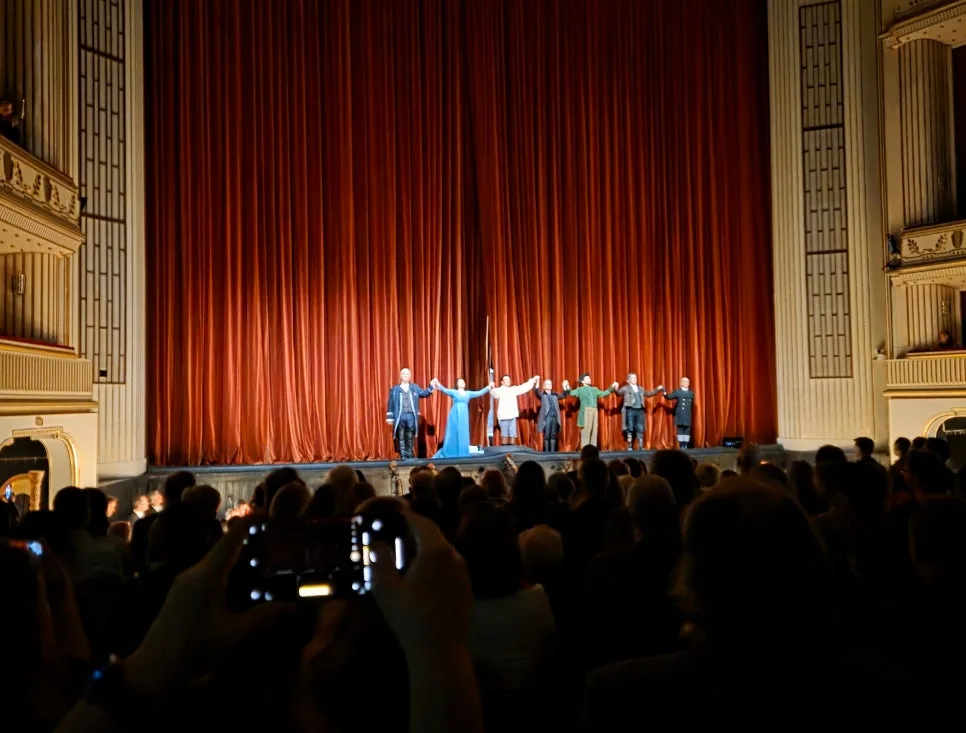
And just like that, we made it through the performance.
The staging was beautiful, the cast was incredible,
and honestly, just being able to say
I saw an opera at the Vienna State Opera felt emotional in itself.
I didn’t know much about the tenor Piotr Beczała beforehand,
but he was truly amazing.
After the aria “E lucevan le stelle,”
the applause just kept going and going,
so he immediately sang it again as an encore.
Some people love encores and some people hate them because they interrupt the flow,
but that aria was so moving that I personally loved it.
I’ve always liked classical music,
but my husband usually isn’t interested and tends to get bored,
so I was a little worried I’d be the only one enjoying it.
But when I asked what he thought afterward, he said
the story made it surprisingly engaging, and he really enjoyed it.
Huge relief.
If you’re planning a Vienna trip,
the Vienna State Opera is absolutely worth adding to your itinerary.
Whether you book a performance or just do the tour,
I really recommend stepping inside at least once.
And after the performance, head straight to the nearby
Bitzinger sausage stand and get a hot dog.
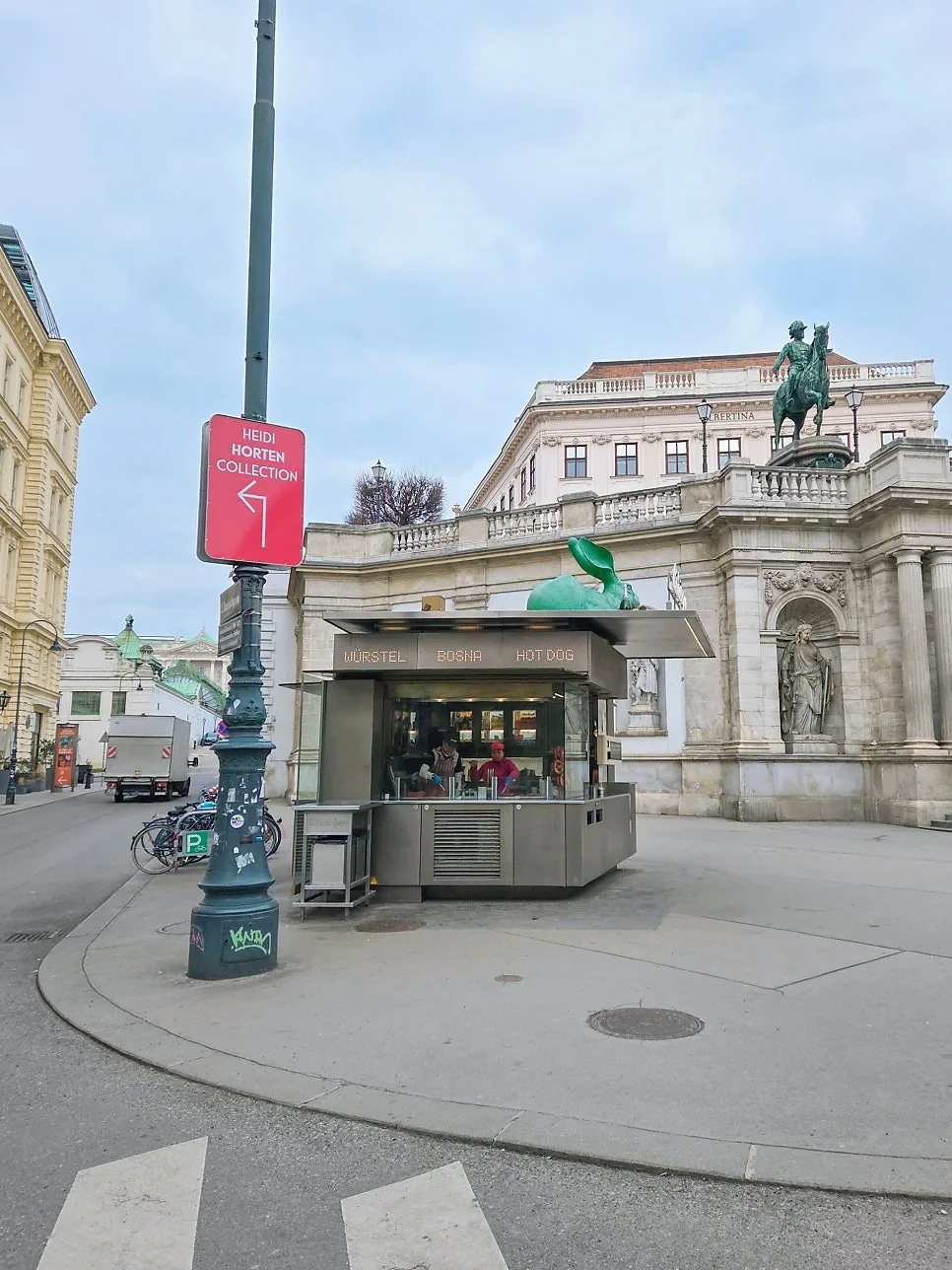
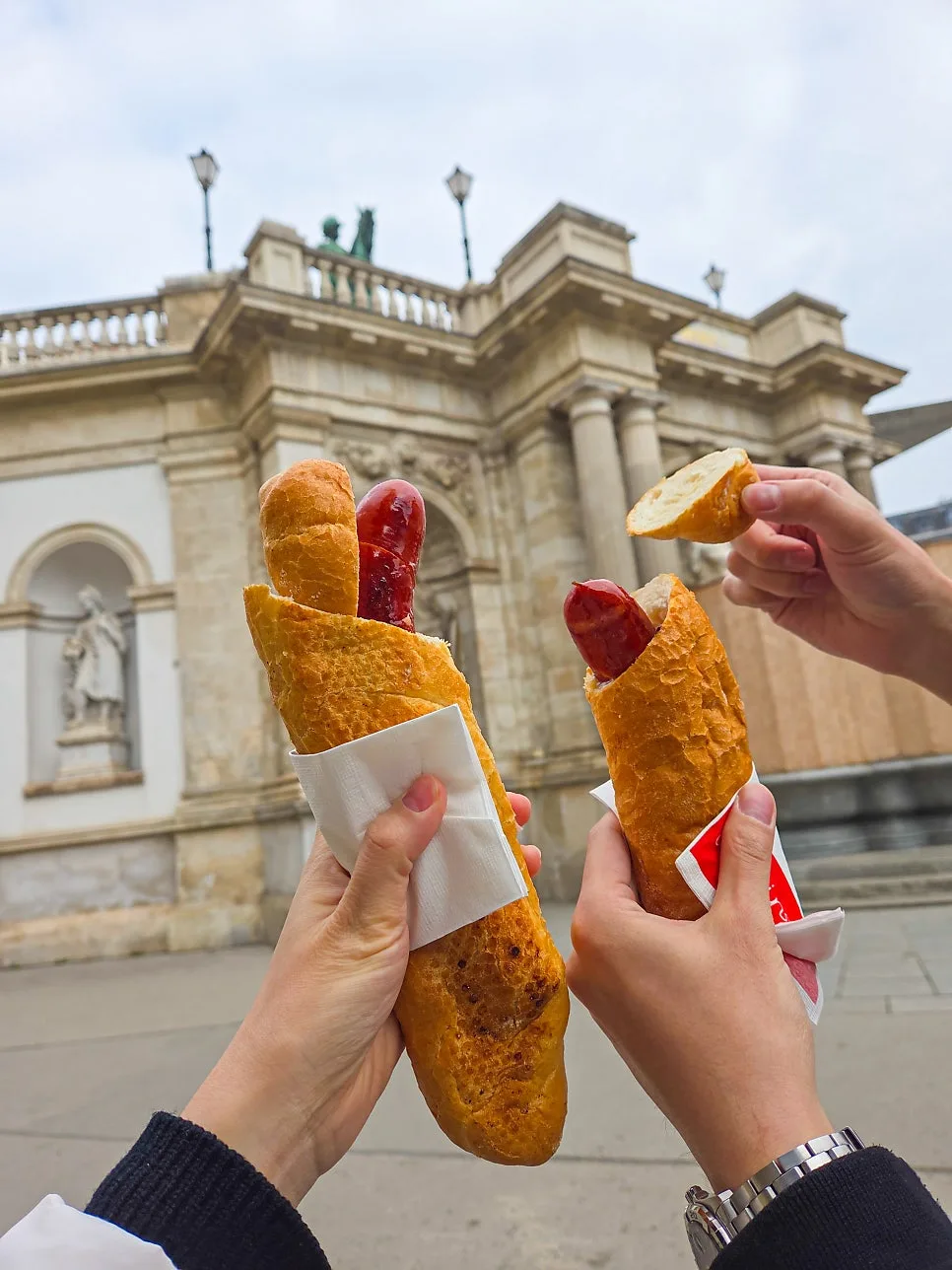
It’s basically a Vienna State Opera post-show classic—
everyone lines up there after the performance.
The sausages are ridiculously good.
We actually had it on a different day, though. ^^