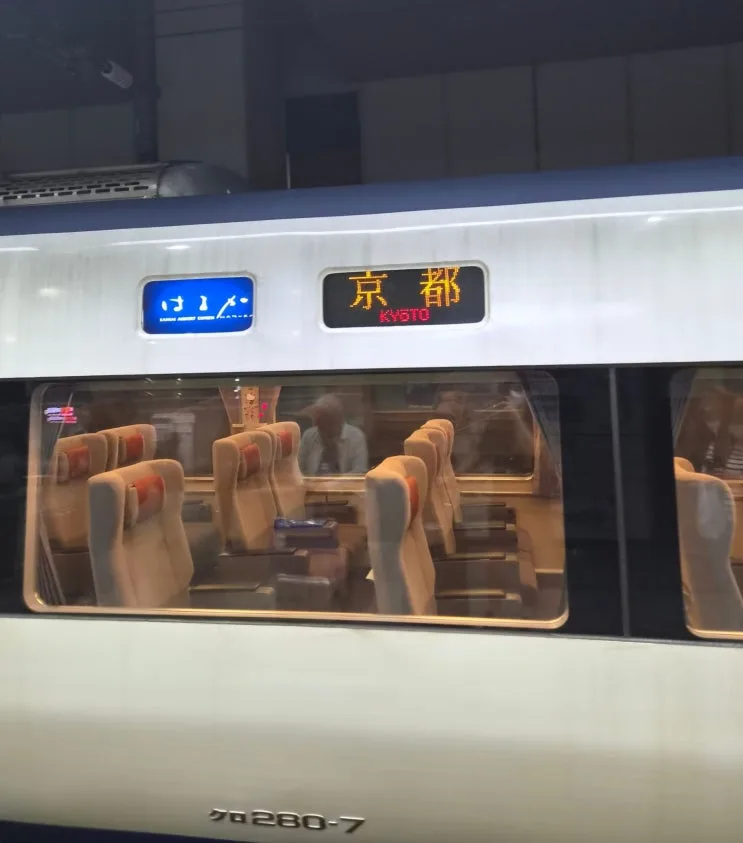
JR Haruka Train Guide from Kansai Airport to Umeda & Kyoto: Tickets, Timetable, and How to Ride
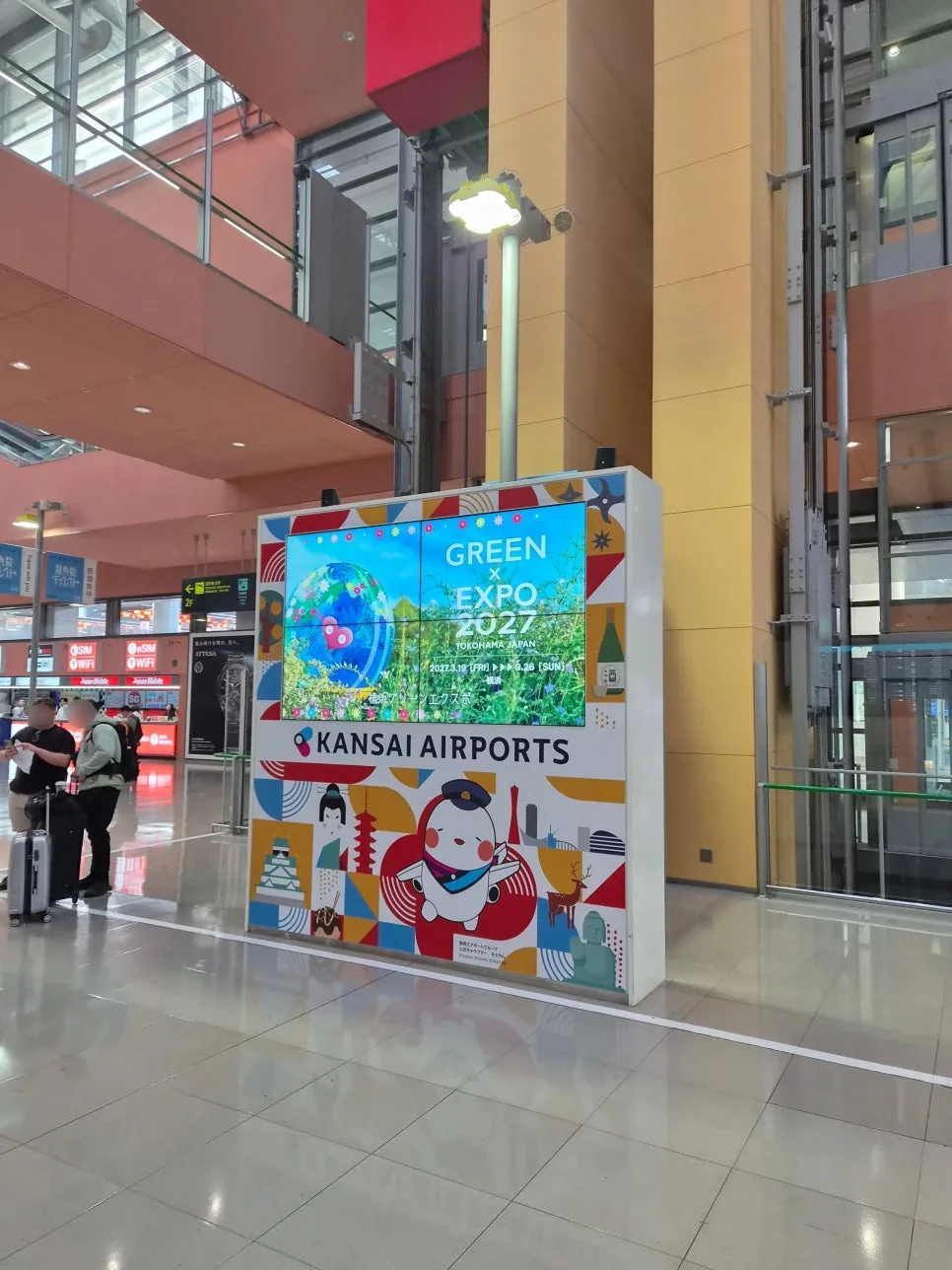
Kansai International Airport is the first stop on most Osaka trips.
When people choose where to stay in Osaka, Namba and Umeda are usually the top picks, and plenty of travelers also head straight toKyoto from the airport.
That’s why the best airport transportation really depends on your final destination.
From Kansai Airport to Namba : take the Rapi:t train
From Kansai Airport to Umeda/Kyoto : take the Haruka train
If you’re looking for how to ride the Rapi:t trainplus ticket booking tips and the timetable, I’ve covered all of that in a separate post below,
and in this post, I’m going to walk you through exactly where to catch the Haruka train, how to book discounted tickets, and how to check the timetable.
Kansai Airport to Umeda/Kyoto
If you’re traveling from the airport to Umeda or Kyoto, the fastest and most reliable option is the JR Haruka Express train.It’s the one I recommend every time.
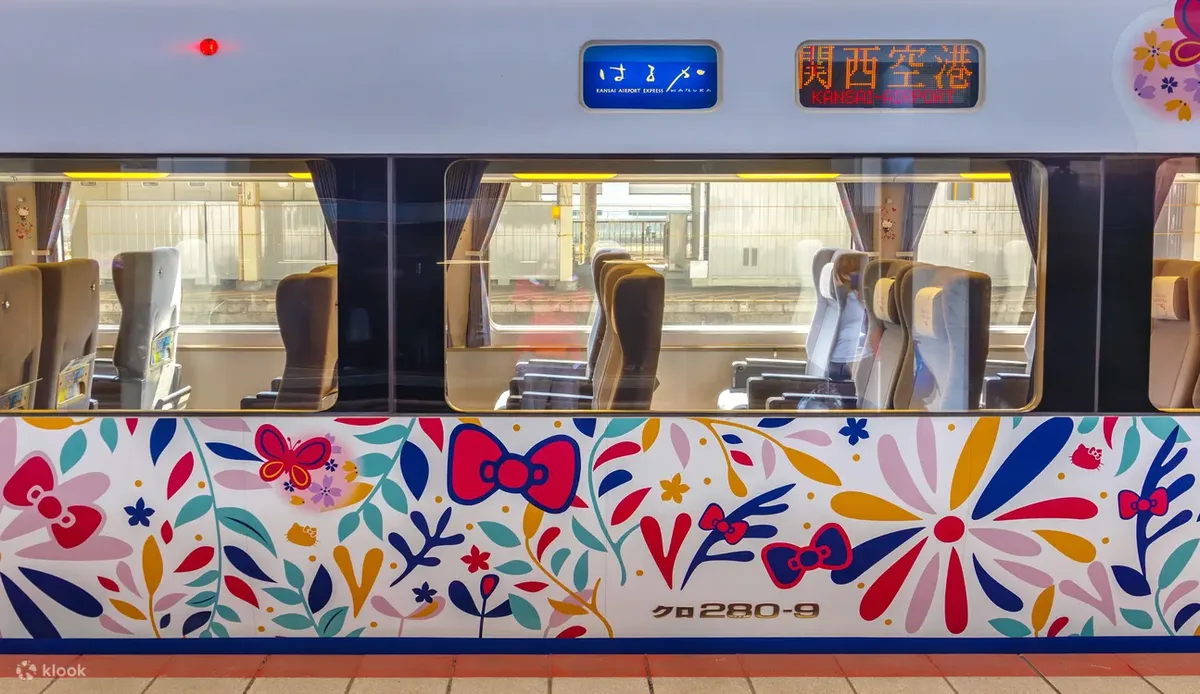
You can also take an airport limousine bus, but the Haruka easily beats it for both travel time and comfort. There’s even a restroomon the train, which the bus doesn’t have. Whenever I’m heading straight to Umeda or Kyoto from the airport, I always take the Haruka.
|
Airport limousine bus |
||
|
Travel time |
About 45–48 minutes |
About 50–70 minutes |
|
Reliability |
About 99% on time |
Travel time can vary every trip depending on rush hour, weekends, and weather-related traffic. |
If you take the bus, it uses the Hanshin Expressway, which is notorious for heavy congestion. In summer, especially during rainy periods, it’s not unusual for the trip to stretch by 90 minutes or more, so definitely keep that in mind when choosing how to get into the city.
Where to catch the Haruka train
Once you exit into the arrivals hall at Kansai International Airport, getting to the train is very easy. I’ll walk you through it step by step.
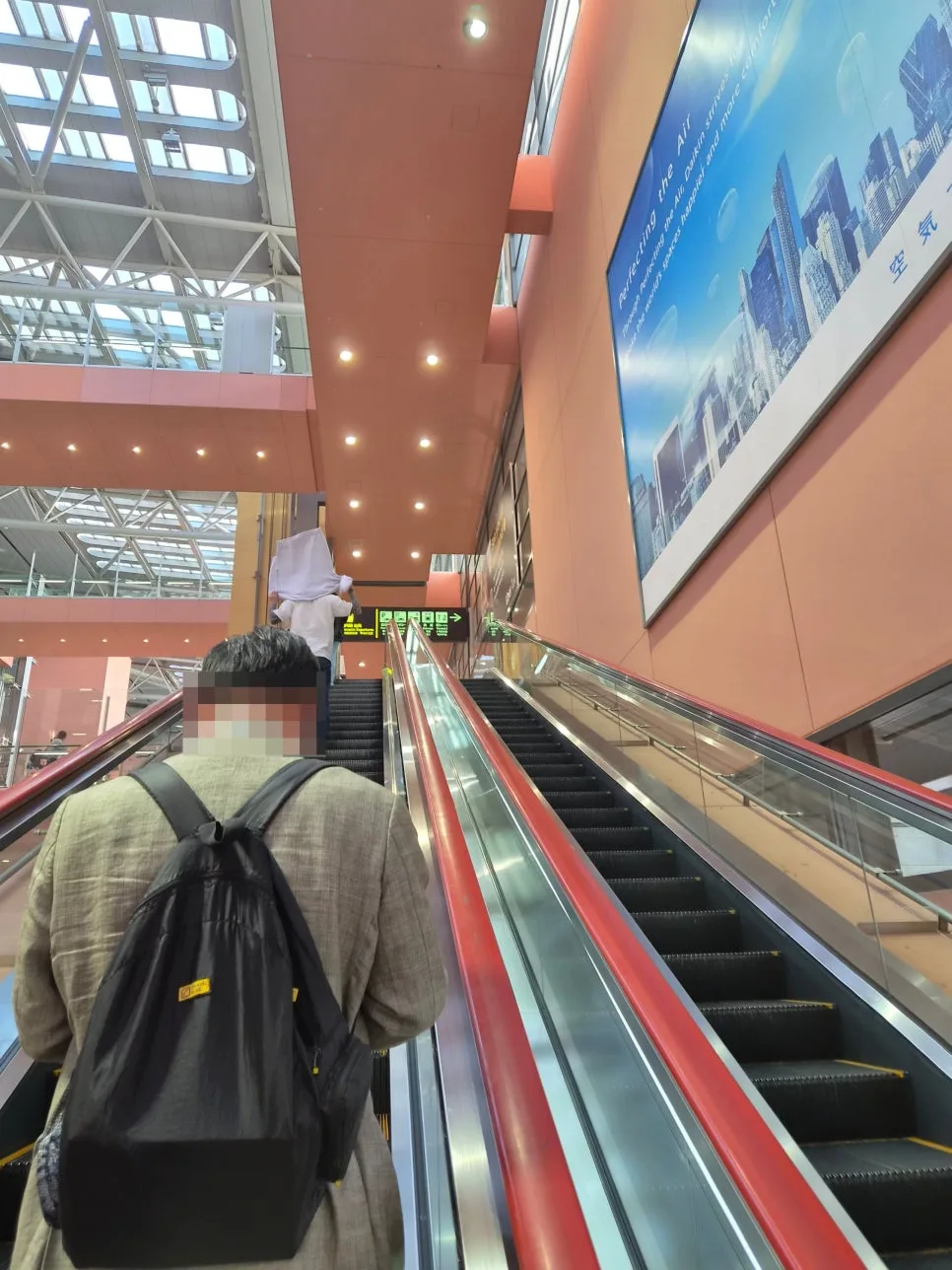
After you pick up your luggage and come out, look to your left and you’ll see the escalator going up to the second floor. There’s also an elevator nearby.
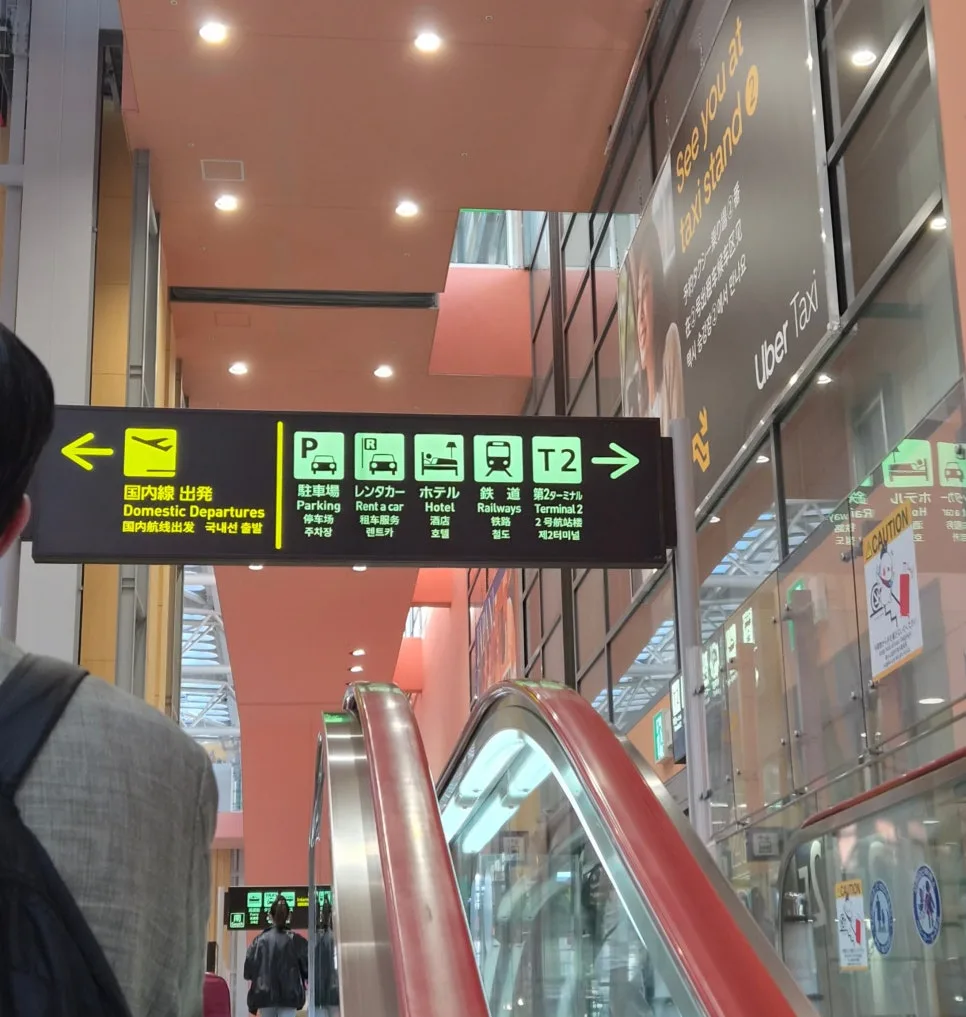
Go up to the second floor and follow the signs for the railway.
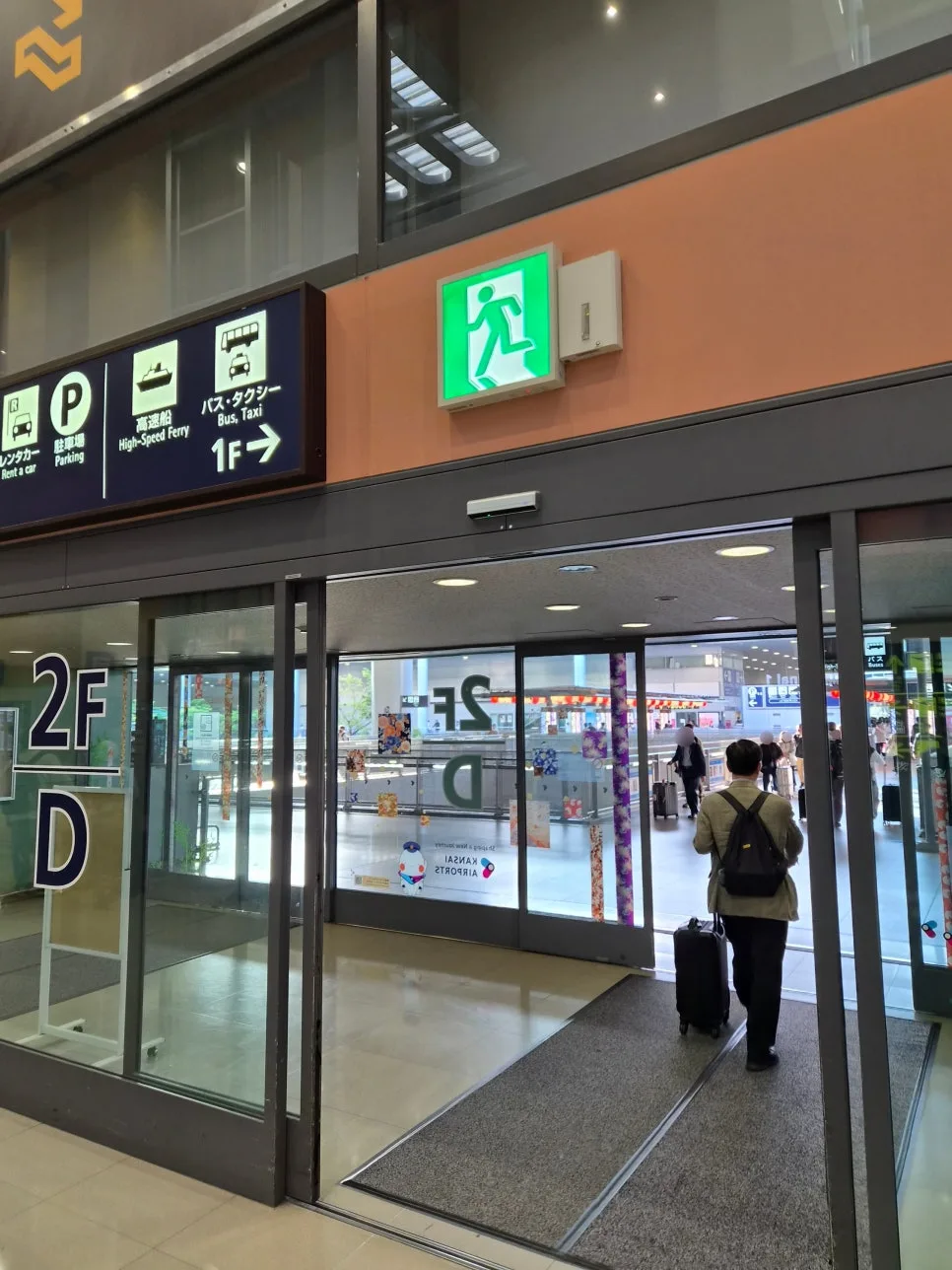
Head outside.
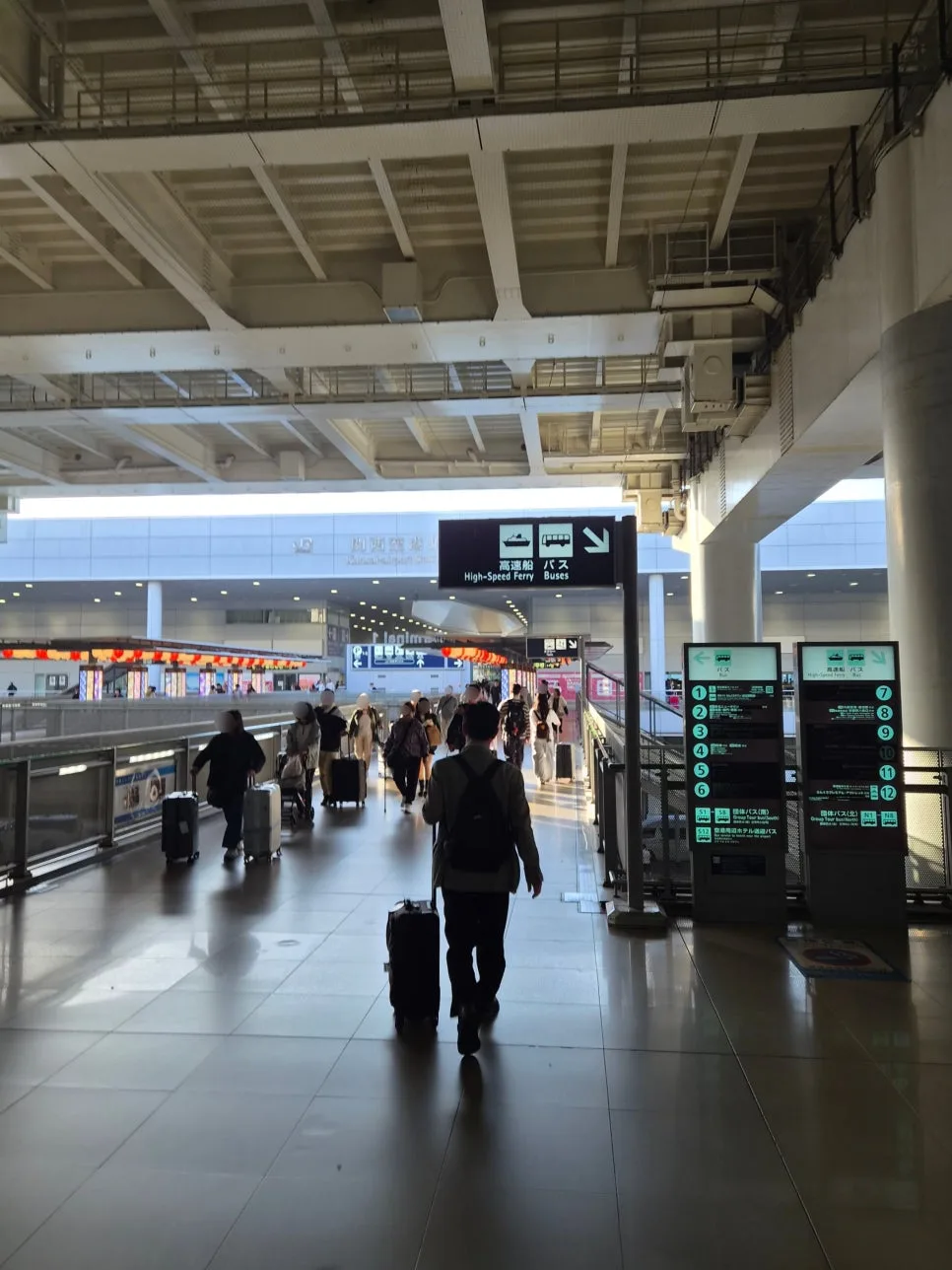
Cross the skybridge to the Kansai Airport Station building.
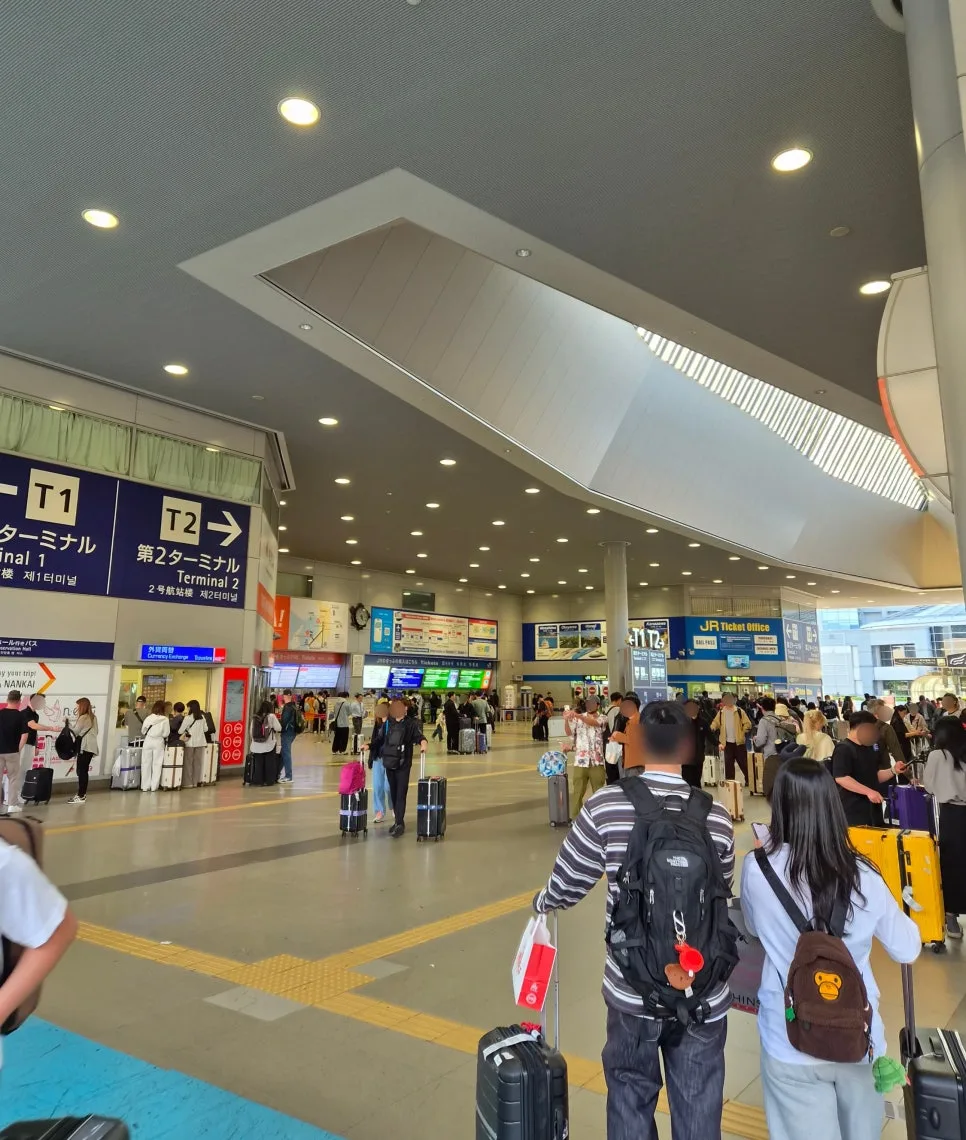
This is where you can issue your ticket and board the train.
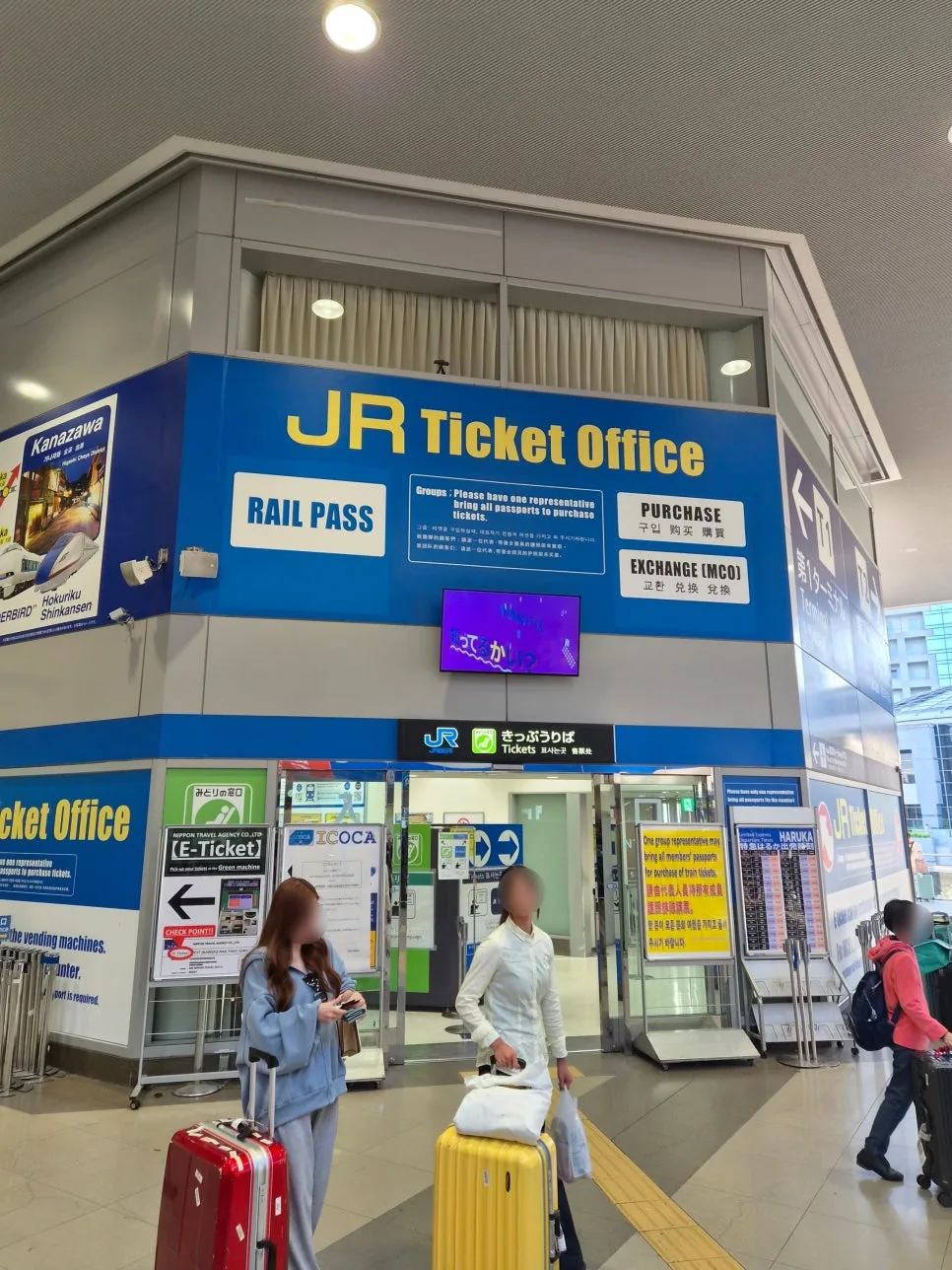
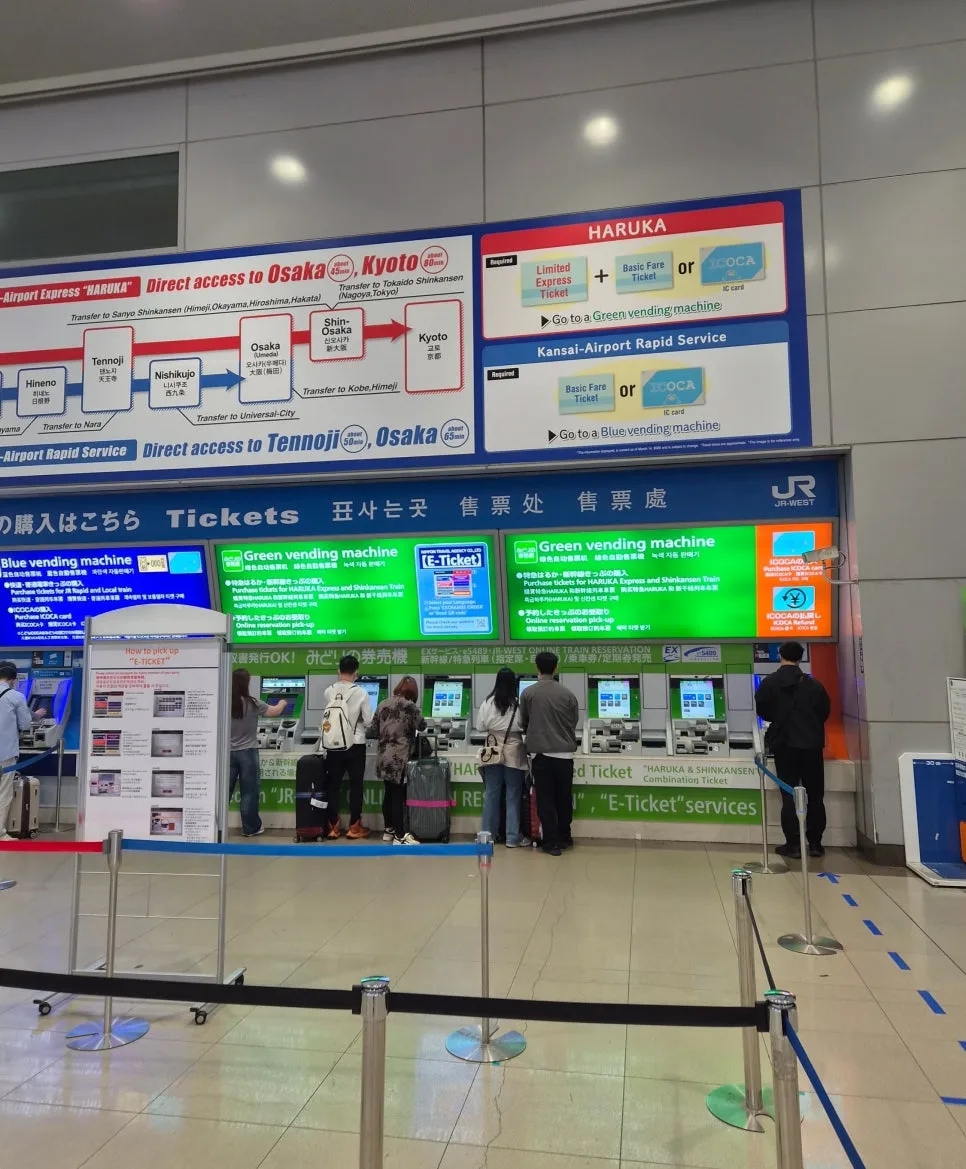
You can either get help from staff at the ticket office or use a ticket machine yourself.
But honestly…!!
I really don’t recommend buying your ticket on site. It’s much more expensive than booking in advance.
Why you should book your ticket in advance
If you reserve your ticket ahead of time, it’s cheaper,and you don’t even need to exchange it for a physical ticket at the station. You can board directly with a QR code,which makes the whole process even easier.
Here’s a quick comparison of Haruka ticket prices for advance booking versus buying on site. These are adult fares. For children ages 6–11, just think of it as roughly half price.
|
Online booking price |
On-site ticket price |
||
|
To Umeda (get off at Osaka Station) |
Standard car, non-reserved seat |
X |
2,380 yen |
|
Standard car, reserved seat |
2,910 yen |
||
|
Green Car (first class) |
X |
3,680 yen |
|
|
To Kyoto (get off at Kyoto Station) |
Standard car, non-reserved seat |
X |
2,960 yen |
|
Standard car, reserved seat |
3,490 yen |
||
|
Green Car (first class) |
X |
4,260 yen |
|
The price difference is huge, right? With online booking, only standard reserved seats are available. If you want a non-reserved seat or Green Car, you’ll need to buy your ticket on site.
But honestly, a reserved seat is better than a non-reserved one anyway because you get your own assigned seat. And if booking a reserved seat in advance is actually cheaper than buying a non-reserved seat at the station, there’s really no reason not to reserve ahead.
You can book through sites like Klook or MyRealTrip, but the prices in the table above are based on Klook, which had the lowest fare. MyRealTrip was more than 2,000 won pricier, and the Umeda ticket there was 17,984 won. I’d definitely go with Klook.
Another plus is that if your trip gets canceled or your plans change, you can still get a full refund, so it feels pretty low-risk to book ahead.
For families traveling with little kids, children ages 0–5 can ride free, up to two infants per paying adult. Just note that infants can’t occupy their own seat and need to share with the accompanying adult. If you want them to have their own seat, you’ll need to buy a child ticket, which is also available on Klook.
Haruka timetable
Here’s the Haruka train timetableas of the latest March 2026 update.
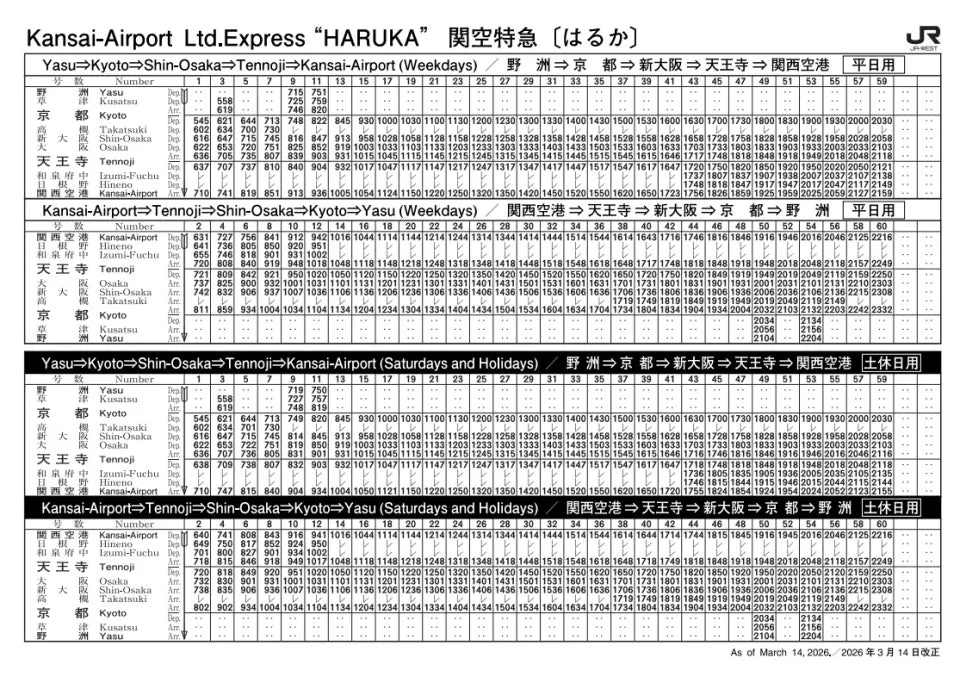
This is the timetable provided on the official JR website, and honestly, it looks overwhelming at first glance.
So I pulled out just the arrival times for Osaka Station and Kyoto Station, since those are the stops most travelers care about.
For reference, it takes about 5–6 minutes from Osaka Station to Shin-Osaka Station, so if you’re getting off at Shin-Osaka, just add 5–6 minutes to the Osaka Station arrival time.
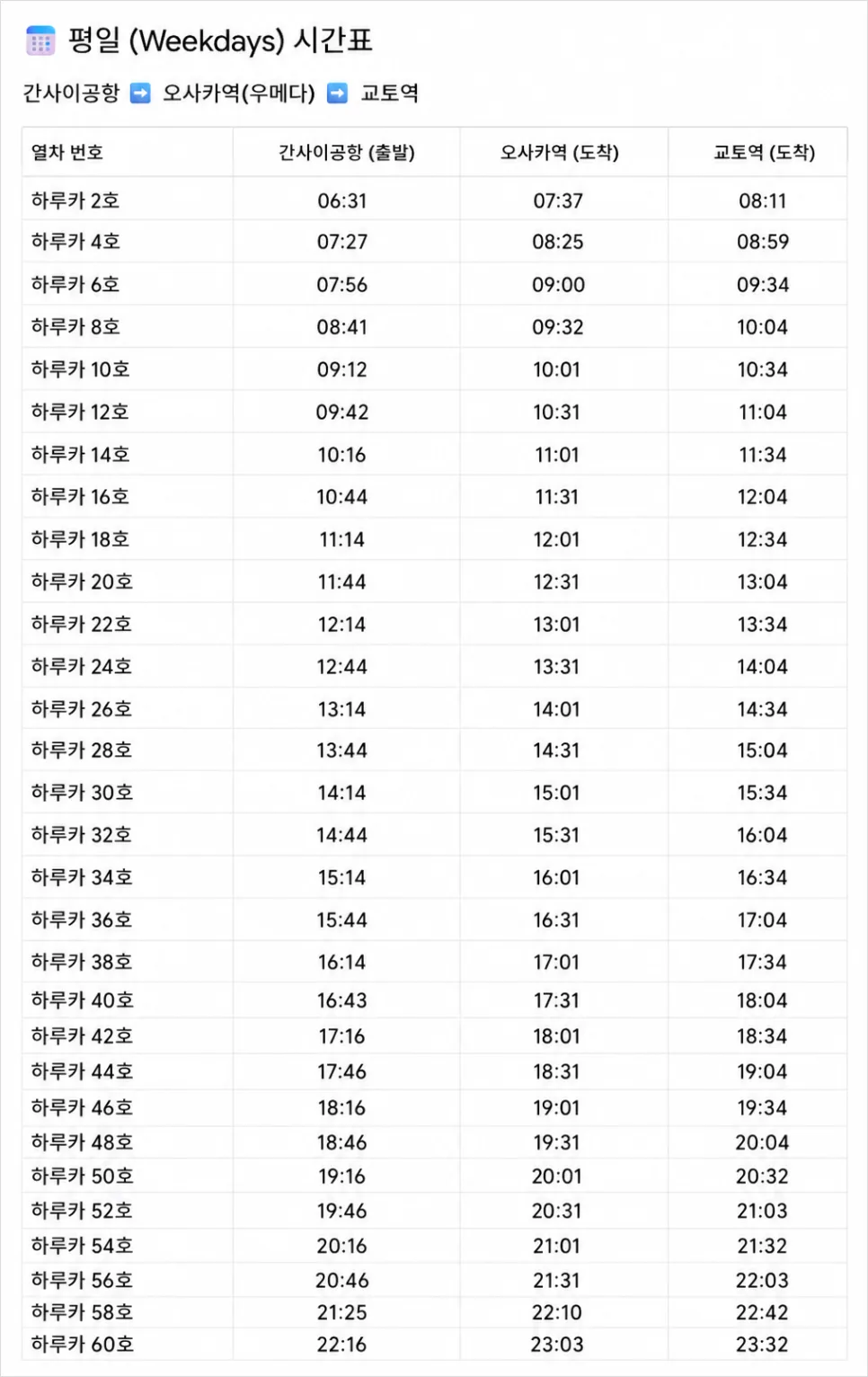
Also, weekday and weekend schedules are different.
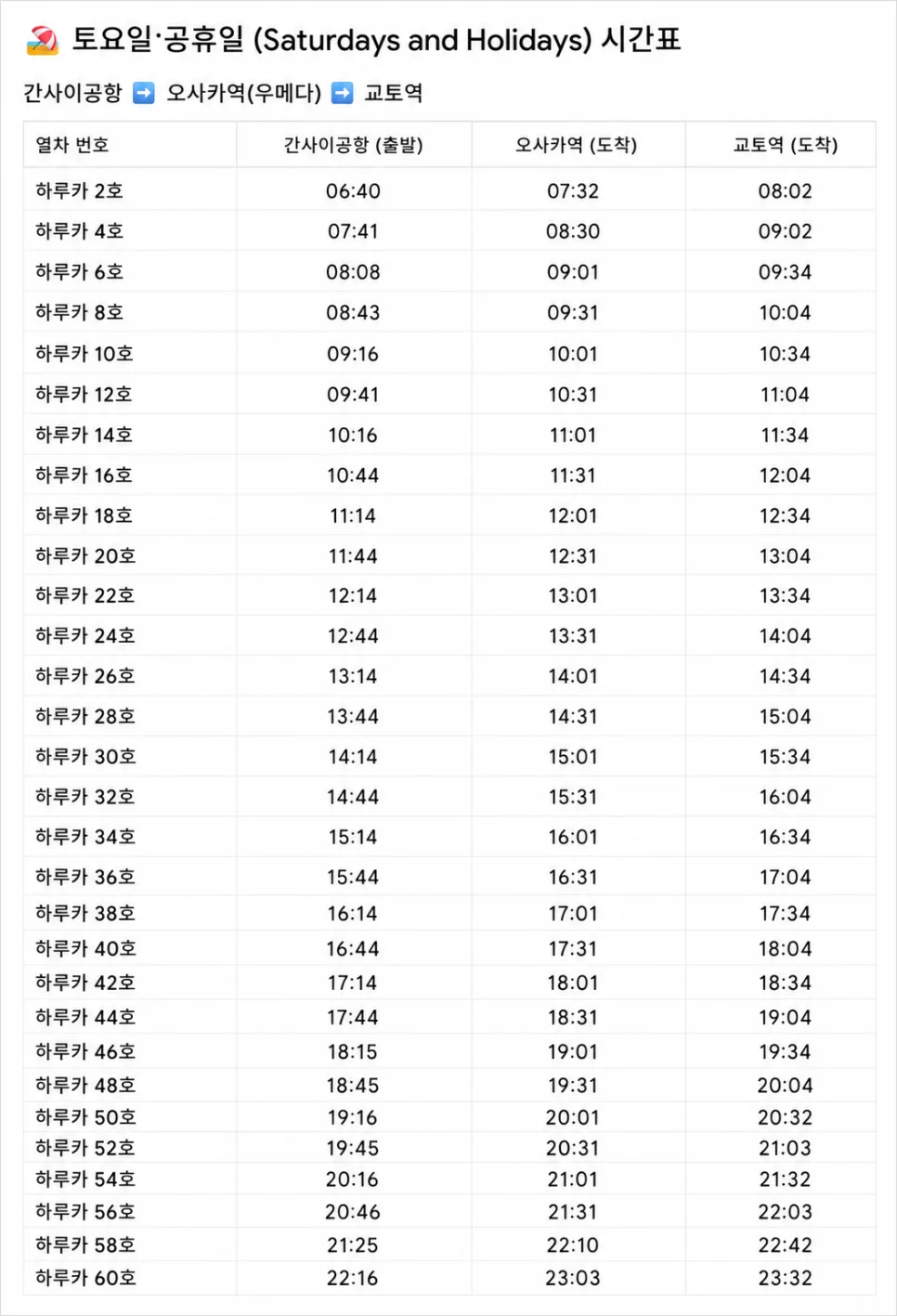
I’d recommend saving a screenshot of the timetable image and checking it around the time your flight lands.
How to board the train
Whether you booked in advance or bought your ticket on site, once you have your ticket, you’re ready to board.
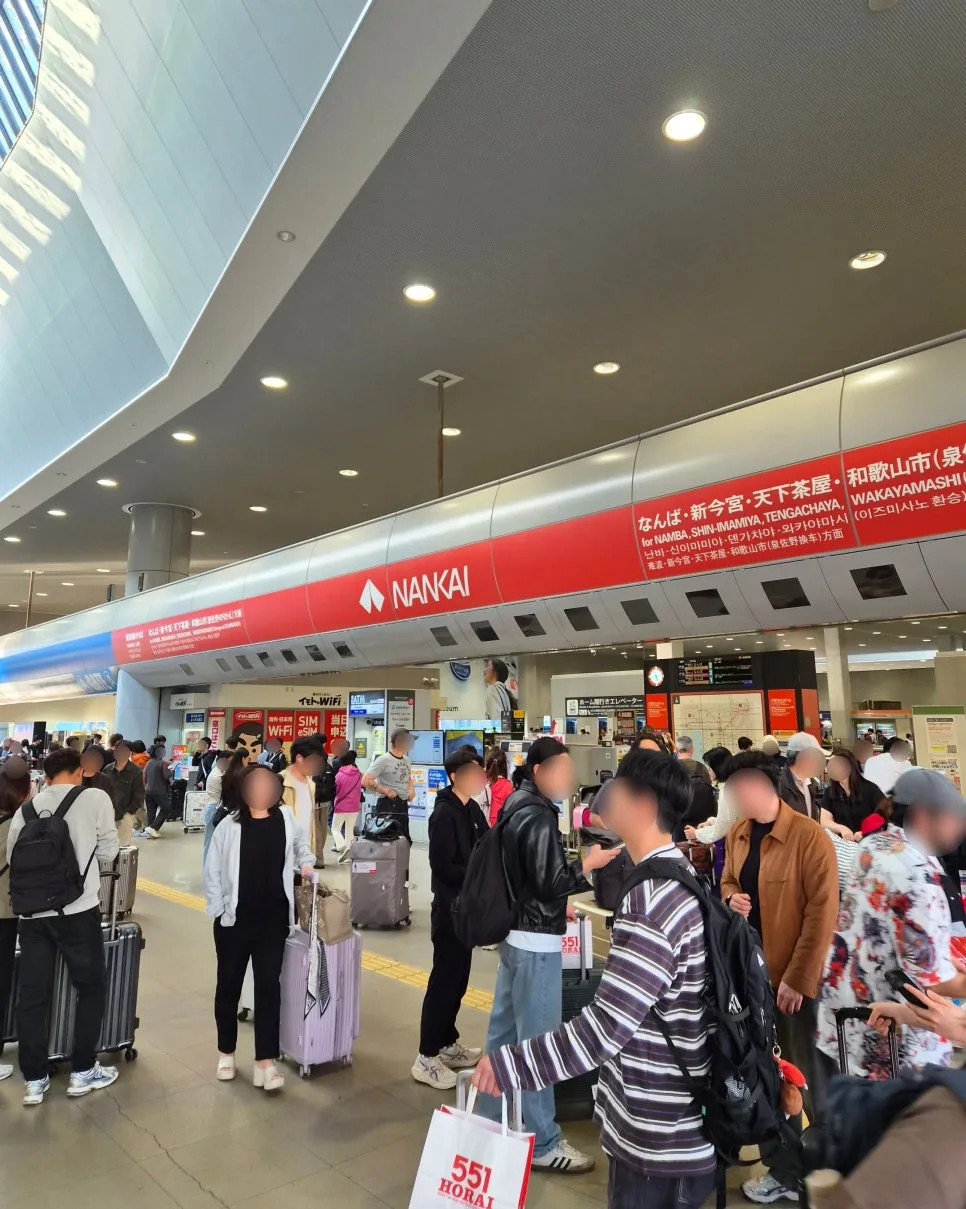
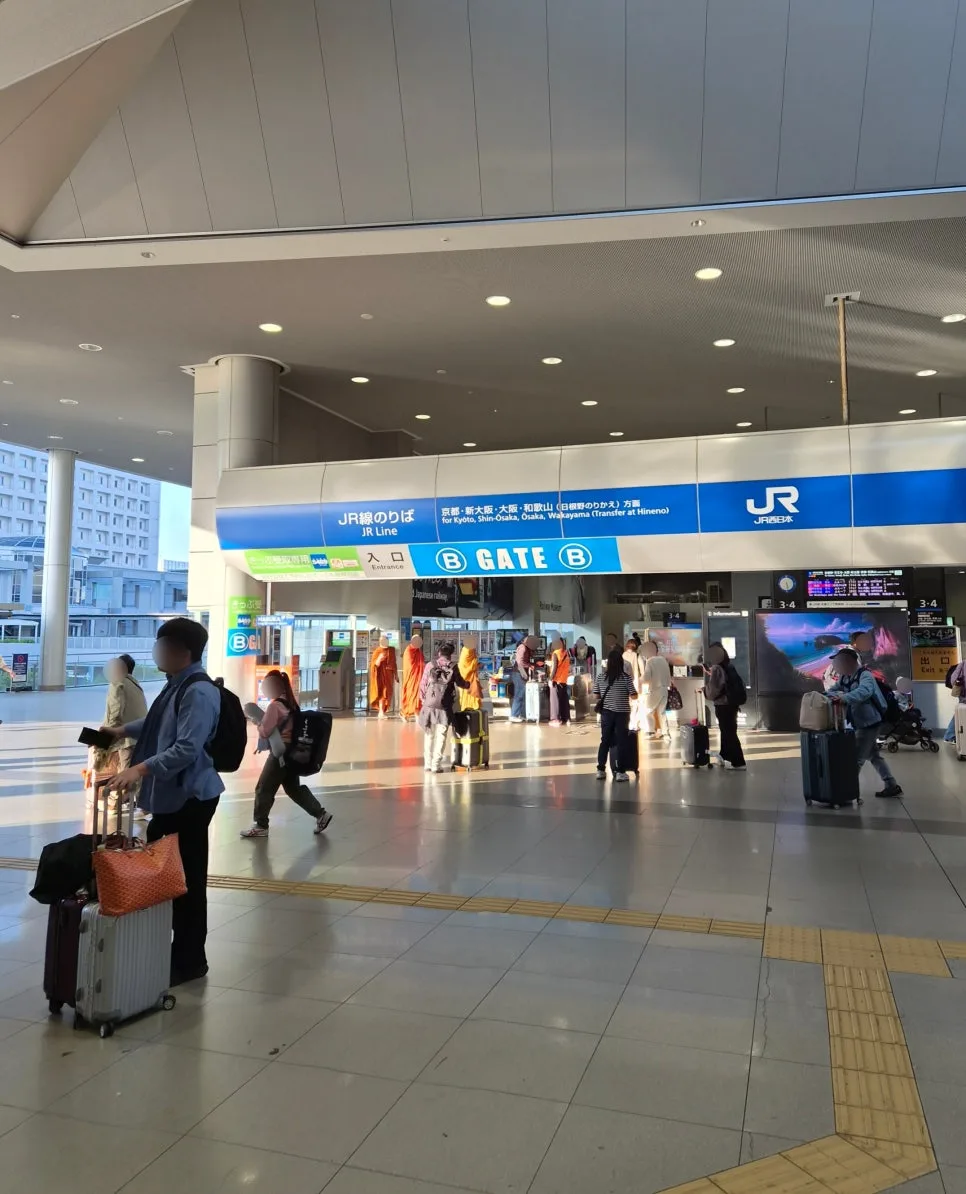
The entrance to the platforms is directly across from the ticket office. An easy way to remember it: red is Nankai Railway for the Rapi:t, and blue is JR for the Haruka.
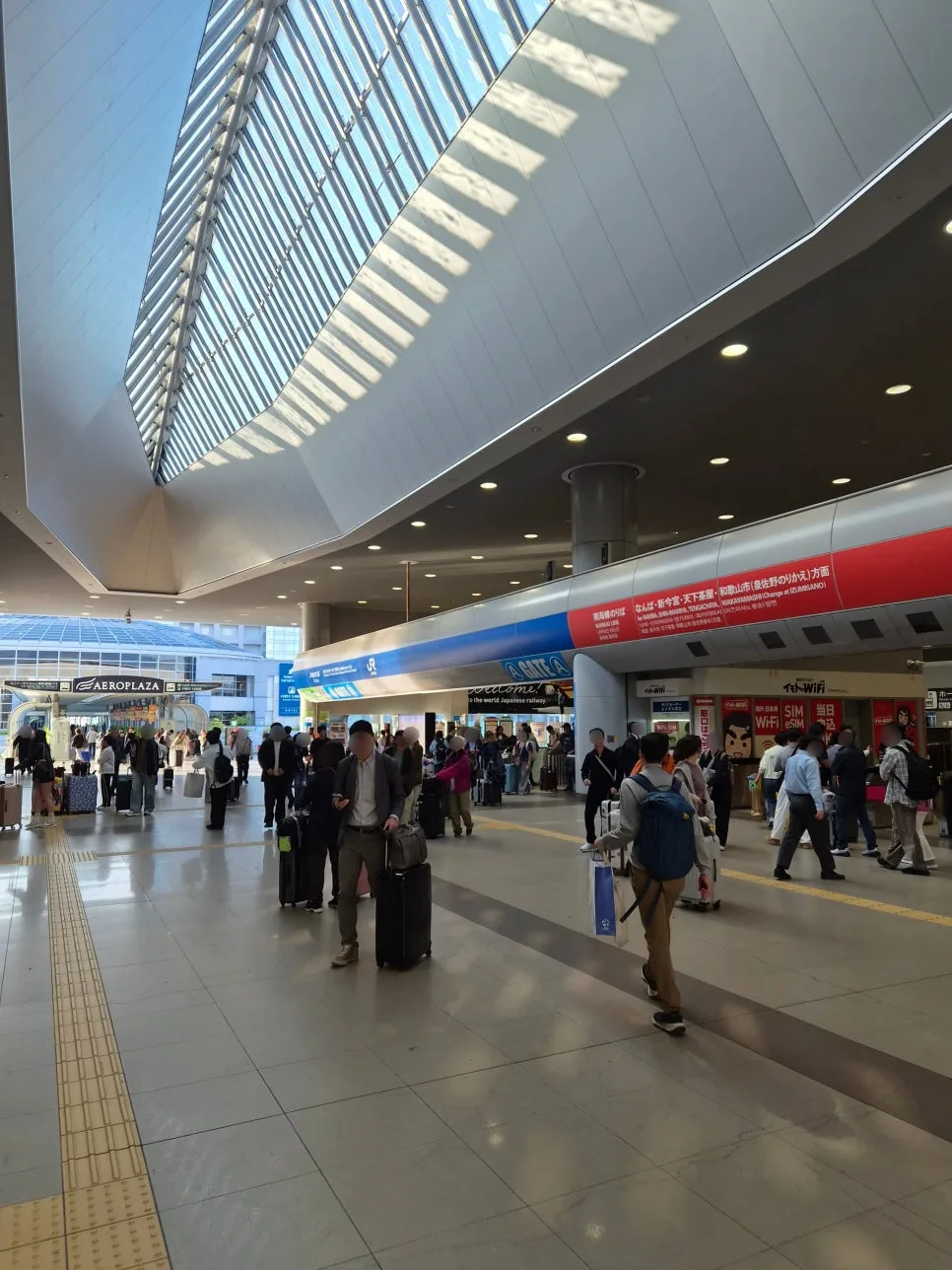
If you’re taking the Haruka, follow the blue signs.
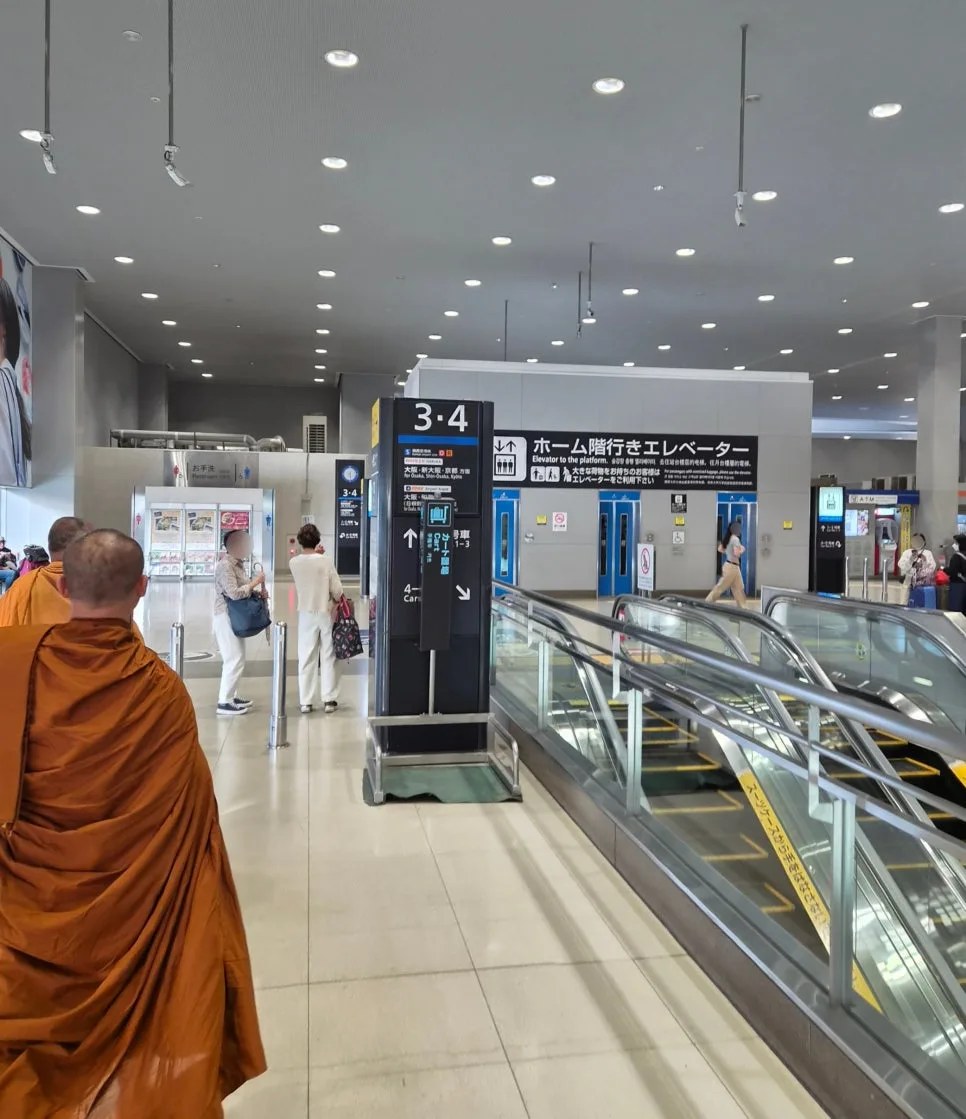
The JR Haruka platform at Kansai Airport is Platform 4. Platform 3 is for the Kansai Airport Rapid Service.
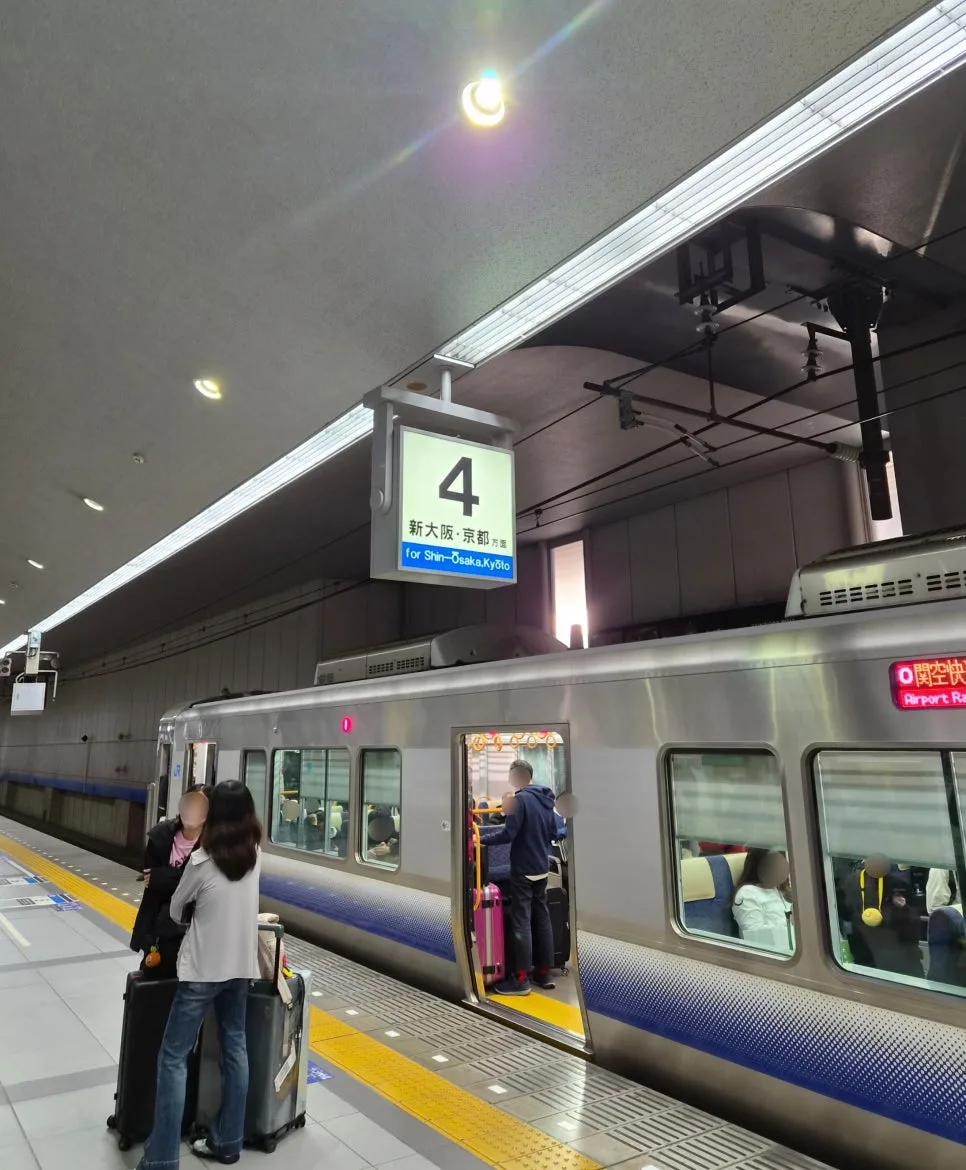
You might look at Platform 4 and see a regular rapid train sitting there instead of the Haruka. That happens sometimes, so don’t panic—just wait.
The Haruka train will pull in right on schedule according to the timetable.
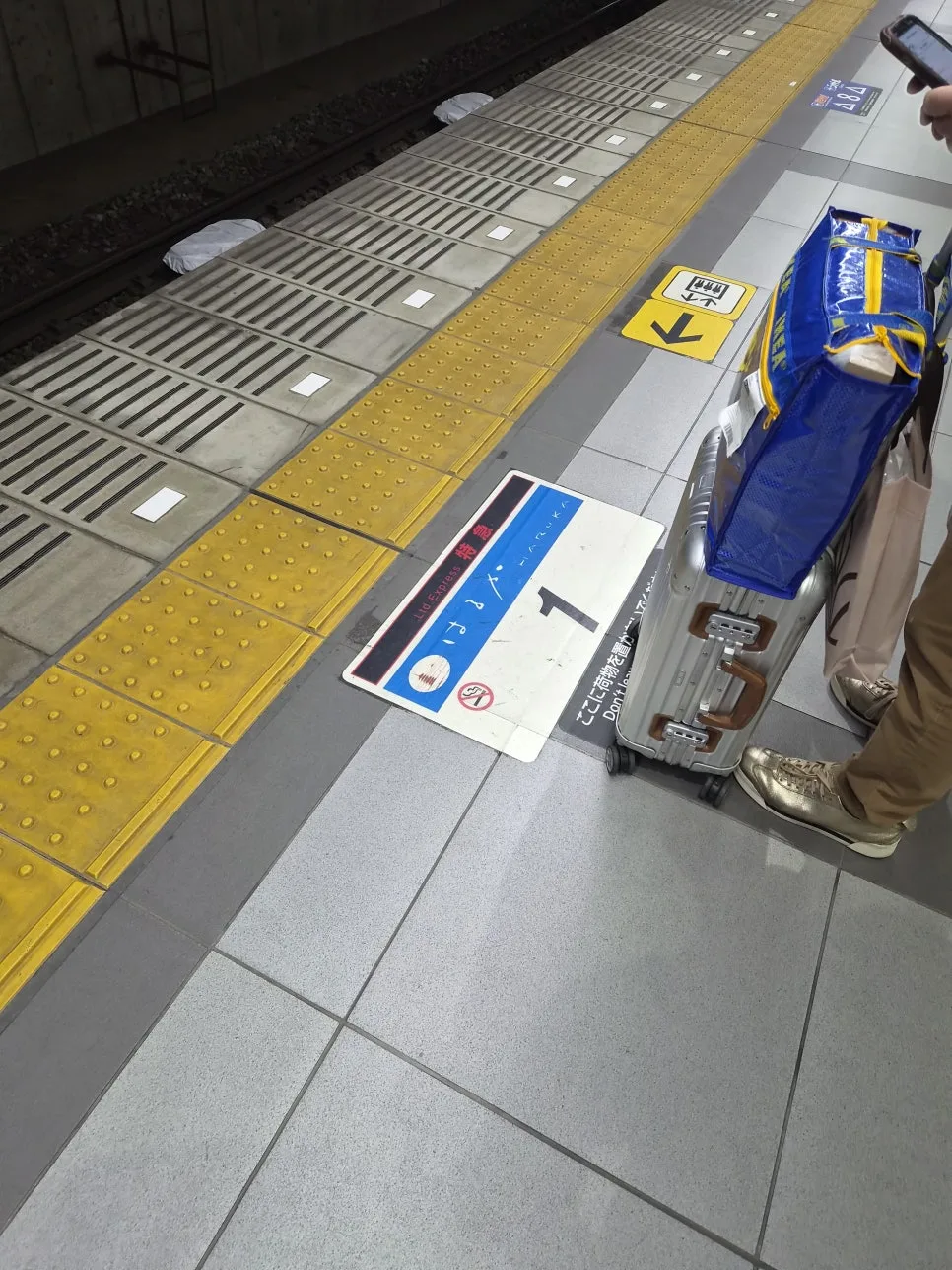
The car numbers are marked on the platform floor, so you can wait in advance at the correct car.
For reference, Car 1 is the Green Car (first class), Cars 2–4 are standard reserved seating, and Cars 5–9 are standard non-reserved seating.
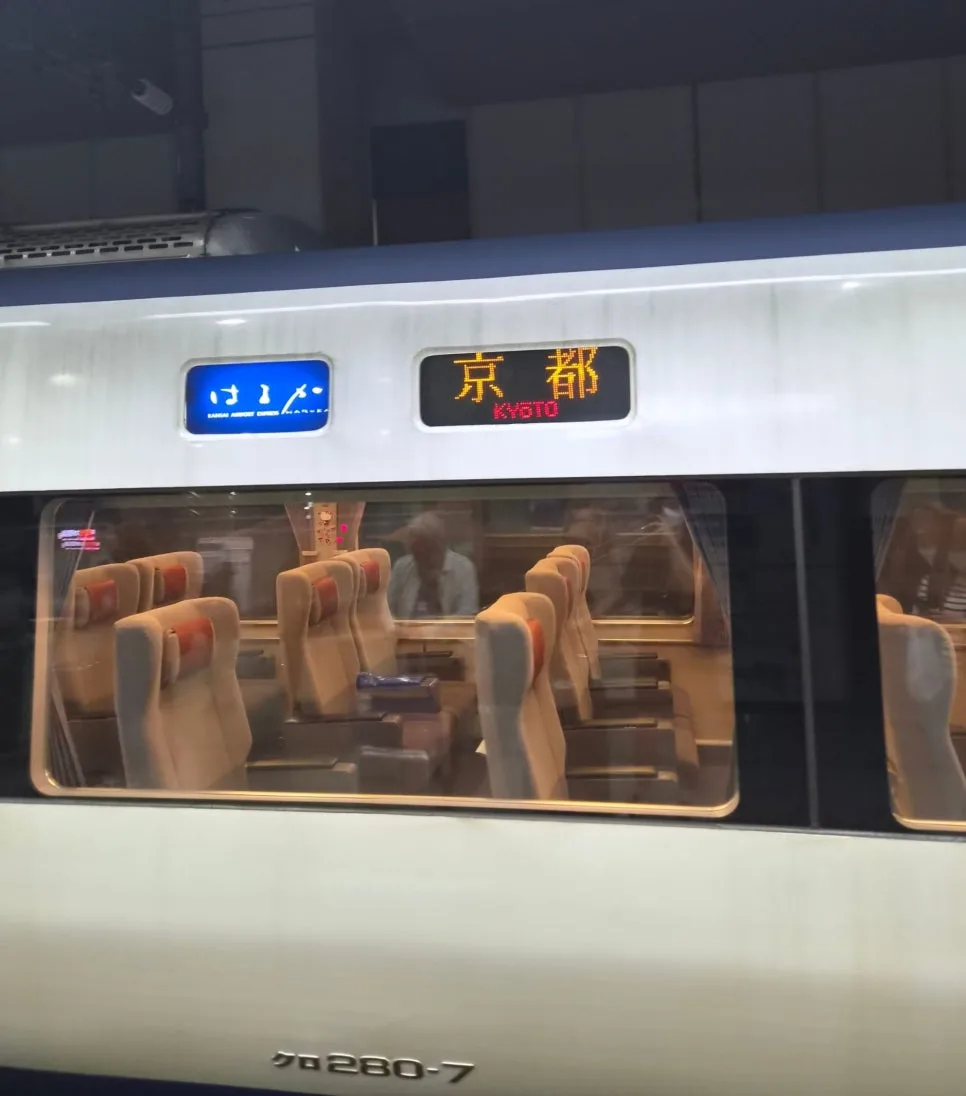
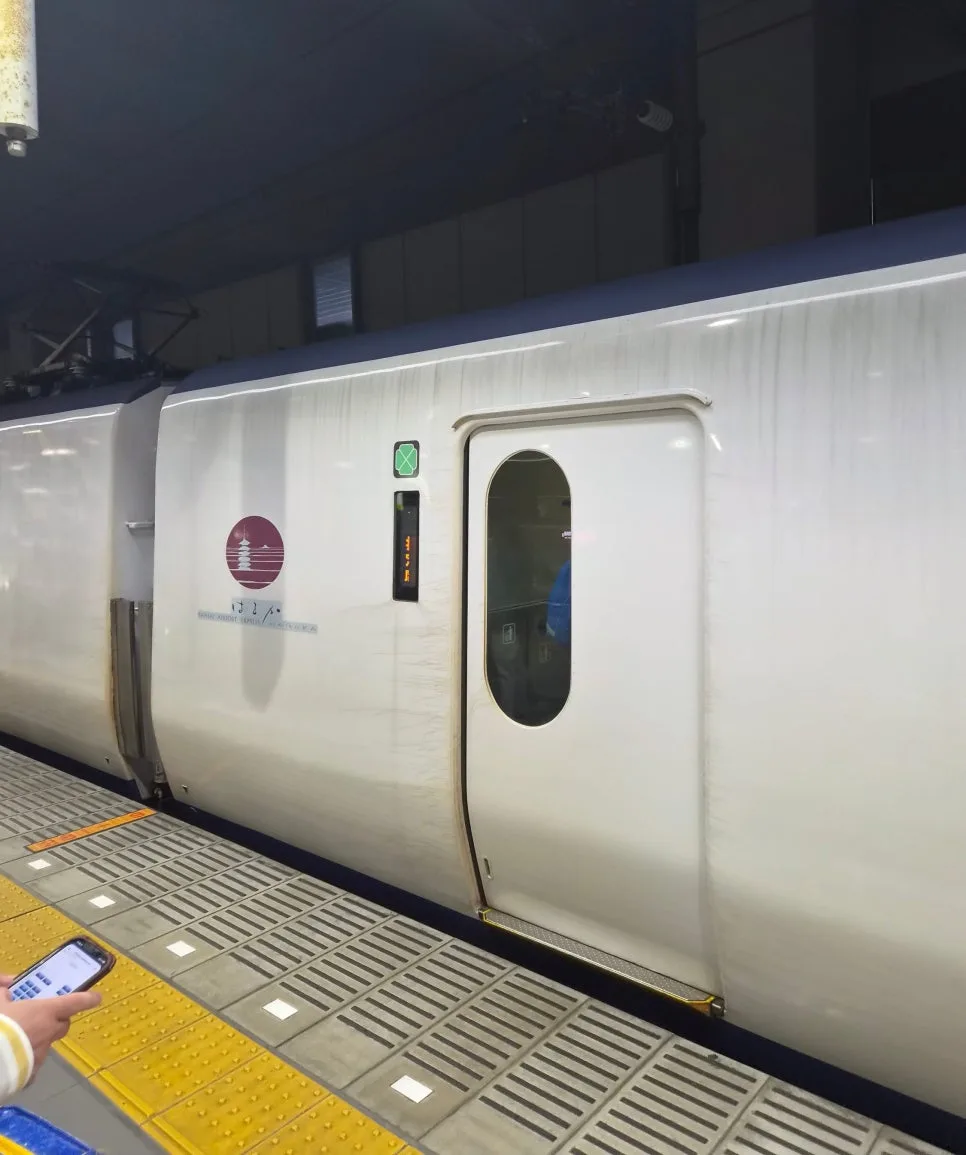
I missed getting a photo of the front of the train, but the Haruka is easy to recognize because it looks very different from the regular commuter trains.
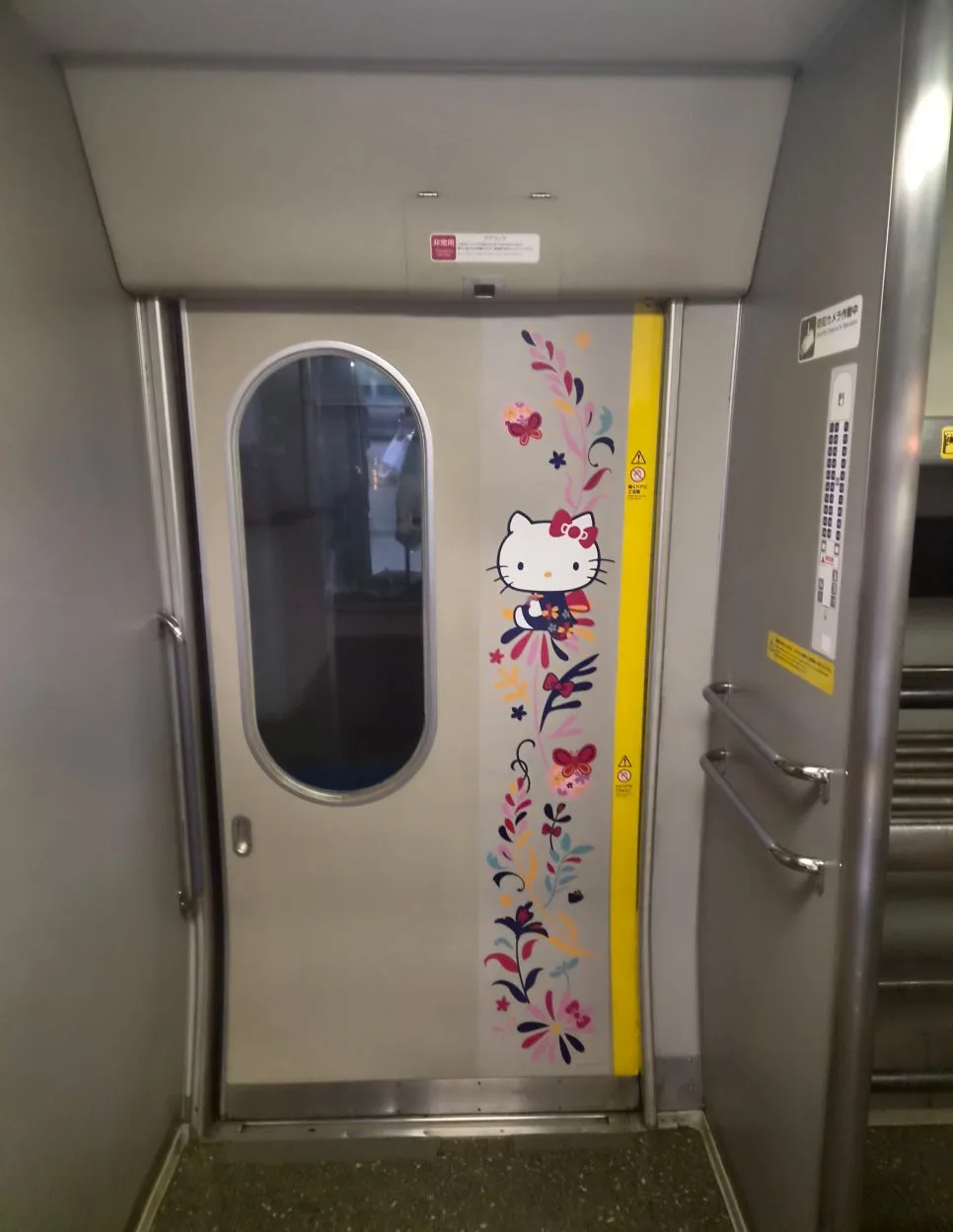
All Haruka trains are decorated with Hello Kitty branding. Some have Hello Kitty on the exterior, while others only have the themed interior.
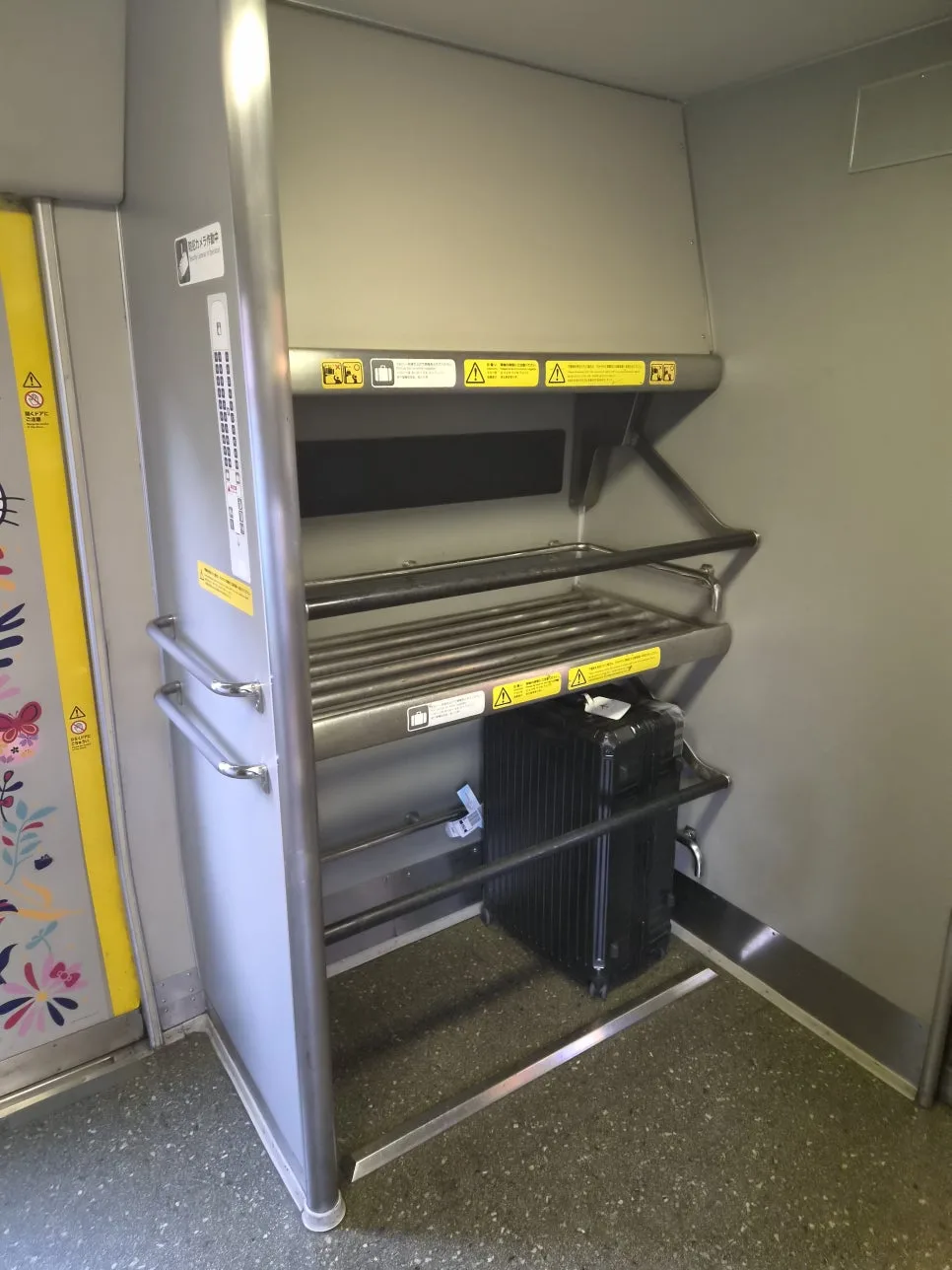
There’s a separate luggage storage area inside, so if you have a large suitcase, it’s best to store it there before heading to your seat.
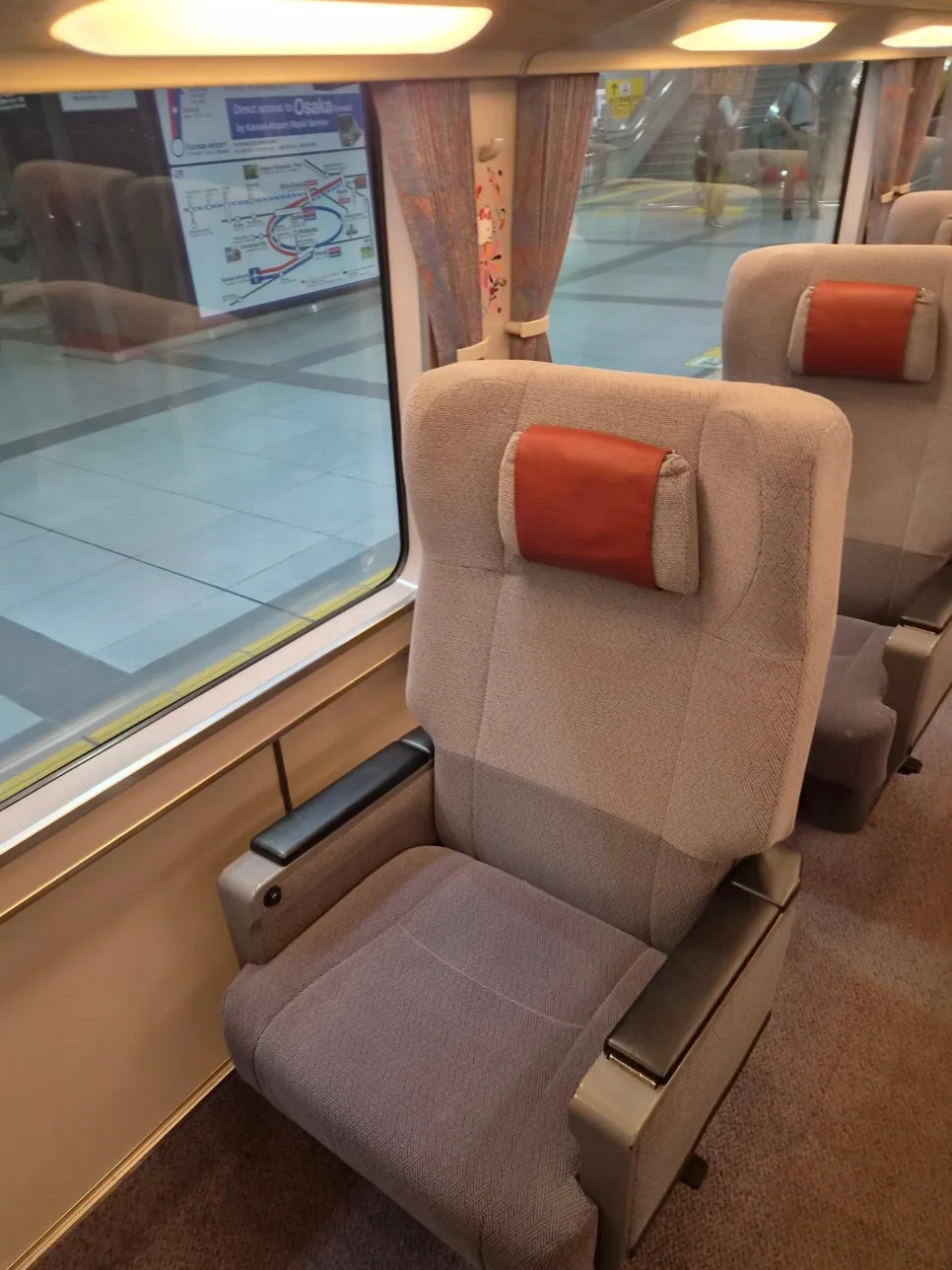
This time, because I was in a rush and forgot to book in advance, I ended up riding in the first-class car.
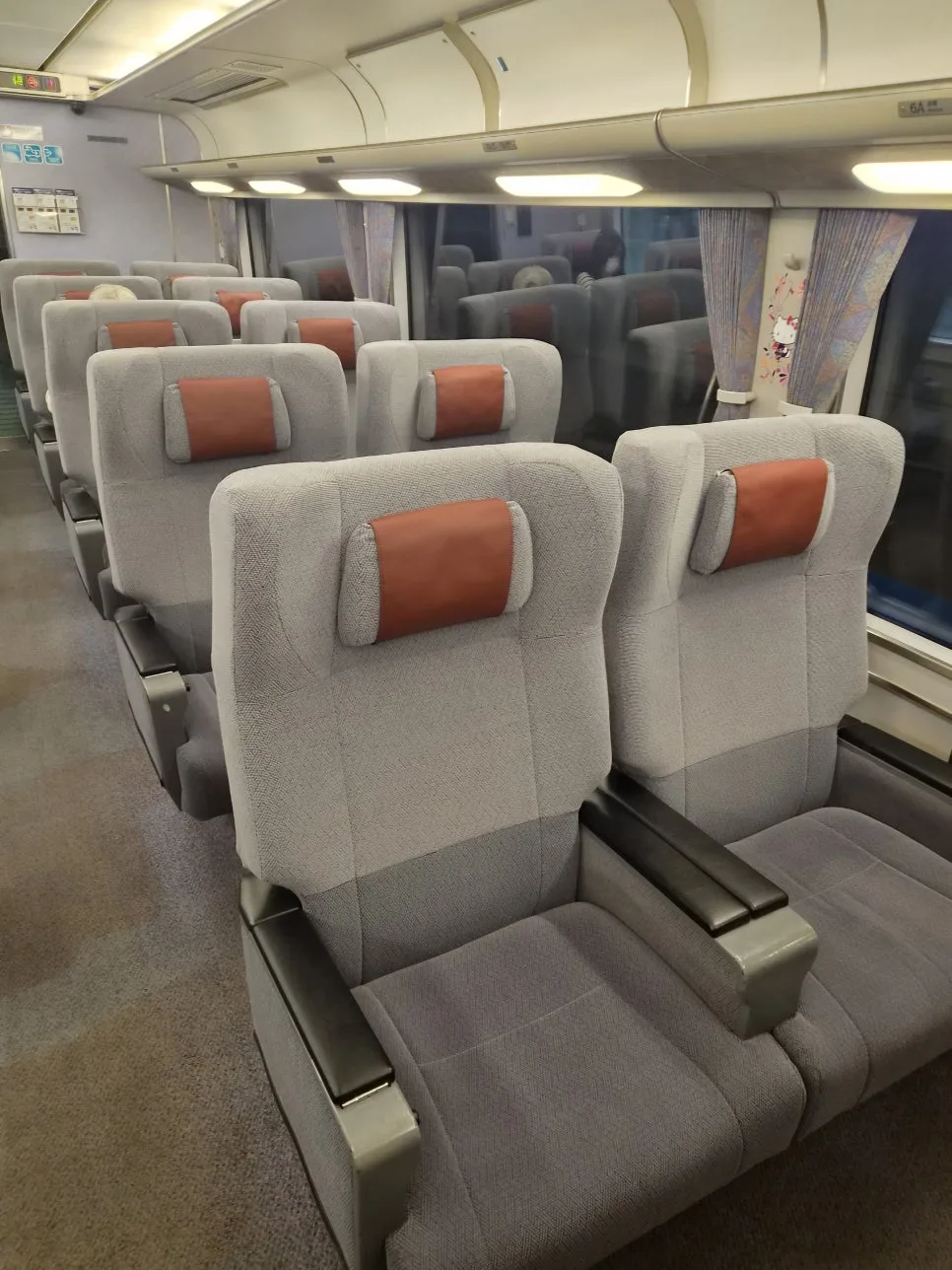
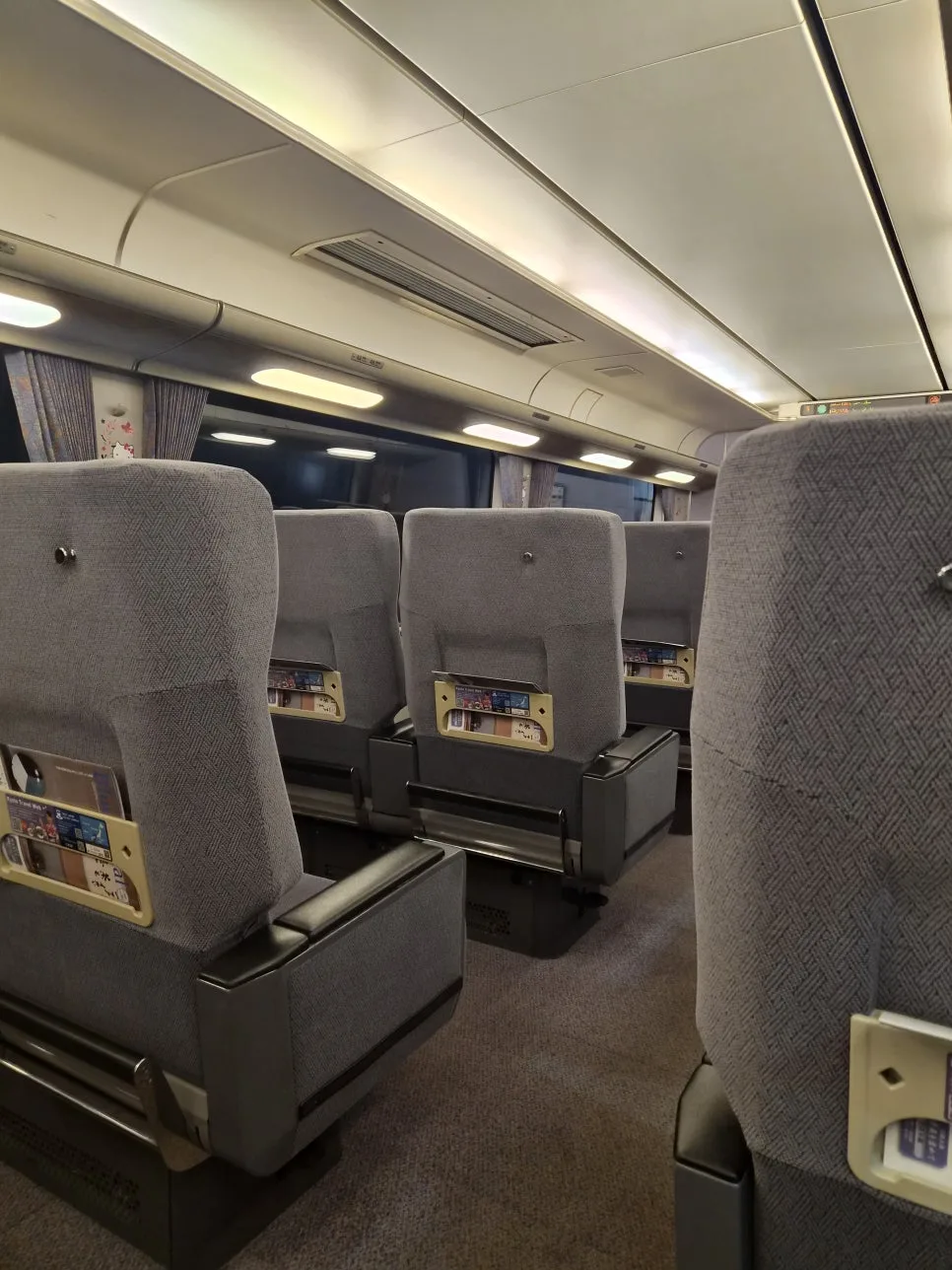
Standard cars have a 2-2 seat layout, while the first-class car is arranged 1-2, so it feels roomier and more comfortable.
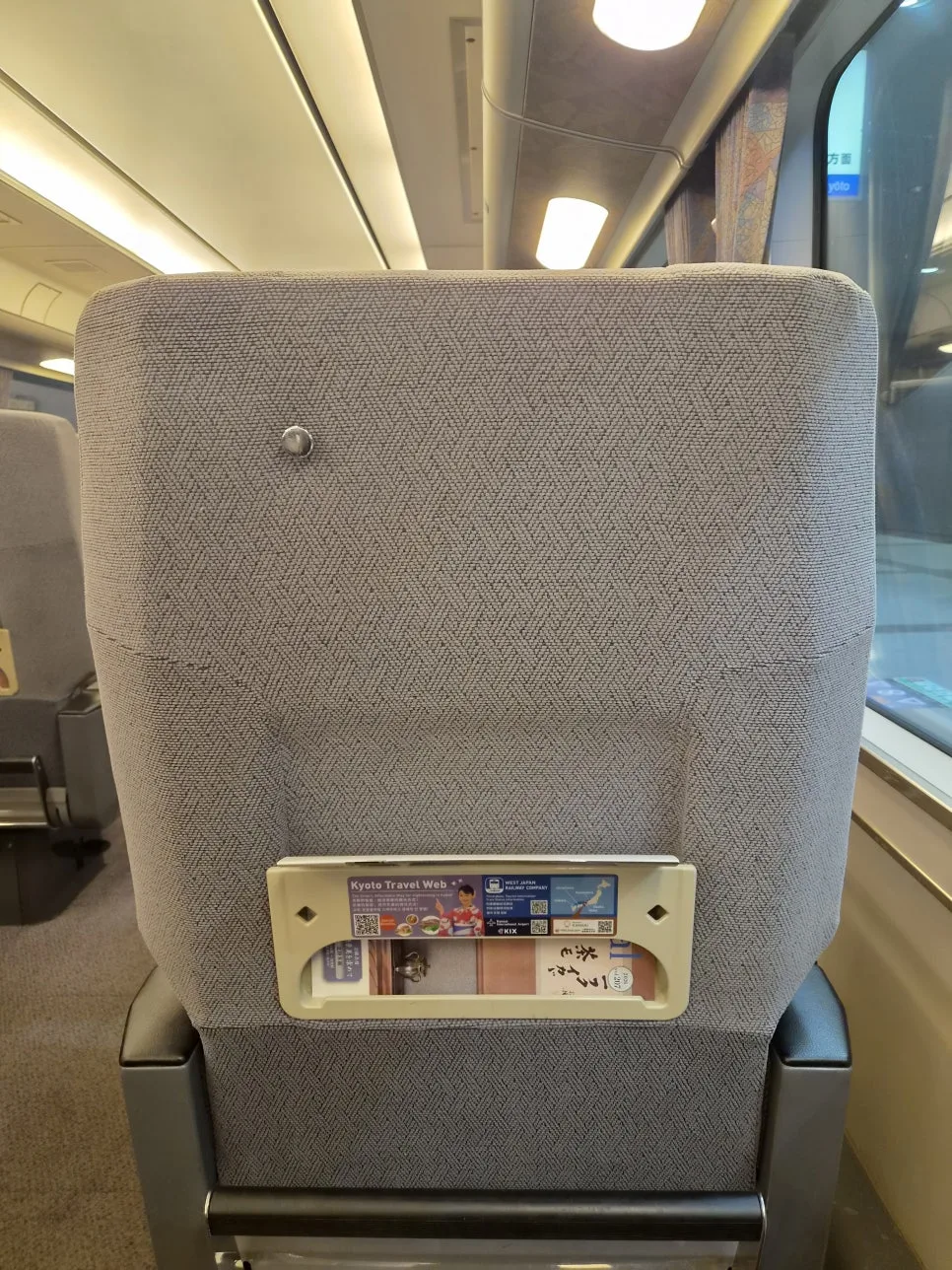
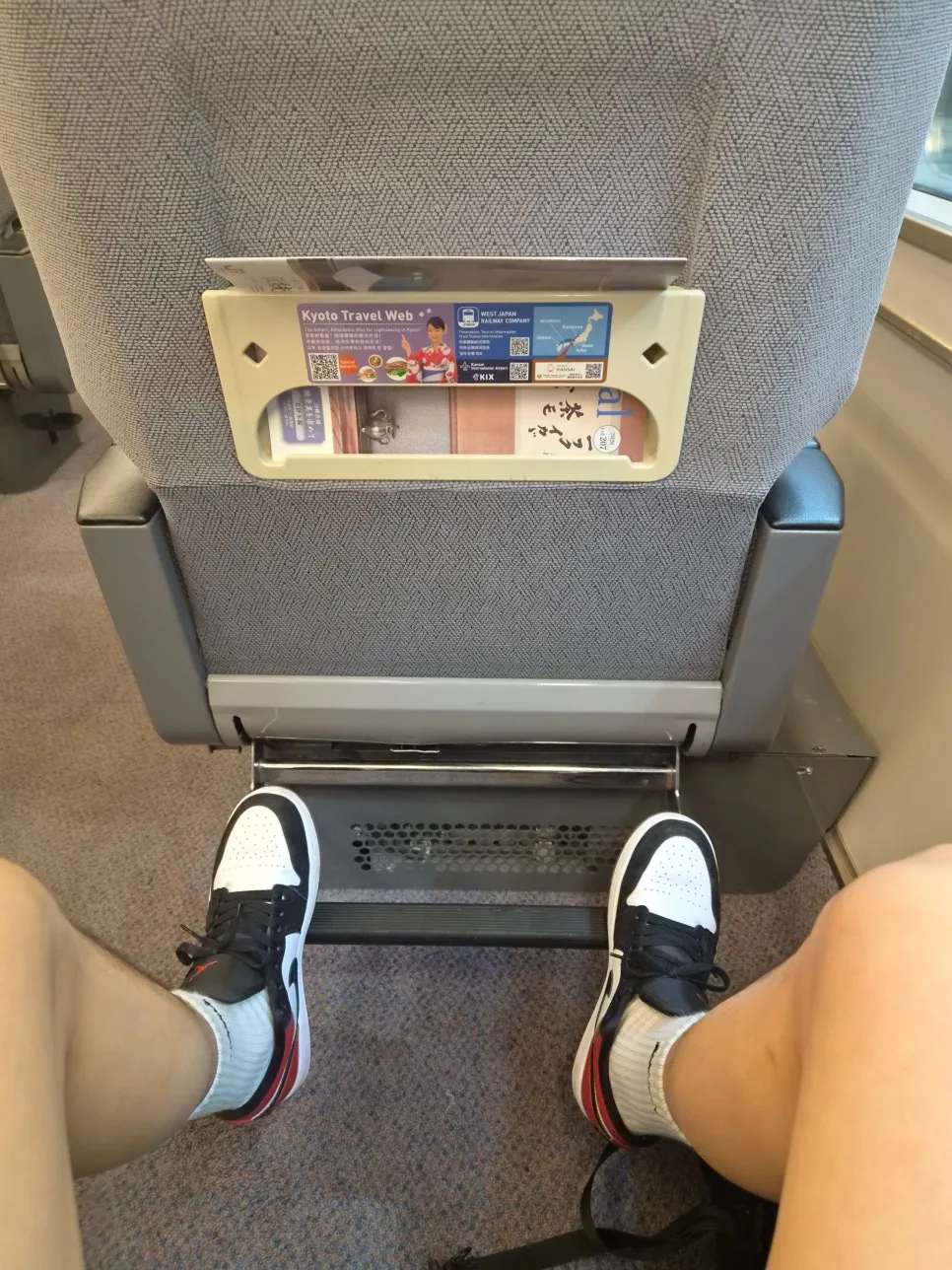
There’s also a bag hook and a footrest, which made the ride even more comfortable. Since it’s a train, it also feels smoother than a bus and much less likely to make you carsick.
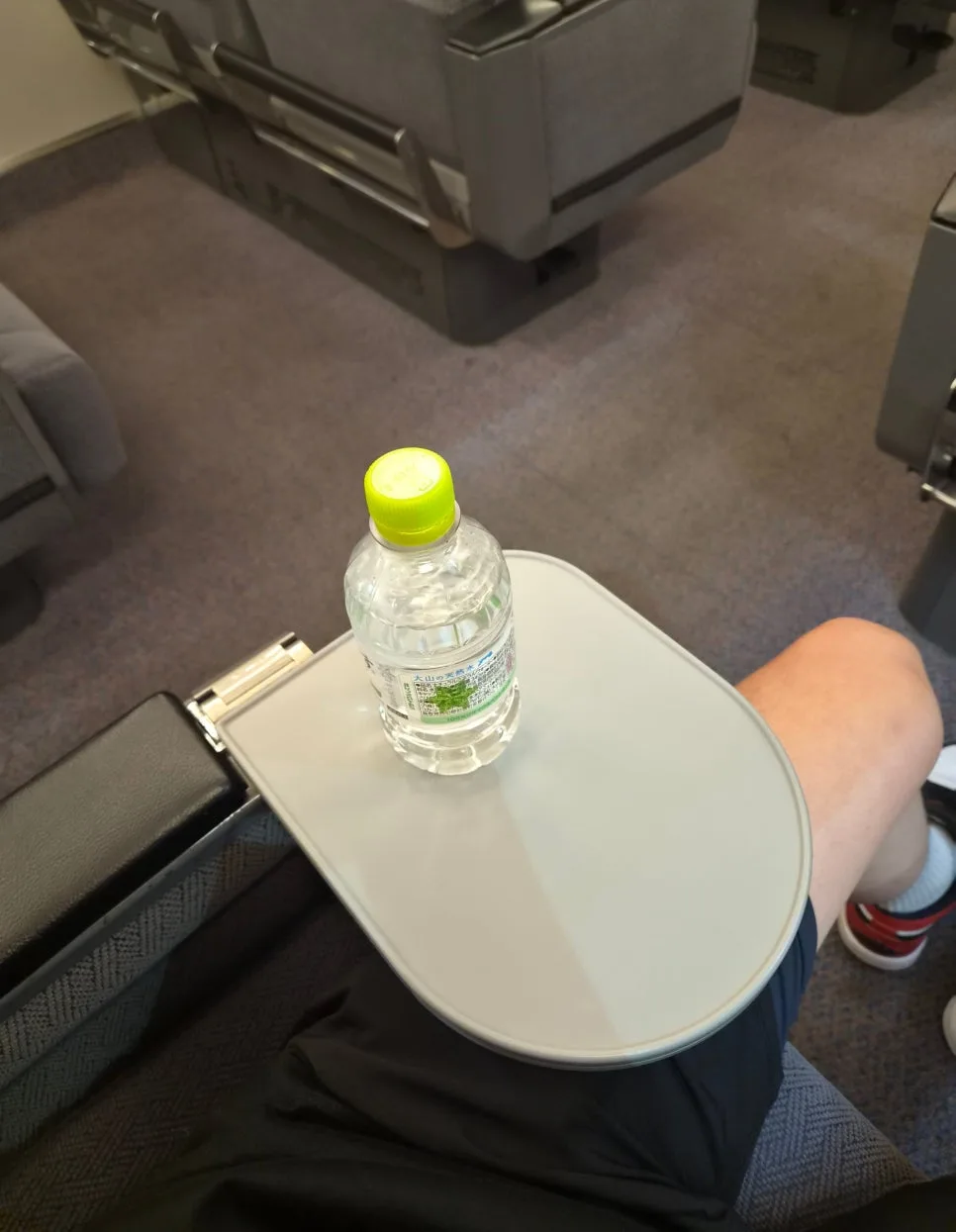
You can even pull out a small table from the armrest.
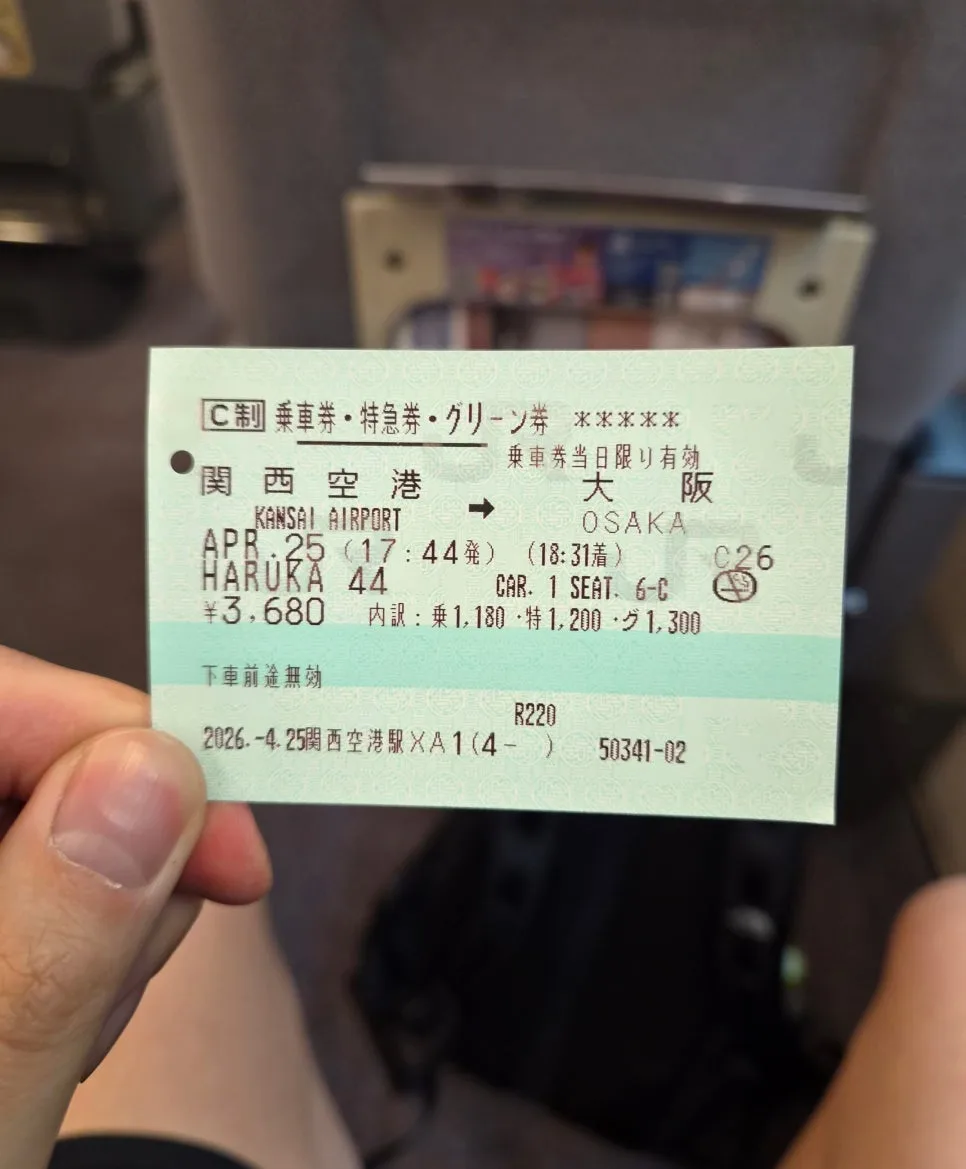
This time I booked a hotel in Umeda, so I got off at Osaka Station. If Umeda is your destination, check in advance whether your hotel is closer to Osaka Station or Shin-Osaka Station before deciding where to get off.
The fare to Osaka Station and Shin-Osaka Station is the same, so you can get off at whichever one is more convenient.
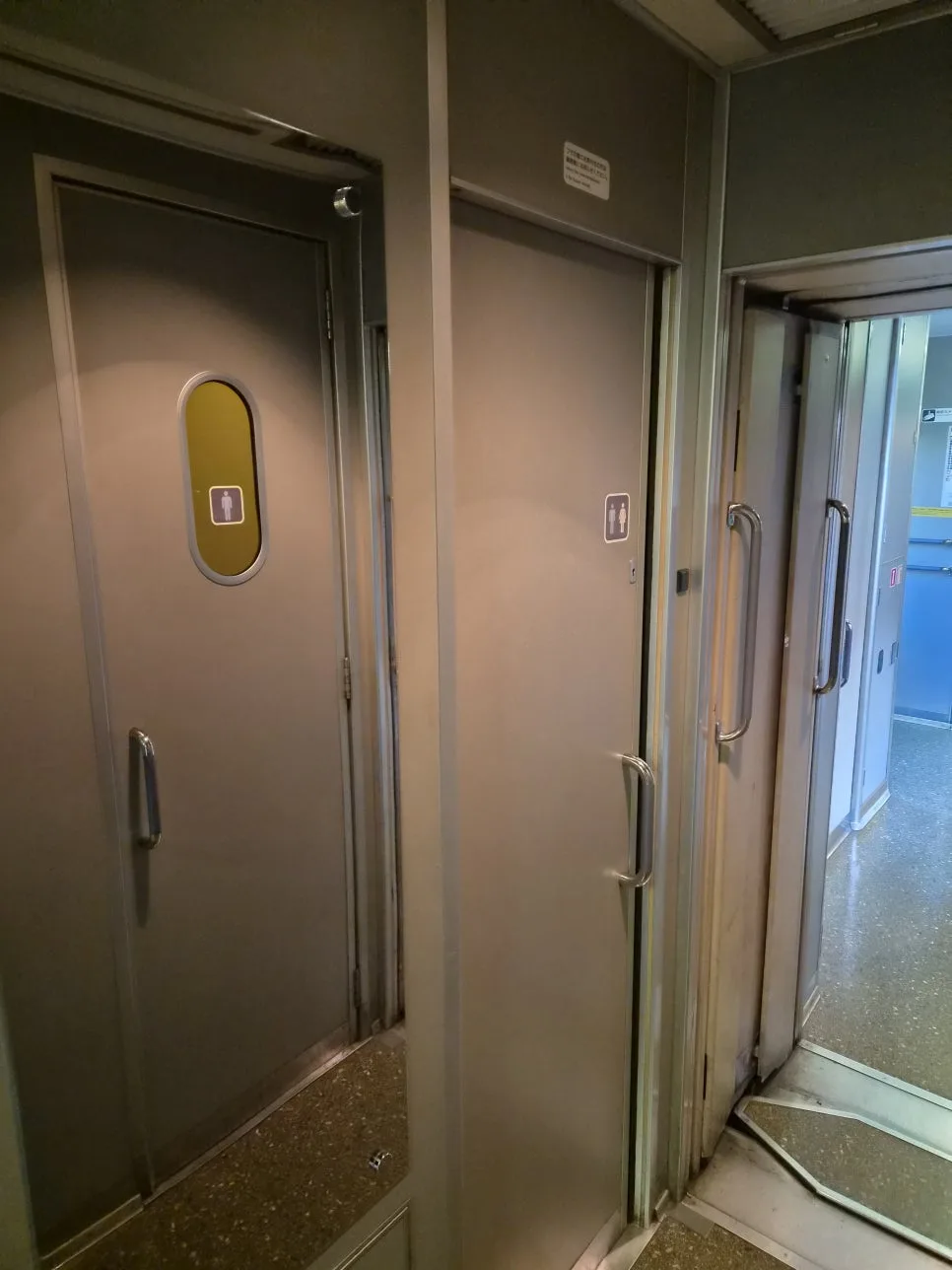
There are several restrooms on the train as well. You’ll see signs throughout the cars showing where the facilities are, so it’s easy to use them during the ride.
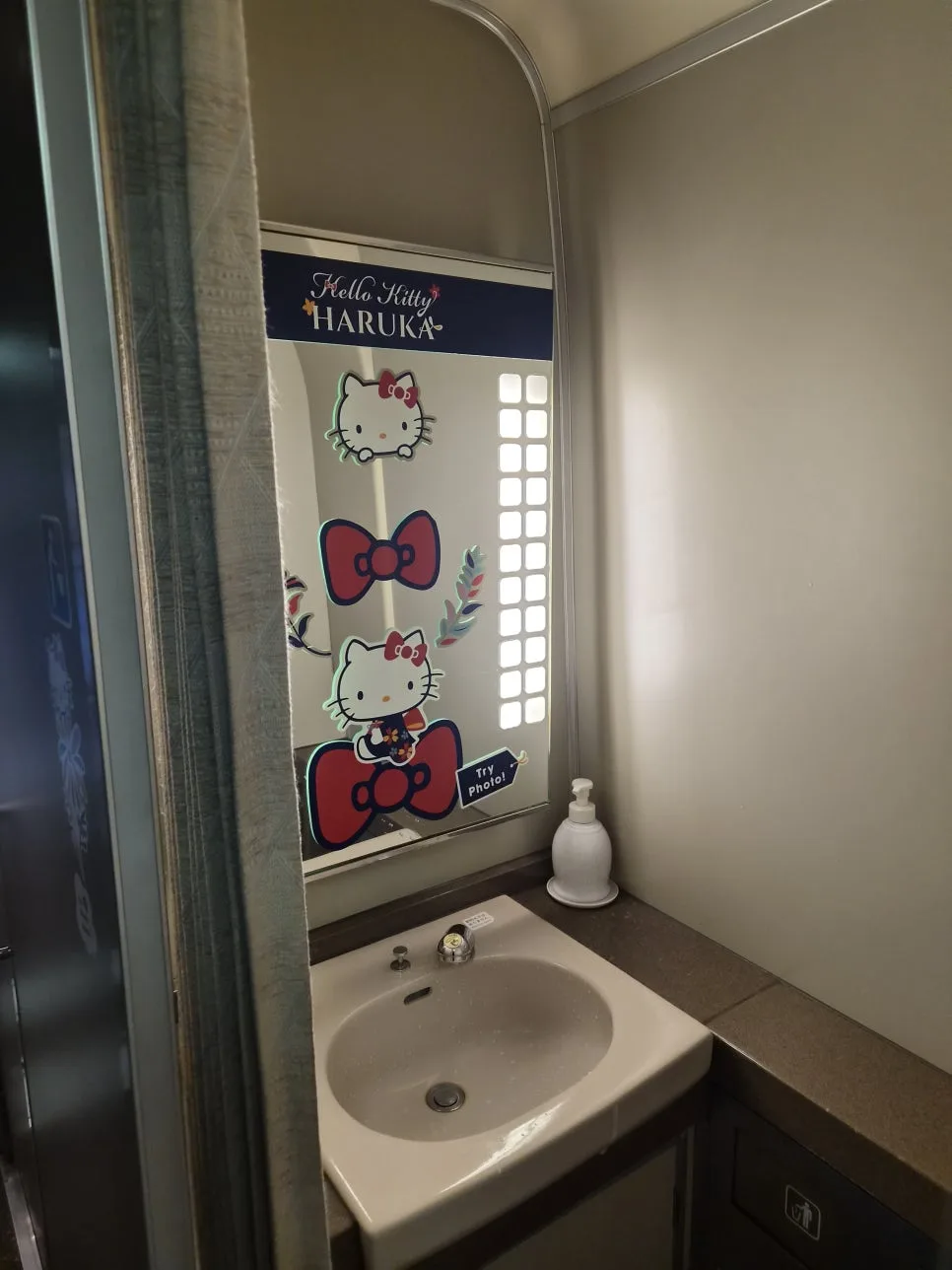
Even the restroom has Hello Kitty touches.
I know this sounds like a lot when written out, but once you actually use it, the process feels very straightforward—pretty similar to taking a train in Korea. Just don’t forget to book your ticket on Klook in advance.