ReFa brush Osaka review: where to buy the ReFa brush and tail comb in Osaka, Japan
ReFa is one of Japan’s best-known premium haircare brands.
This is my honest, bought-it-myself ReFa review.
In Korea, the brand really took off thanks to the scalp massager Jennie made famous,
and now that so many people are traveling to Japan,
I’ve started seeing more and more people back home
using the ReFa brush too.
I’ve been through pretty much every “good” hairbrush over the last 15 years—Tangle Teezer, Aveda, Kent,
you name it—so once I found out about the ReFa brush,
it stayed on my wishlist for a long time.
Then I had a trip to Osaka coming up,
so I stopped by an official ReFa store in Japan and bought it in person.
If you’re planning a Japan trip, definitely save this as a shopping list idea.
Official ReFa offline stores in Osaka
include the Hankyu Department Store in Umeda, which I visited,
plus Daimaru Shinsaibashi and Kintetsu Department Store.
Some drugstores do carry a few ReFa products,
but they’re different from the department store versions.
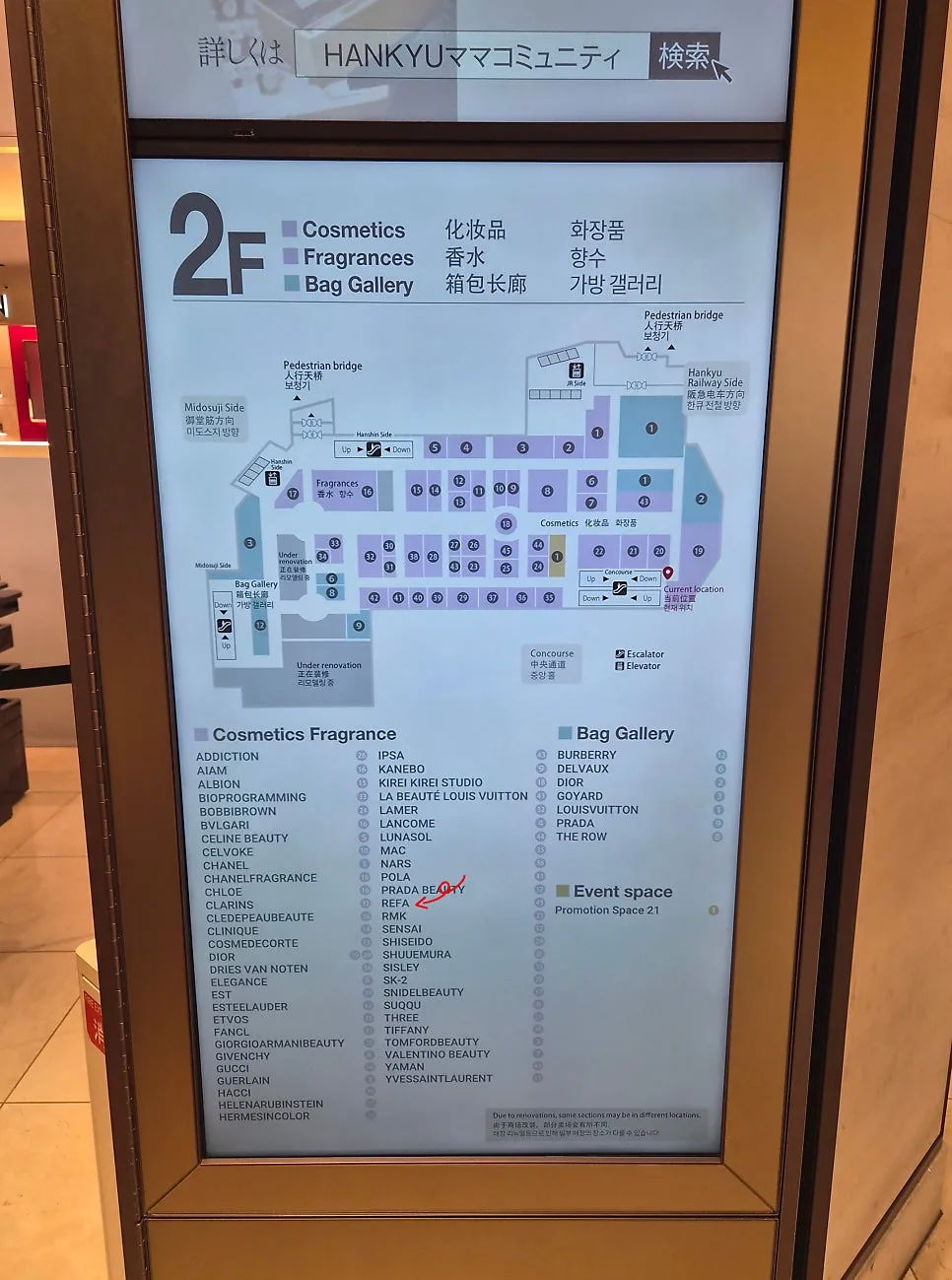
Google Maps says it’s on the 7th floor of Hankyu Umeda,
but in reality, it’s on the 2nd floor.
You’ll find it near the round central rotunda area
in the middle of the floor.
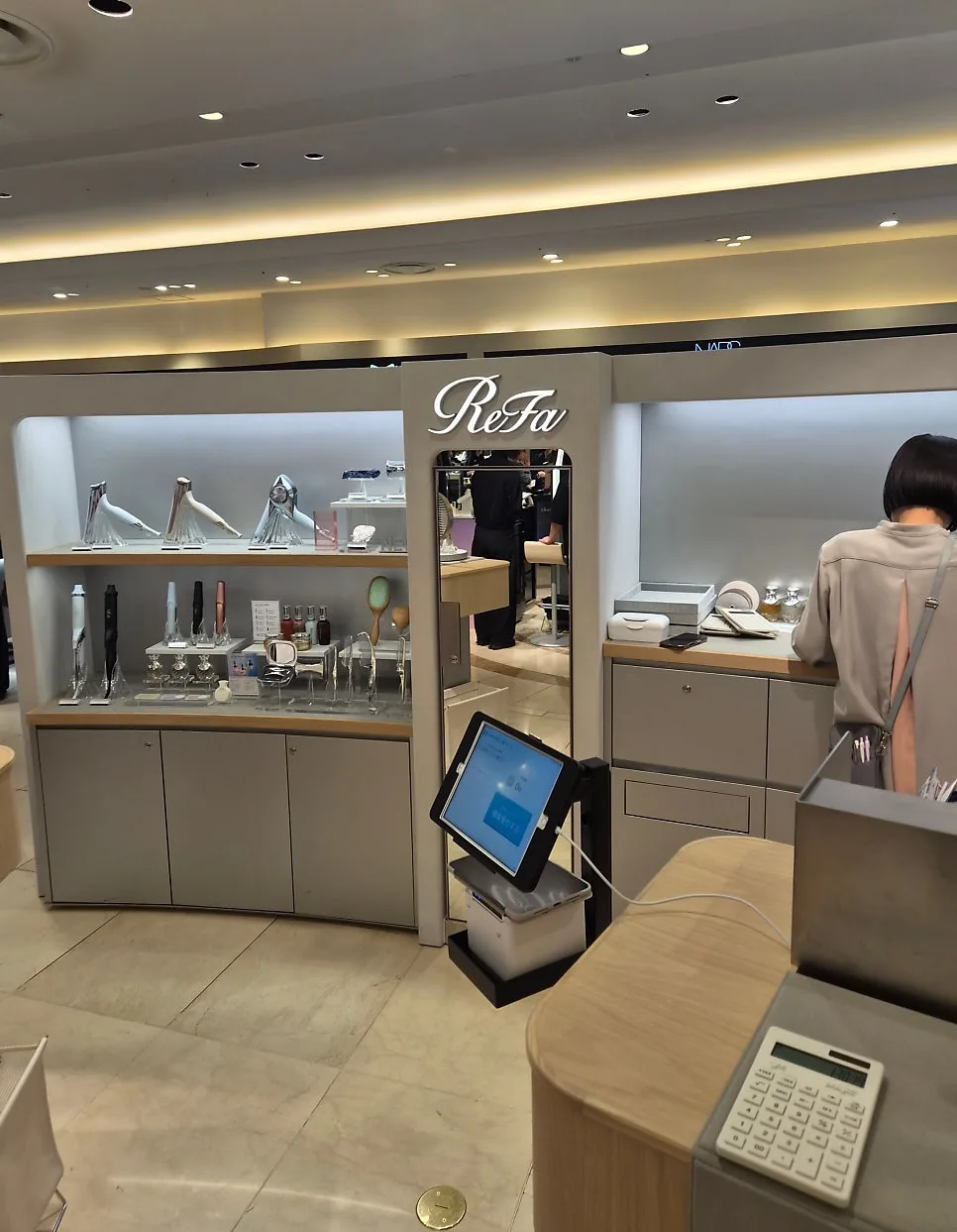
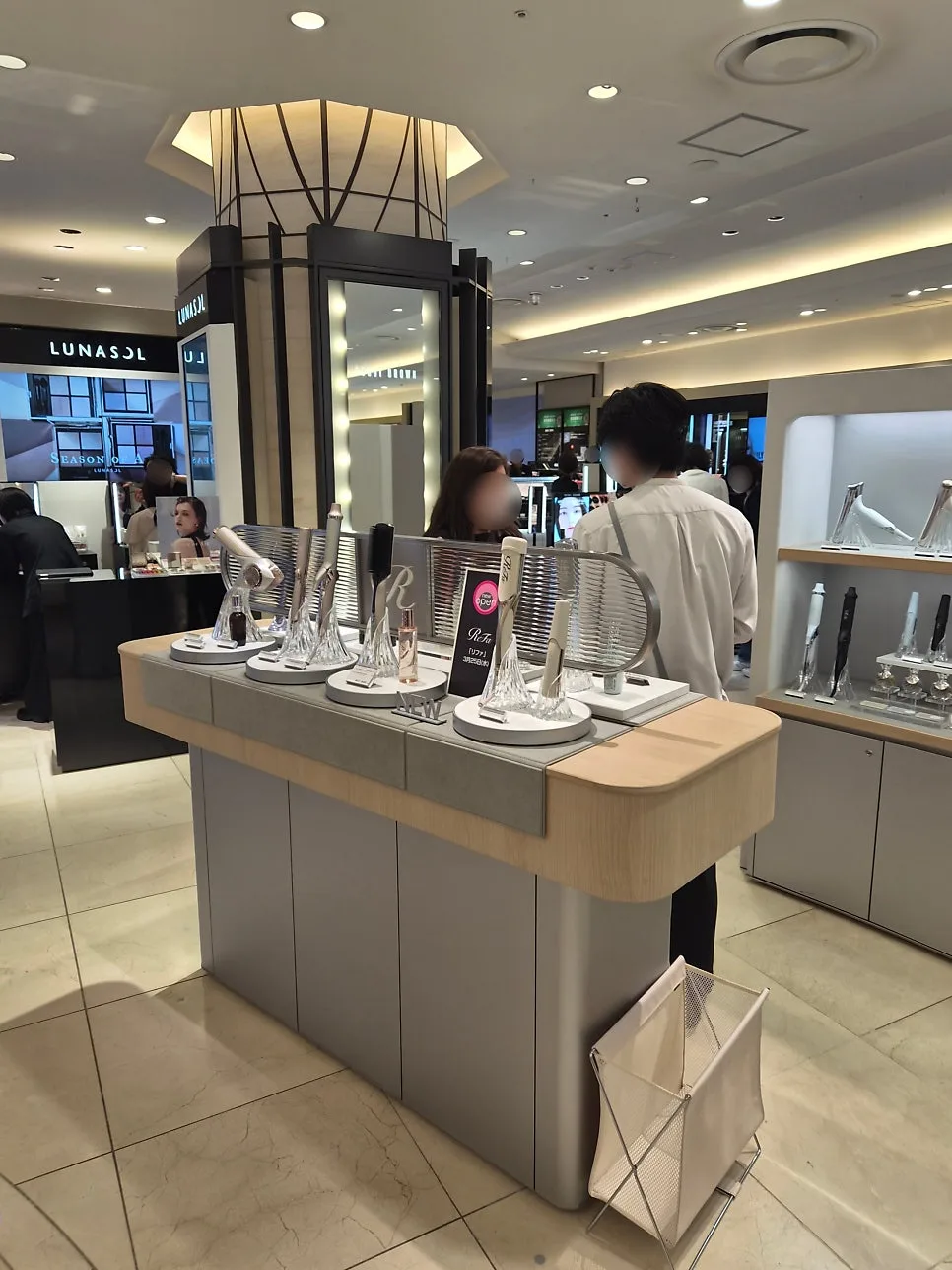
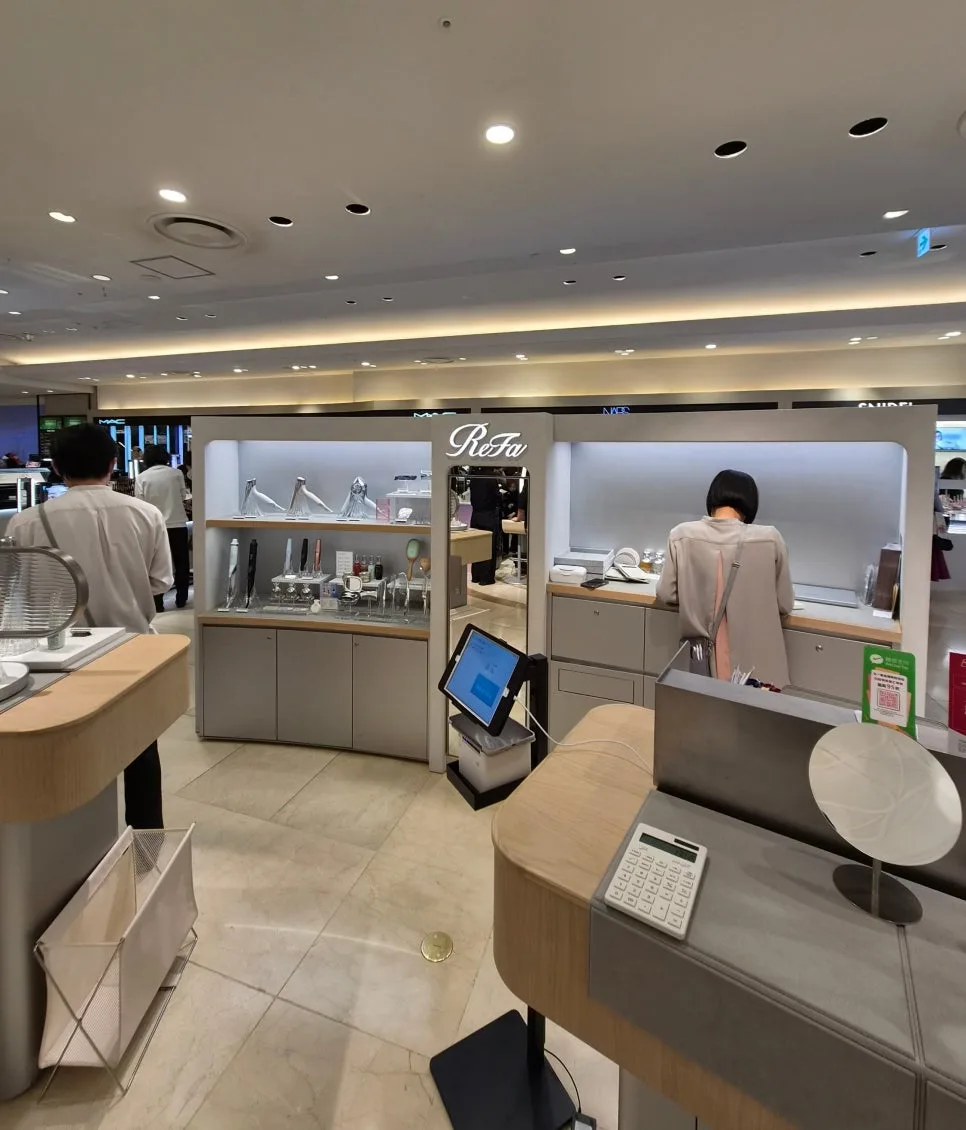
Made it to the ReFa brush section.
The ReFa tail comb and ReFa brush are the stars,
but I’d also heard great things about the hair dryers, straighteners,
and styling products, so I took my time looking around.
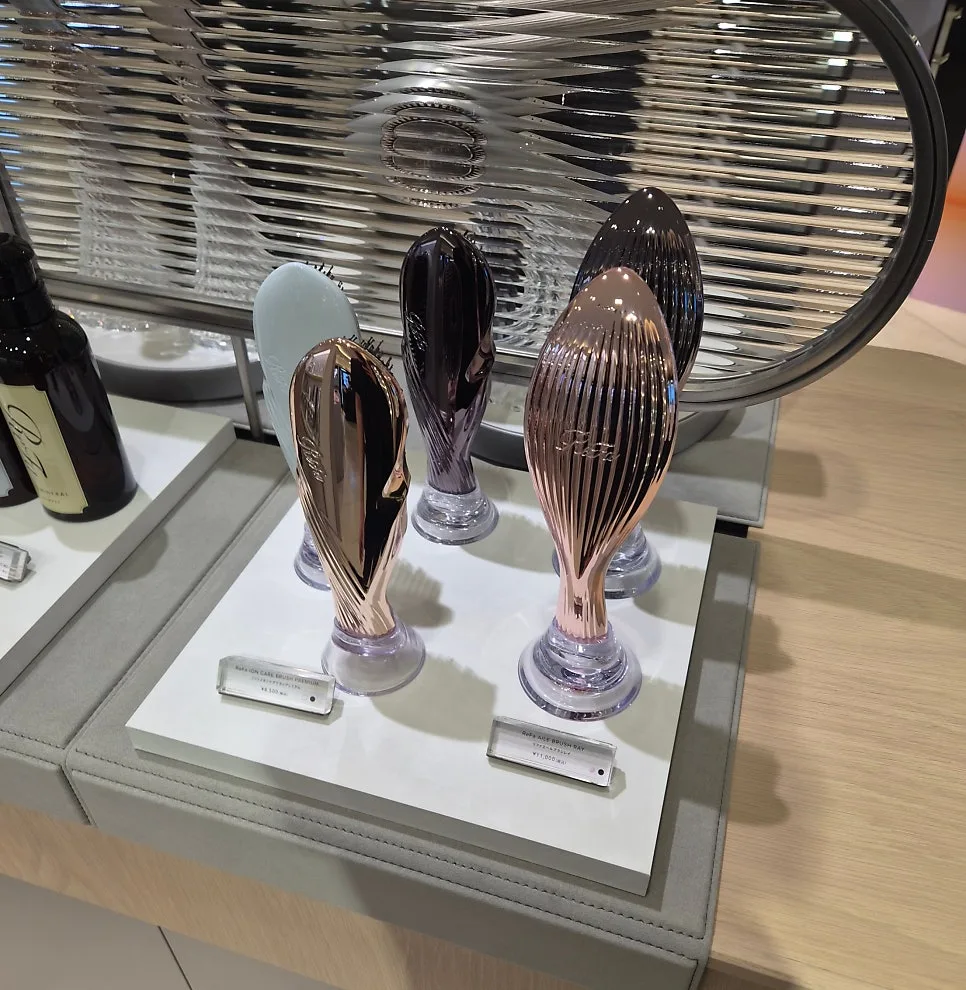
First up: the ReFa brush I came here planning to buy.
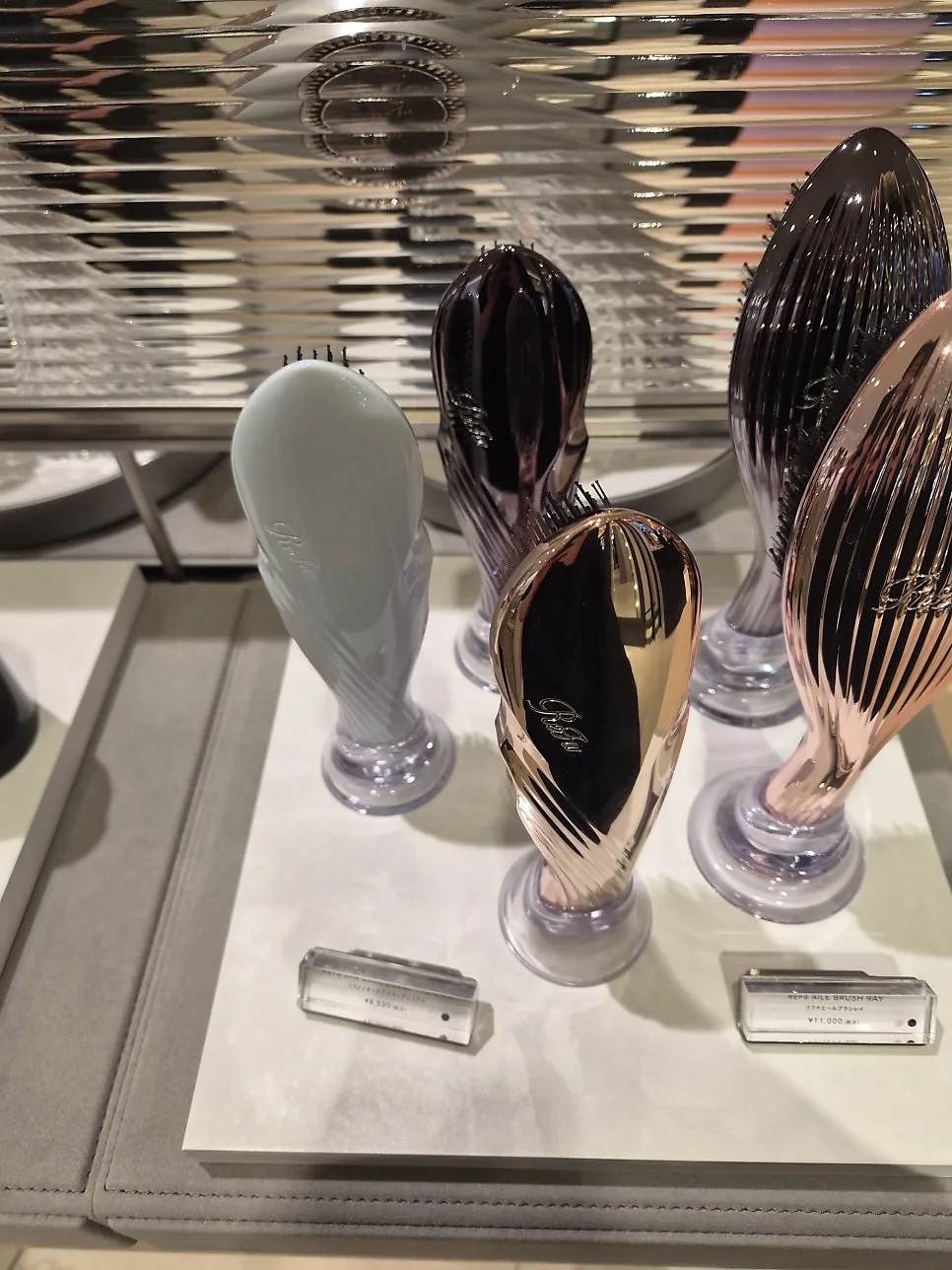
I hadn’t researched every detail,
so I had no idea there were this many versions.
But here was the problem…
The ReFa Ion Care Brush Premium was 8,500 yen,
and the ReFa AILE BRUSH RAY was 11,000 yen—
way more expensive than the prices I’d seen before my trip.
Turns out, even when the design looks similar,
there’s a regular line and a premium line.
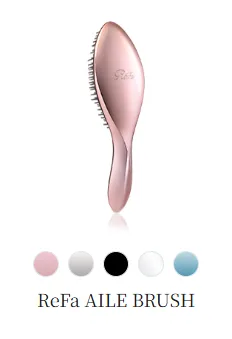
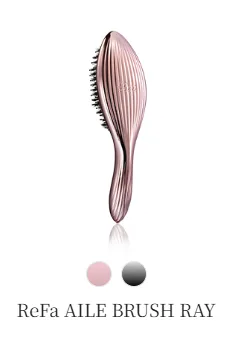
The one on the left is the basic Aile Brush for 3,800 yen,
and the one on the right is the premium Aile Brush for 11,000 yen.
The comb shape is basically the same,
but the body design is different—more elevated, with a ribbed finish.
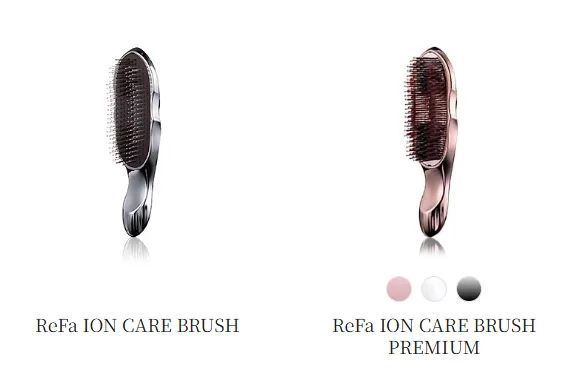
Same story with the ReFa Ion Care Brush:
the left one is 6,050 yen,
and the premium version on the right is 8,500 yen.
Before I knew that, I asked why the price was
so different from what I’d seen online,
and the staff explained that the department store versions
use different materials and have a different level of quality than the basic line.
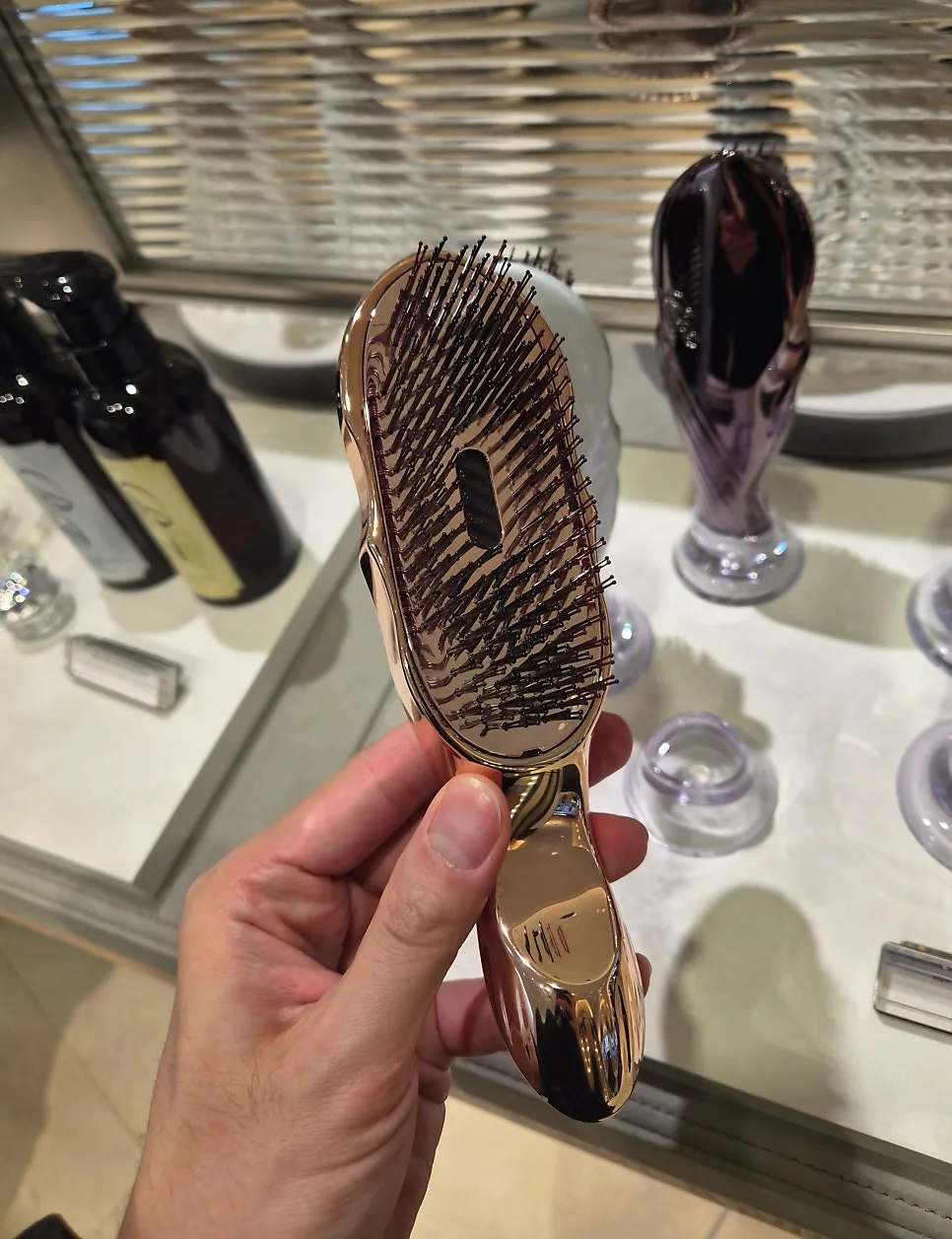
So basically, everything I photographed here
was from the premium line.
You can also find ReFa at places like Bic Camera,
but the prices are definitely lower, and somehow the products looked a little less luxe to me.
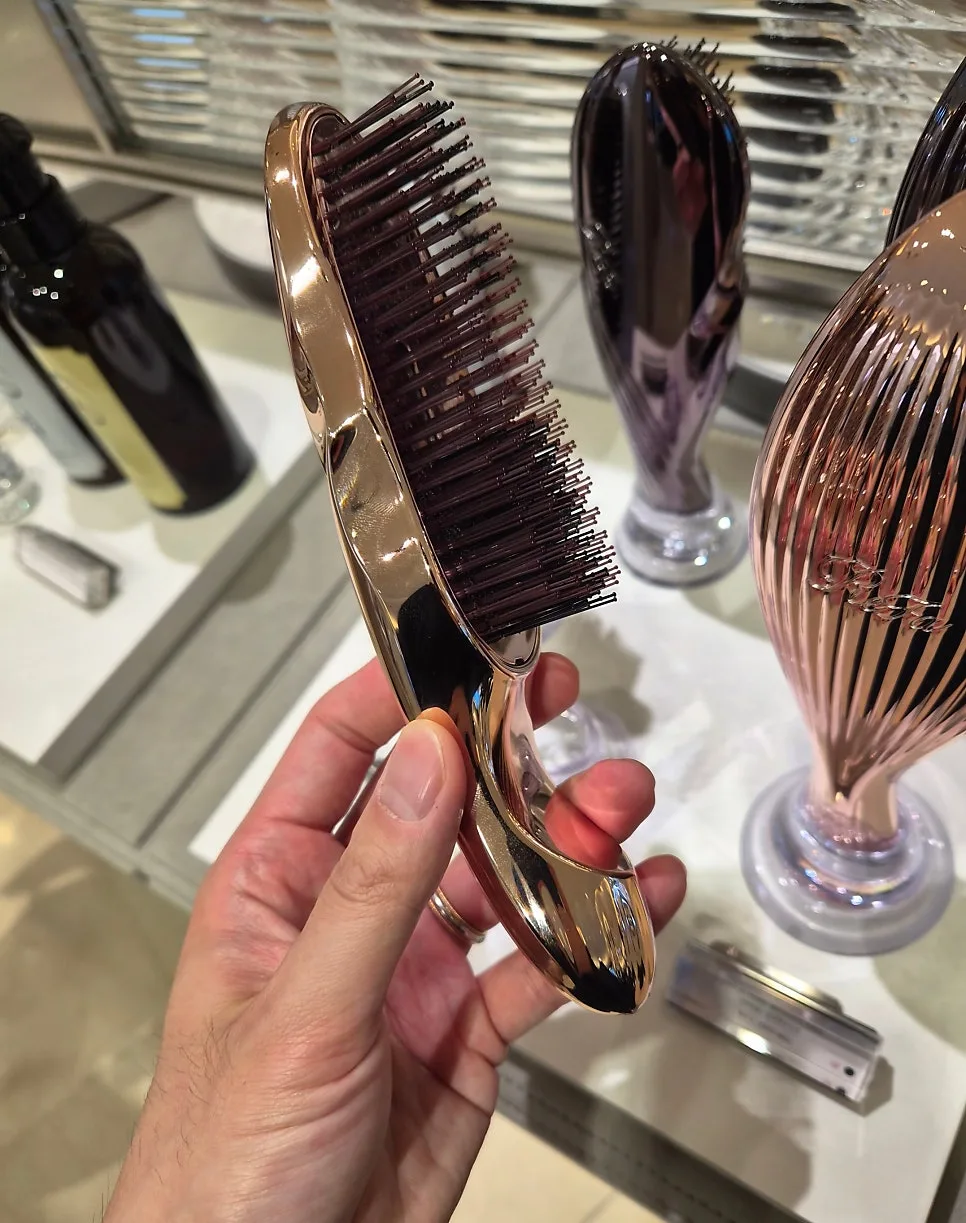
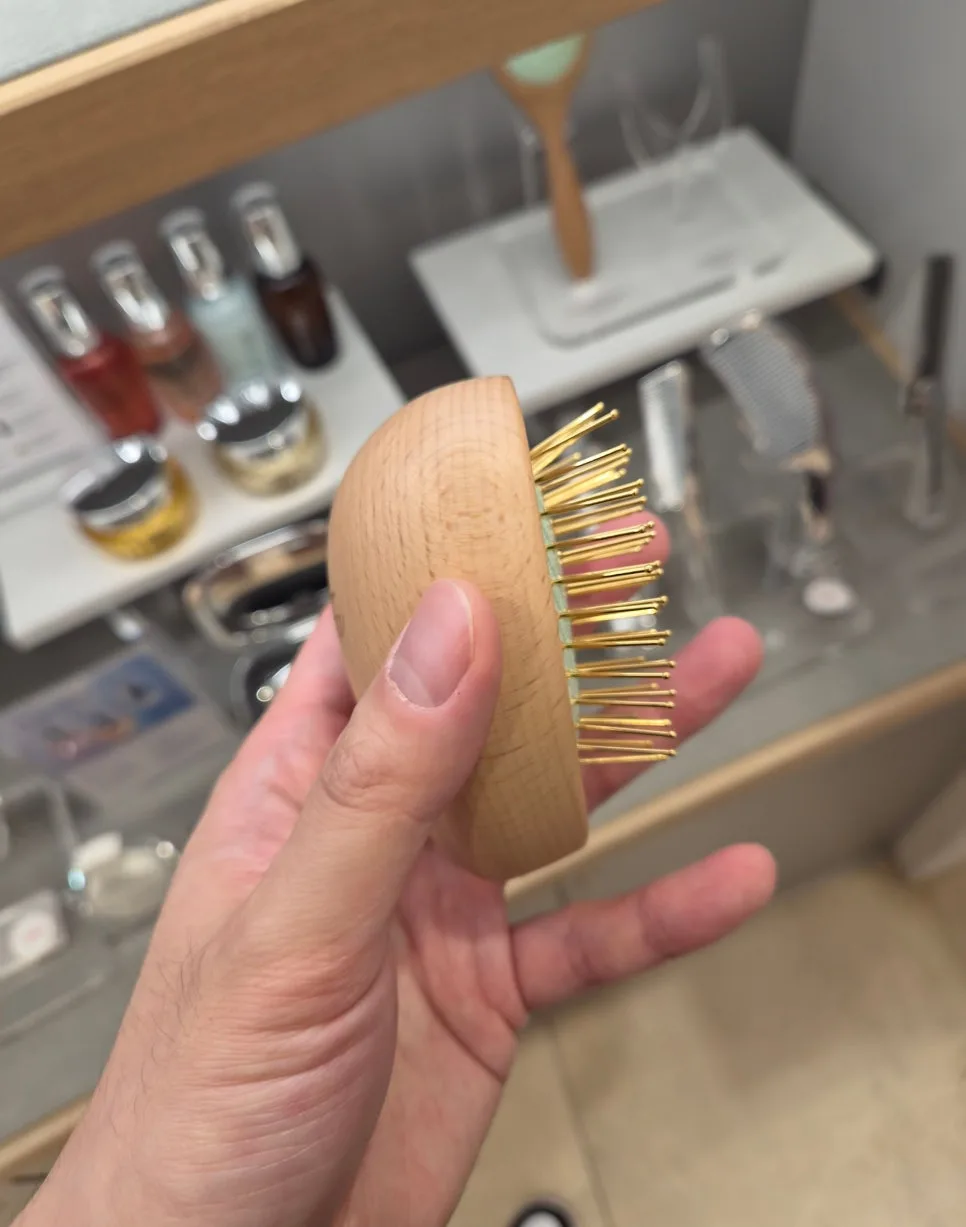
If you look closely, the bristles are densely packed,
with short and long pins arranged in a way that feels oddly scientific.
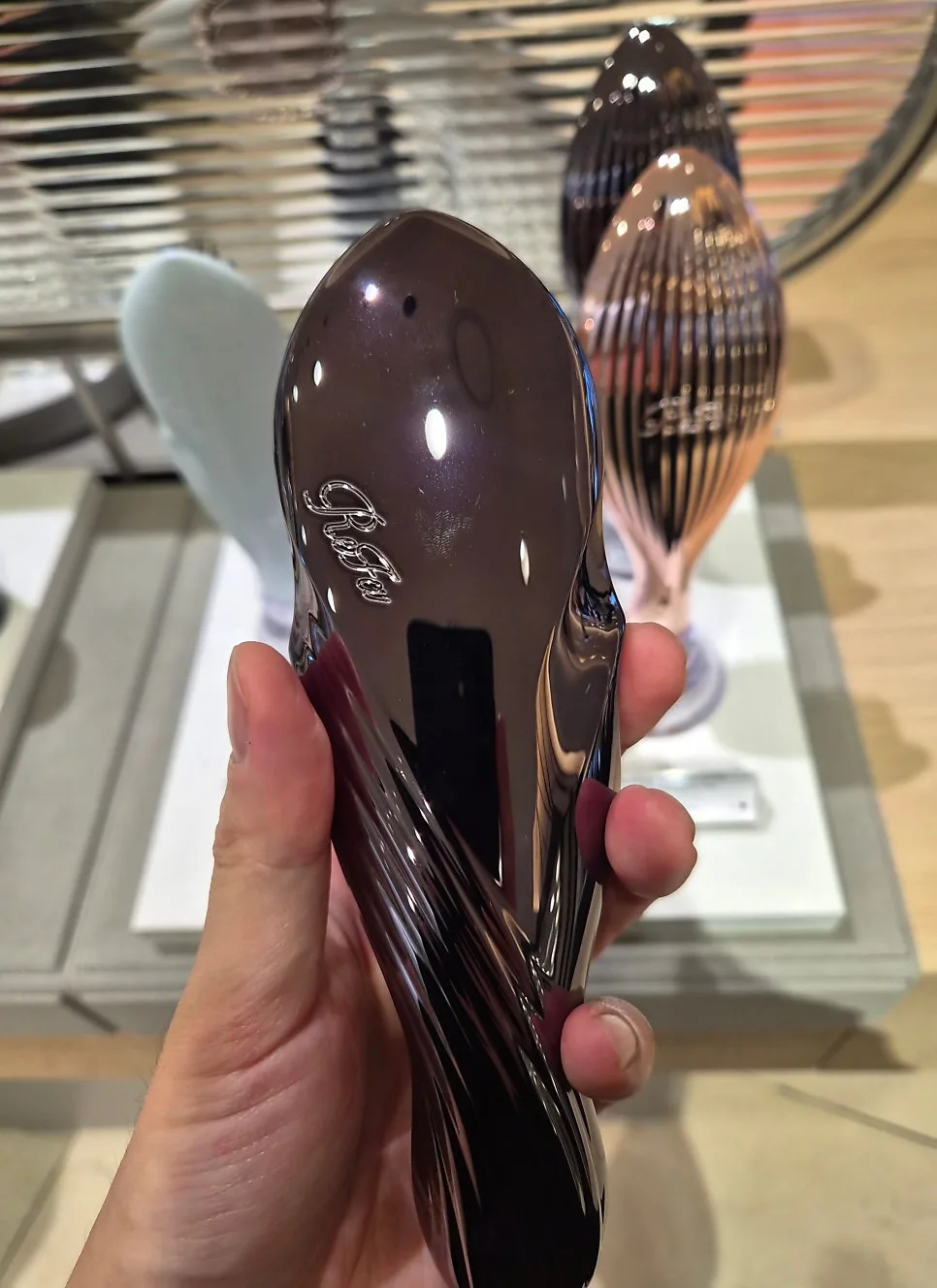
This is what the back of the Ion Brush looks like.
It’s pricey, but I’m the kind of person who buys one comb and uses it forever,
so I decided to splurge and get one.
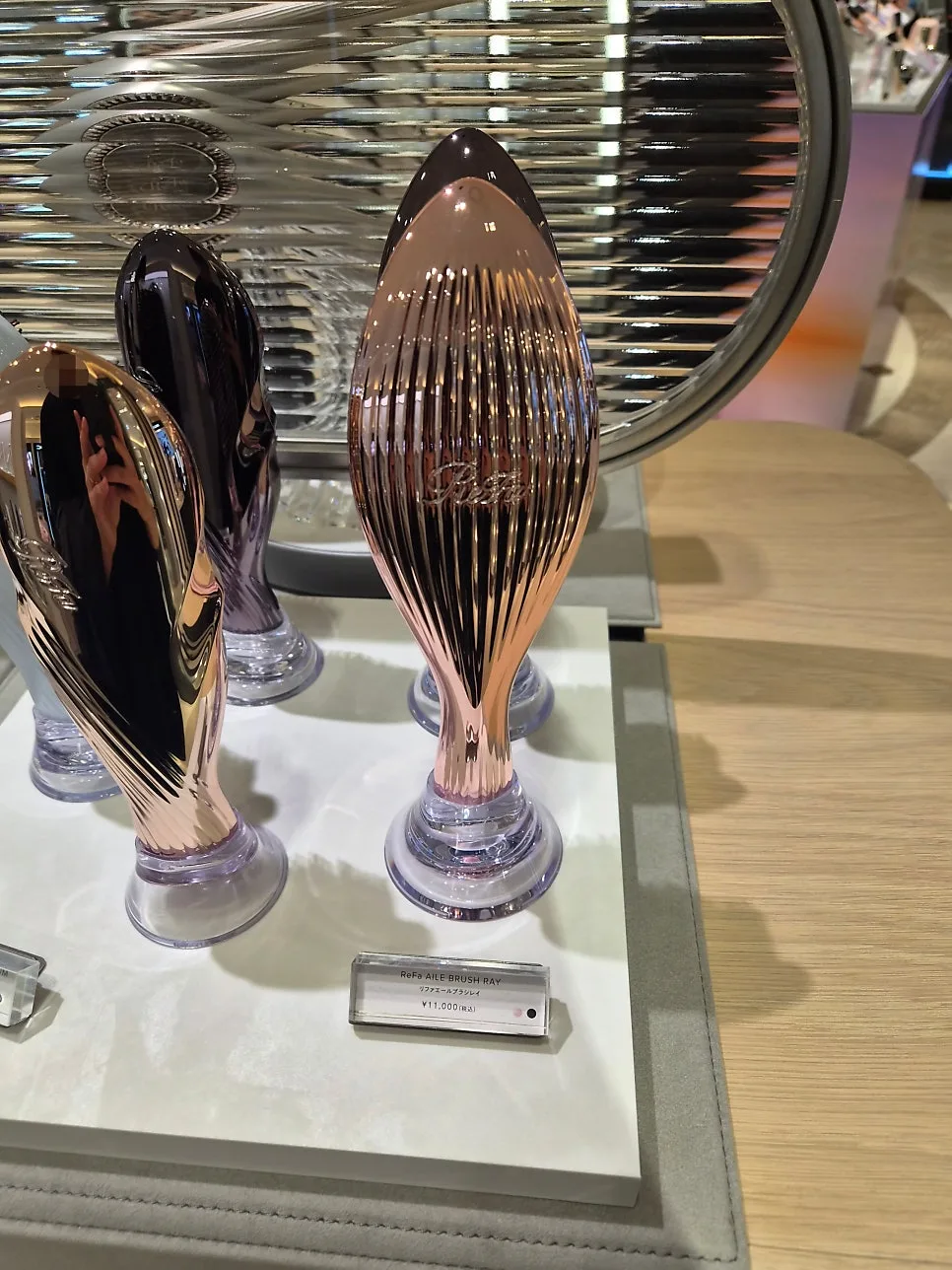
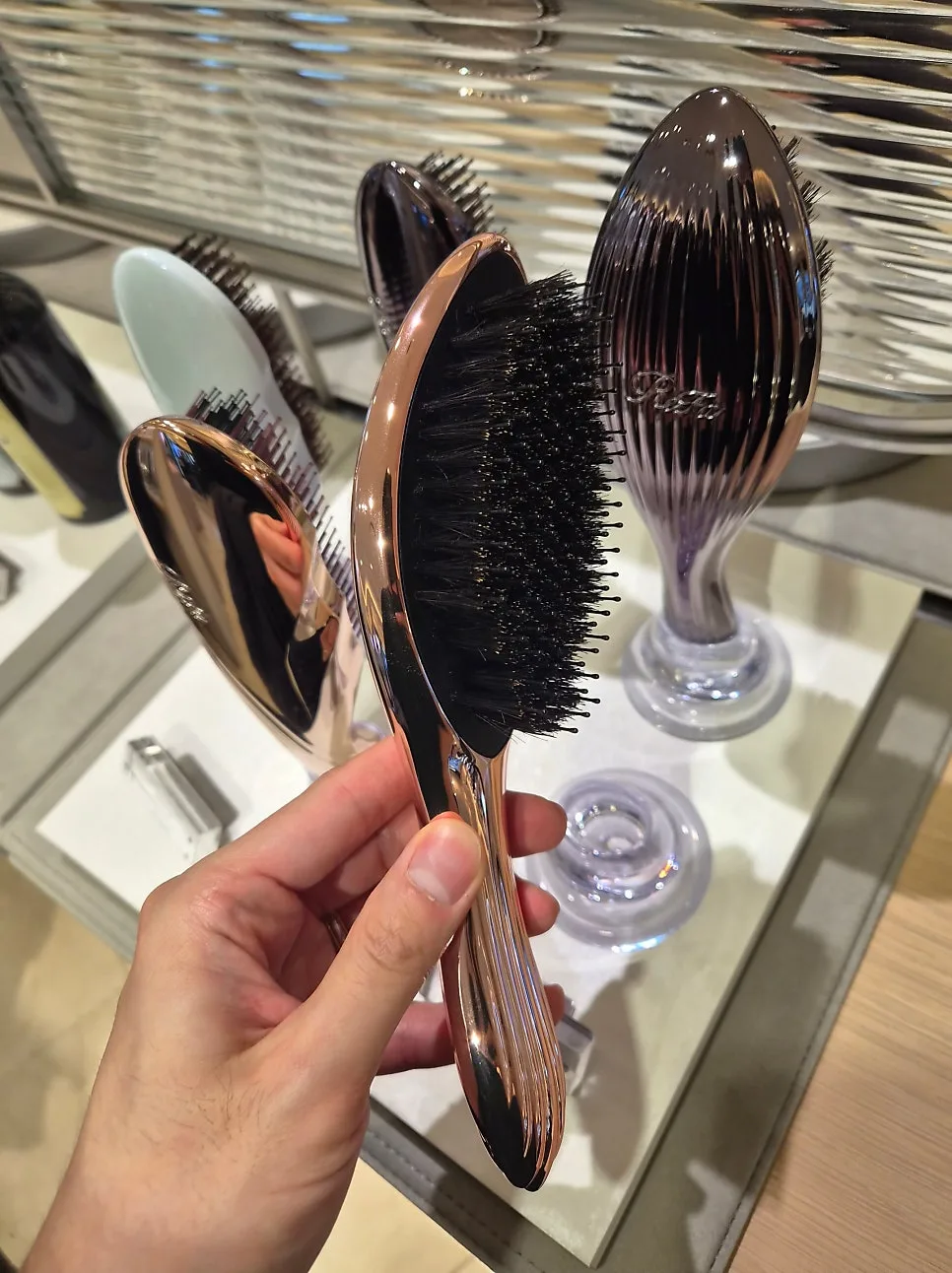
I honestly couldn’t tell a huge difference between the two,
but I figured the Aile Brush was more expensive because it was bigger, so I chose the smaller one.
That said, the Ion Brush isn’t exactly small either.
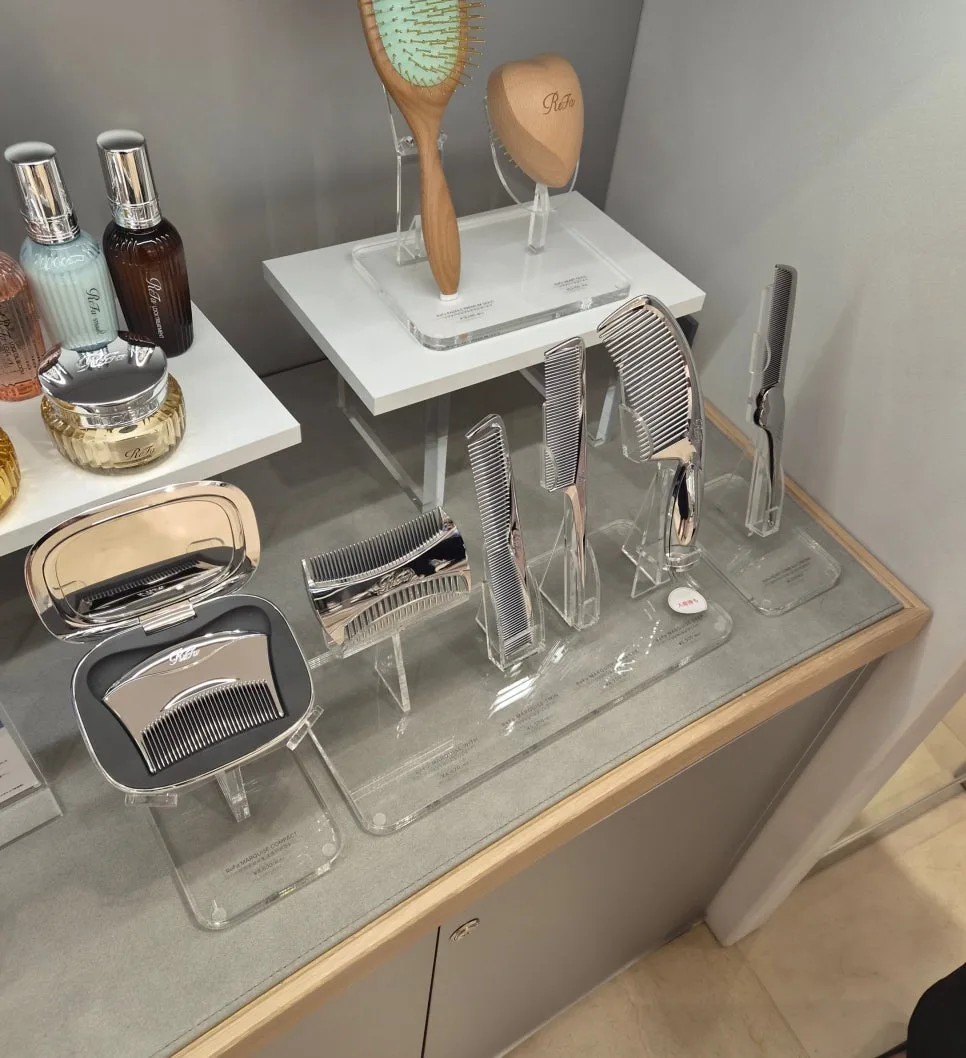
Next up: the ReFa tail comb.
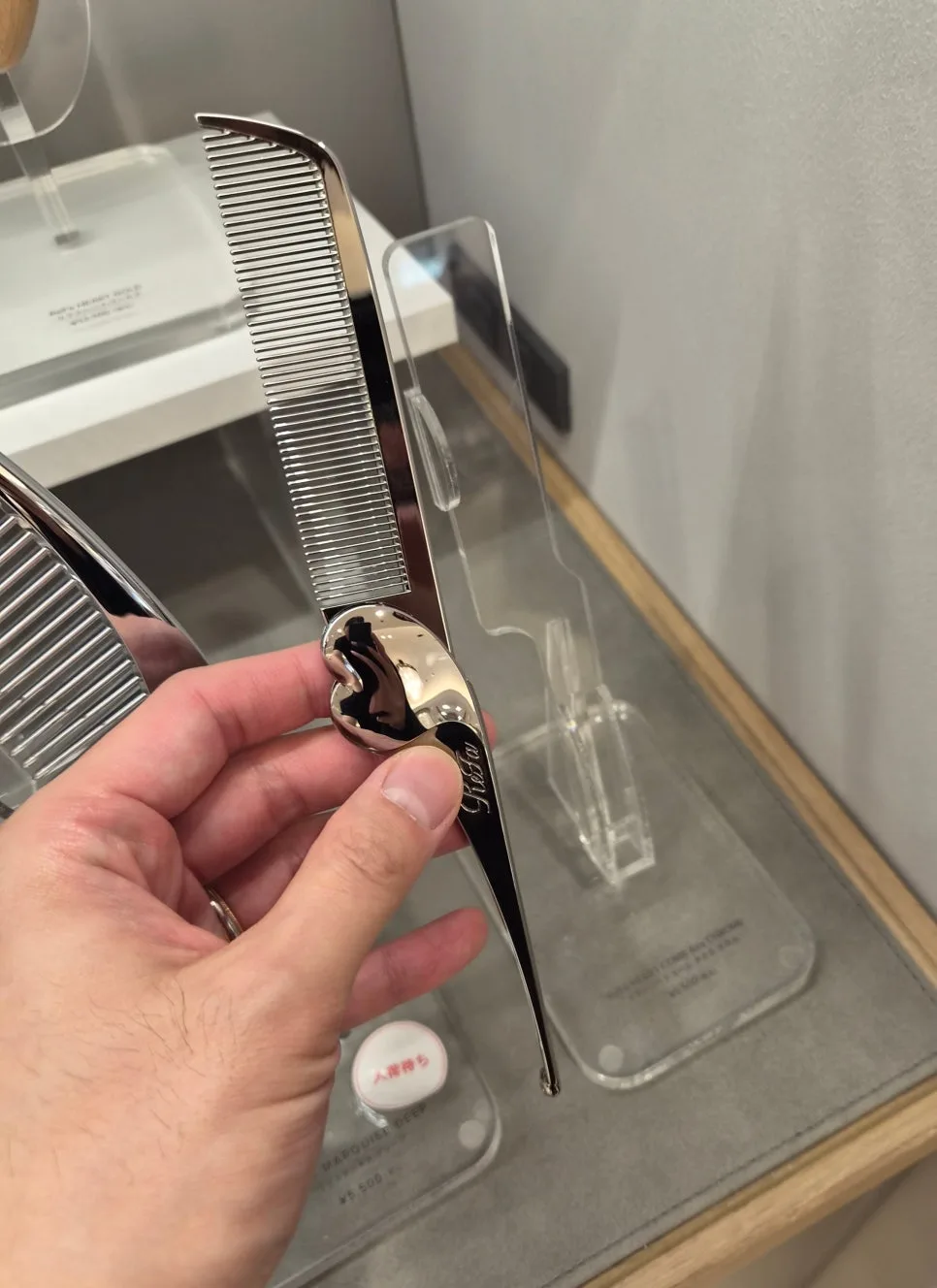
Apparently this heart-shaped tail comb is hugely popular
with Japanese high school girls.
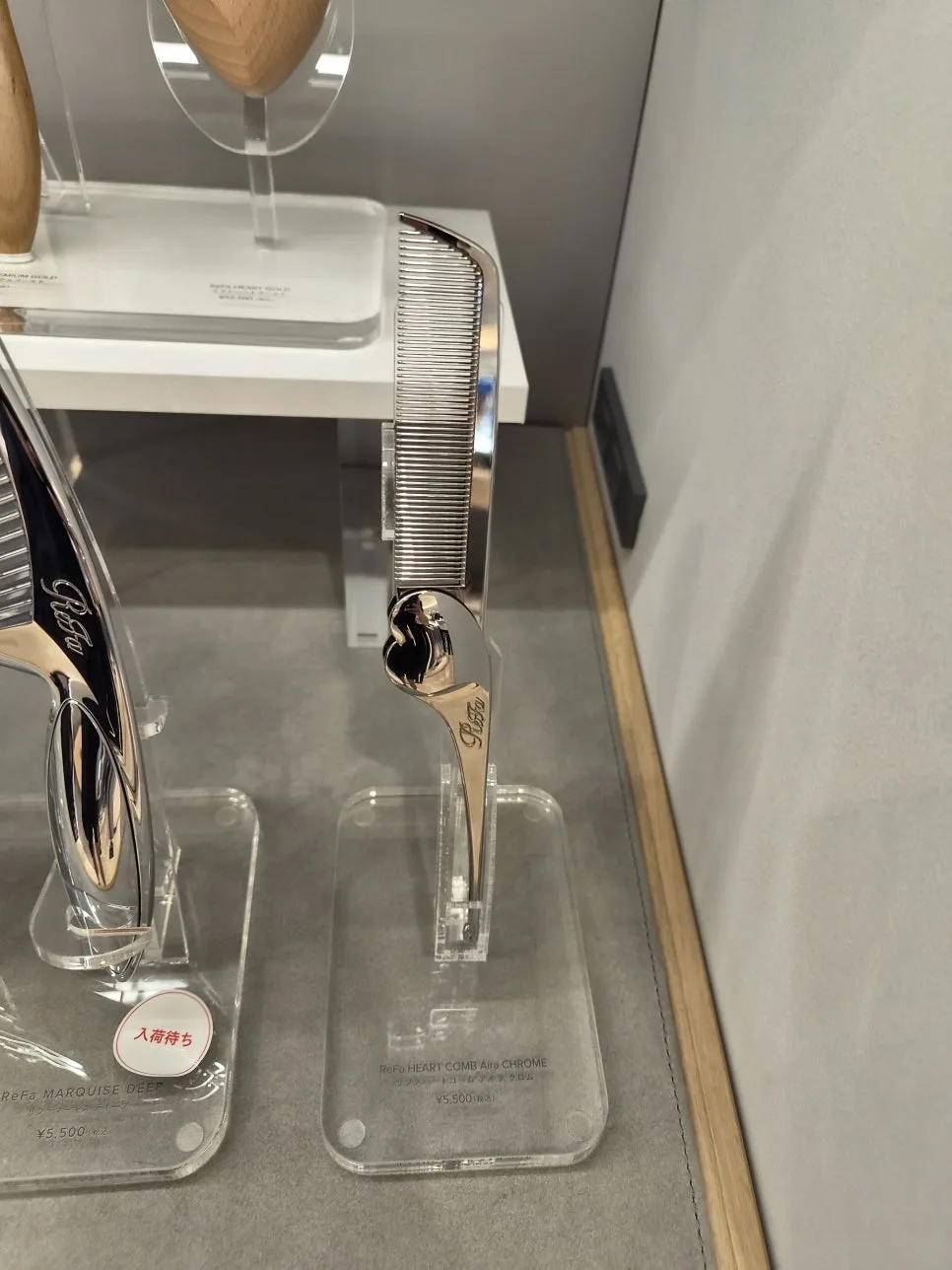
Wasn’t a tail comb supposed to be, like, a $1 item?
This one is a wild 5,500 yen.
To be fair, it is prettier than a regular tail comb.
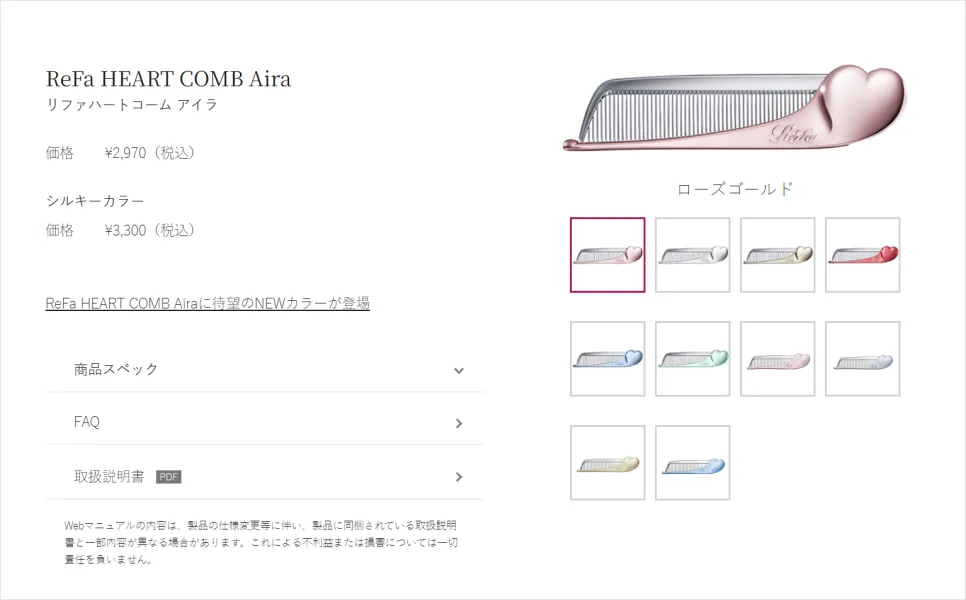
Anyone who checked Korean prices before coming would definitely be shocked.
Honestly, even 2,970 yen already feels absurd for a tail comb,
so 5,500 yen really caught me off guard.
At that point I used my favorite move again: ask the staff.
They told me this comb is made of chrome, not plastic,
which is why it costs more.
Now, whether a tail comb being chrome instead of plastic actually matters…
I wasn’t fully convinced, but somehow I still got talked into it.
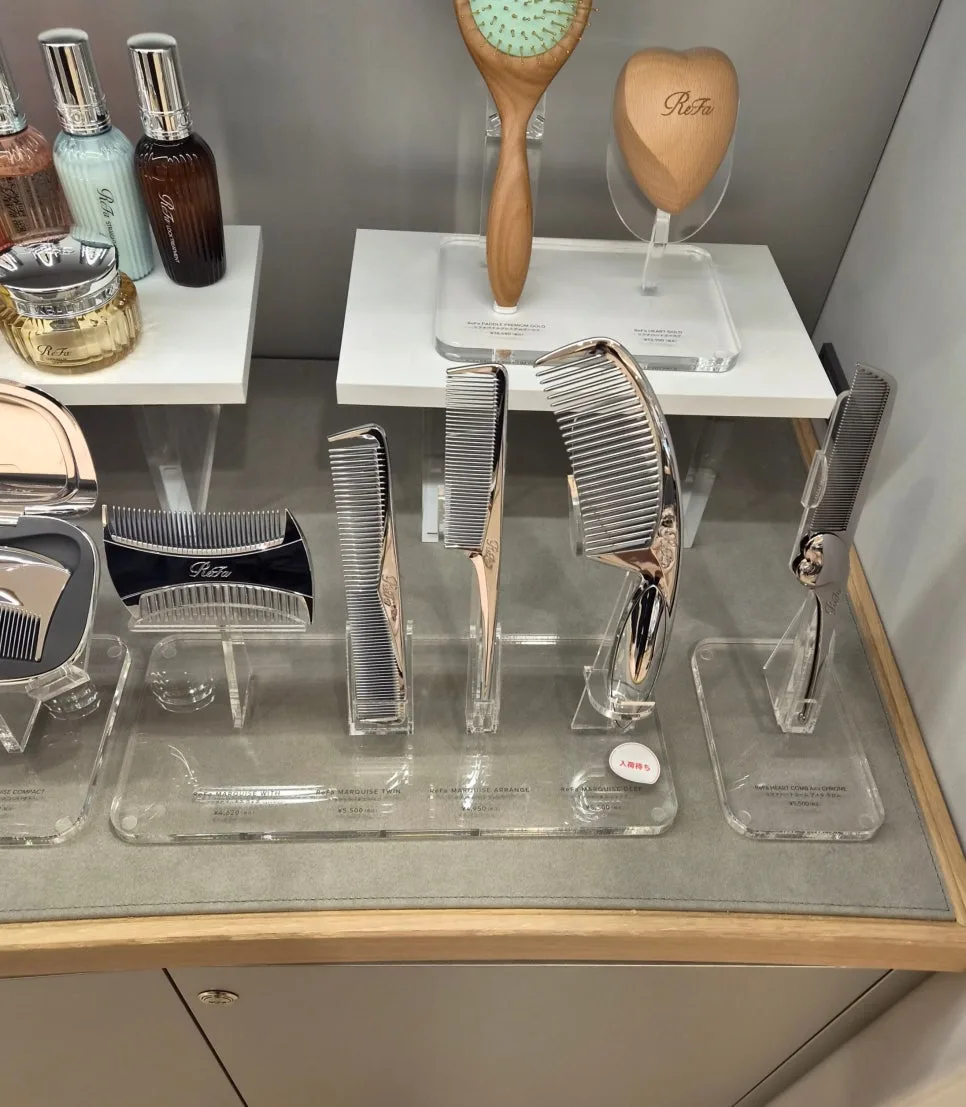
Looking at the prices of the other combs next to it,
they all seemed to be chrome too.
But when you actually touch them,
the weight and texture feel surprisingly similar to plastic.
The biggest difference, though, is that plastic creates static when you comb your hair,
while chrome doesn’t.
I was also told it’s a material that bacteria don’t grow on easily,
and that it resists corrosion better, so it should last longer.
And just like that, the ReFa heart tail comb
somehow ended up in my shopping basket too.
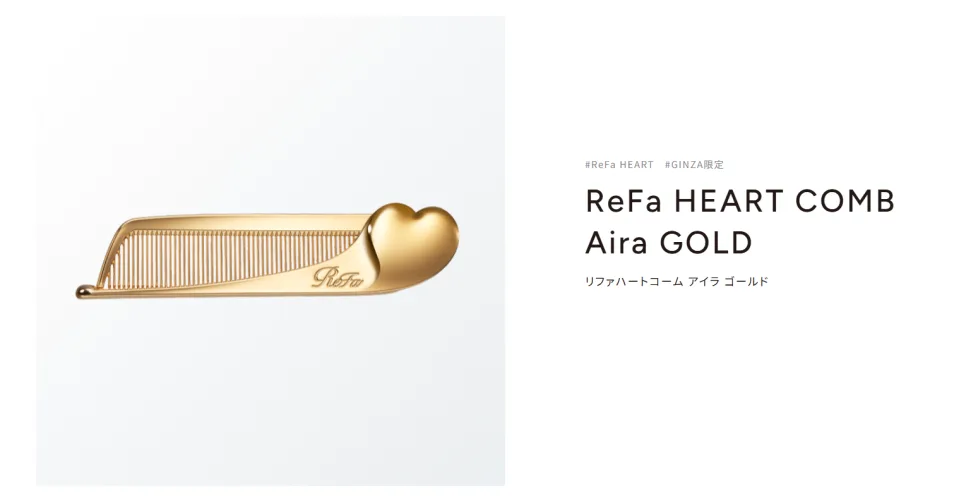
I checked the official website later and found out there’s even
a heart tail comb coated in 99.7% pure gold.
There isn’t even a price listed.
Apparently you have to go to the flagship store in Ginza, Tokyo,
to see that one in person.
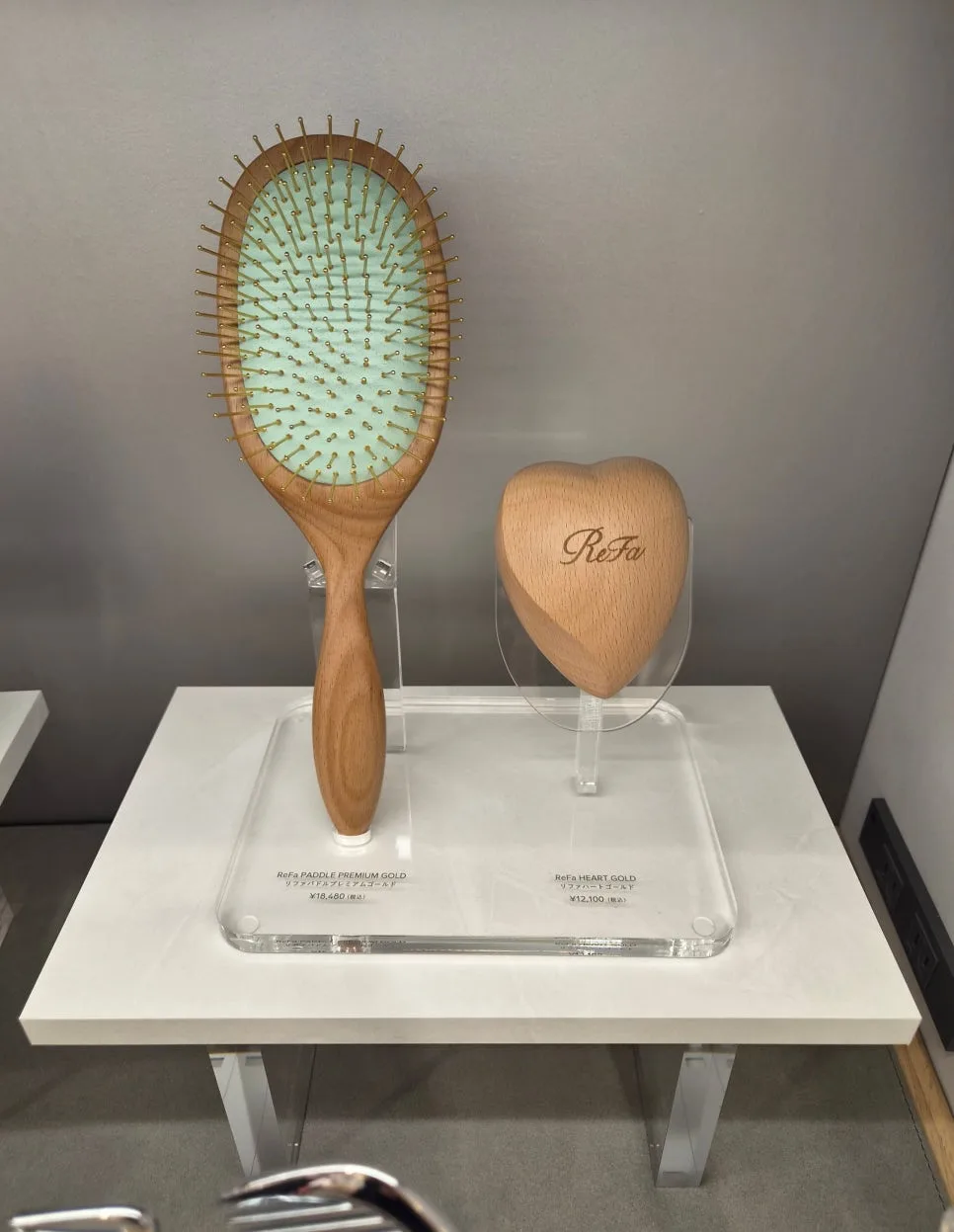
These are part of the gold line, so they’re even more expensive.
The brush itself is made with gold.
The premium paddle brush with a handle is 18,480 yen,
and the heart gold brush is 12,100 yen. Truly jaw-dropping.
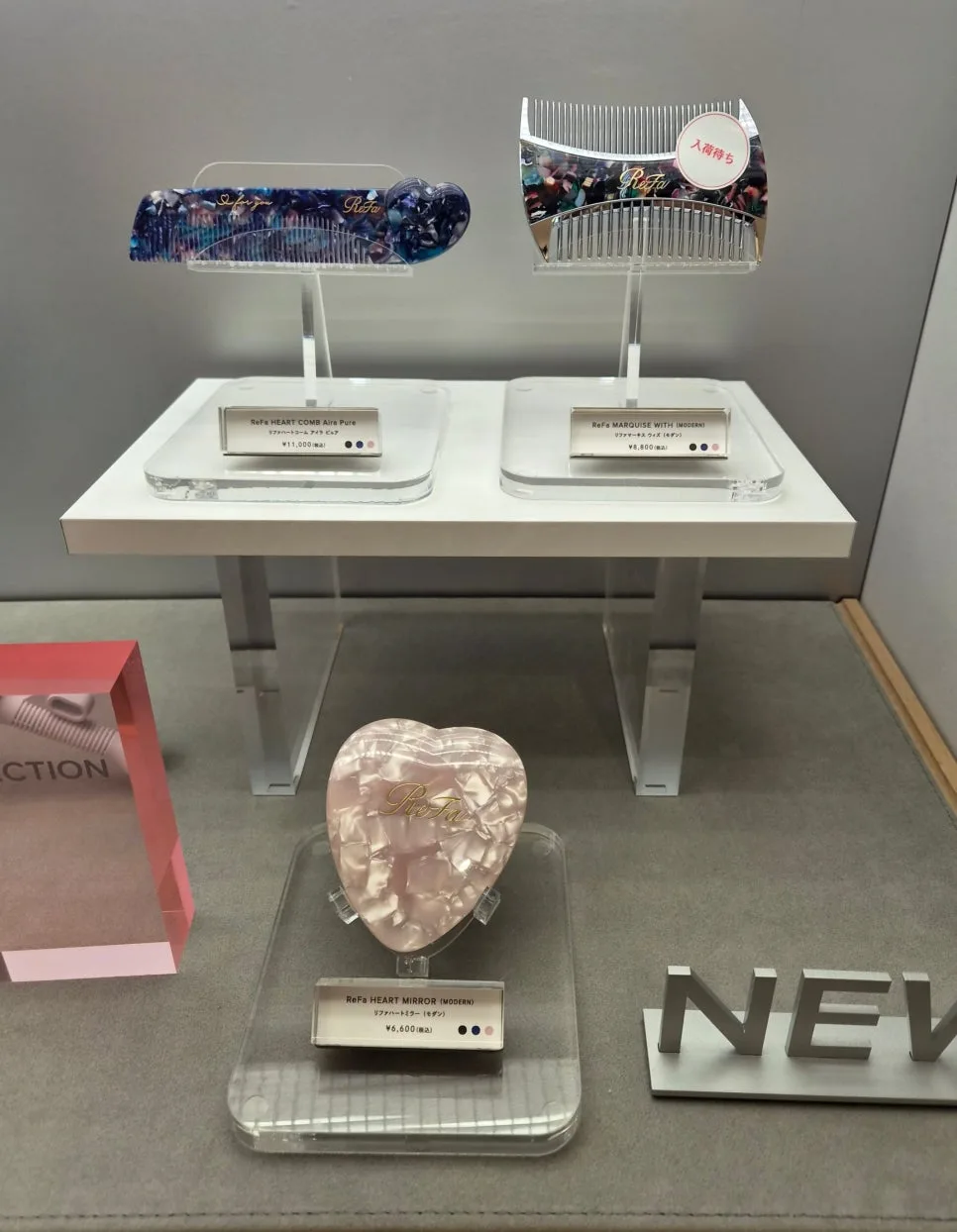
There’s also a mother-of-pearl design, and those are pricey too since they seem to be limited editions.
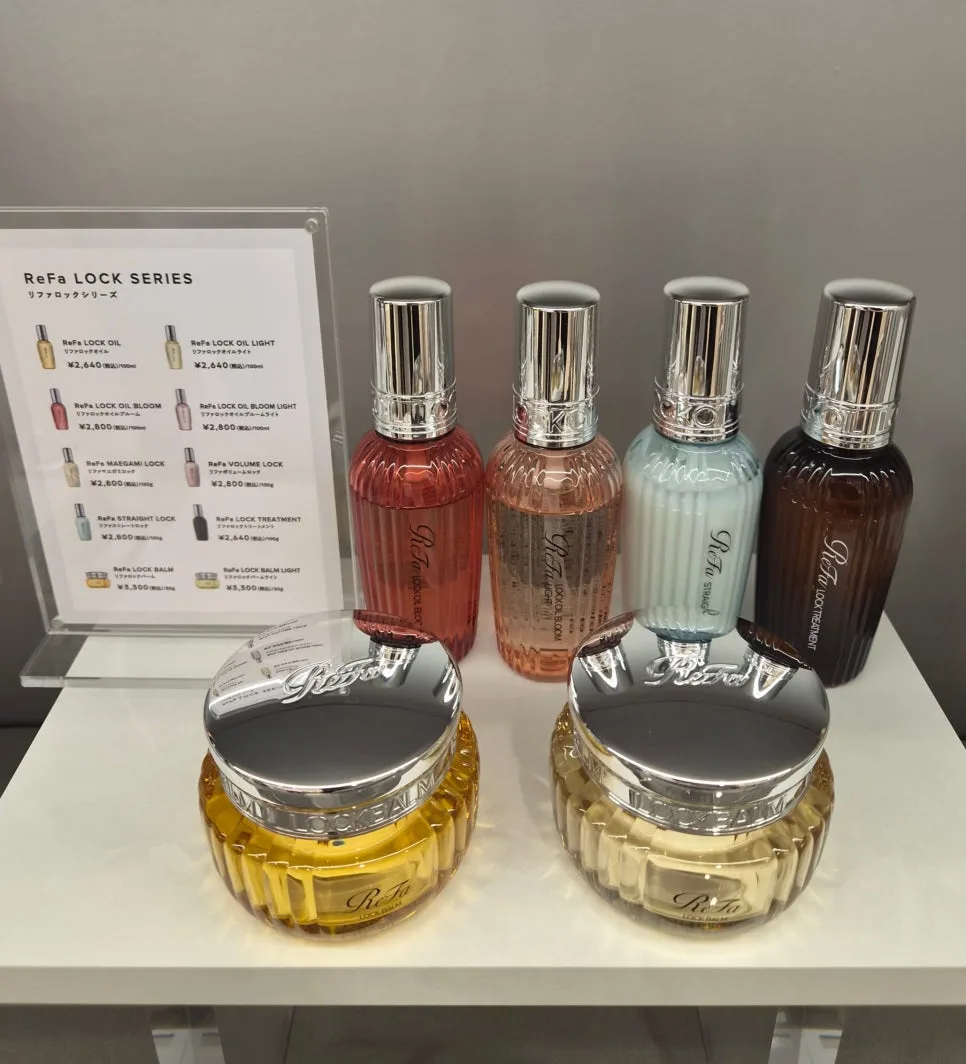
They also sell hair products you apply directly to your hair,
and the oils weren’t as expensive as I expected,
so I’m tempted to read a few reviews and maybe try one next time.
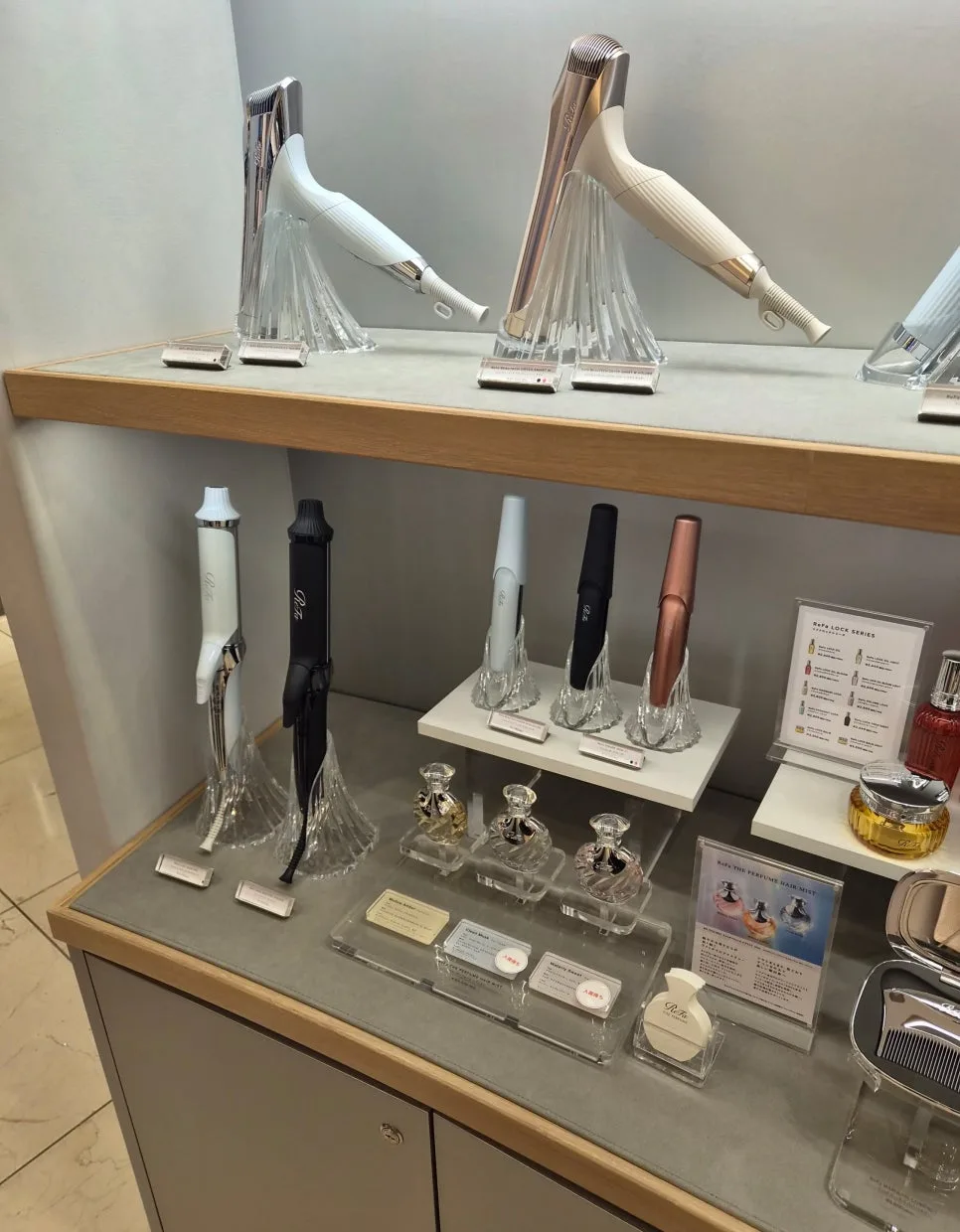
Now onto the dryers and styling tools.
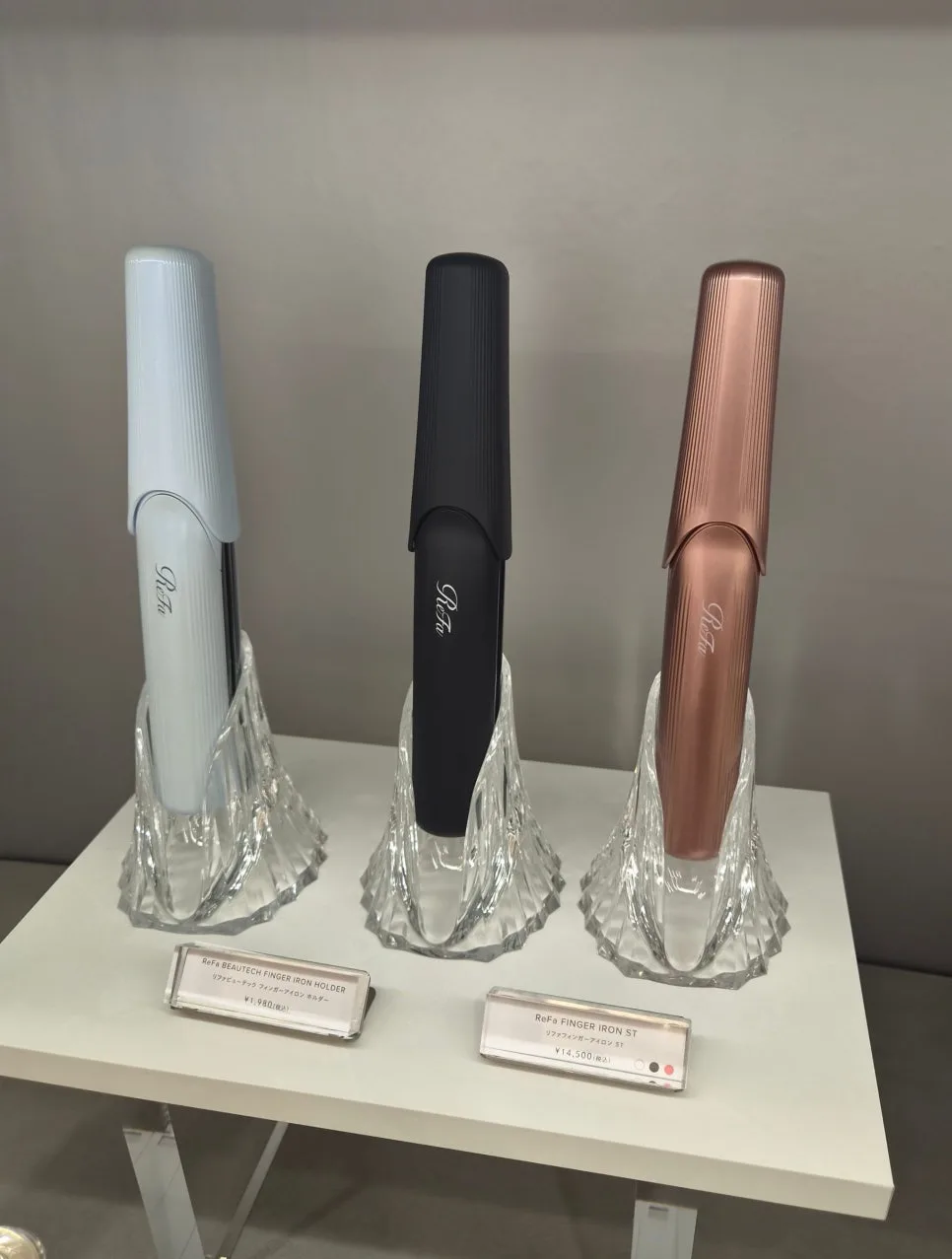
This tiny little straightener is called the Finger Iron.
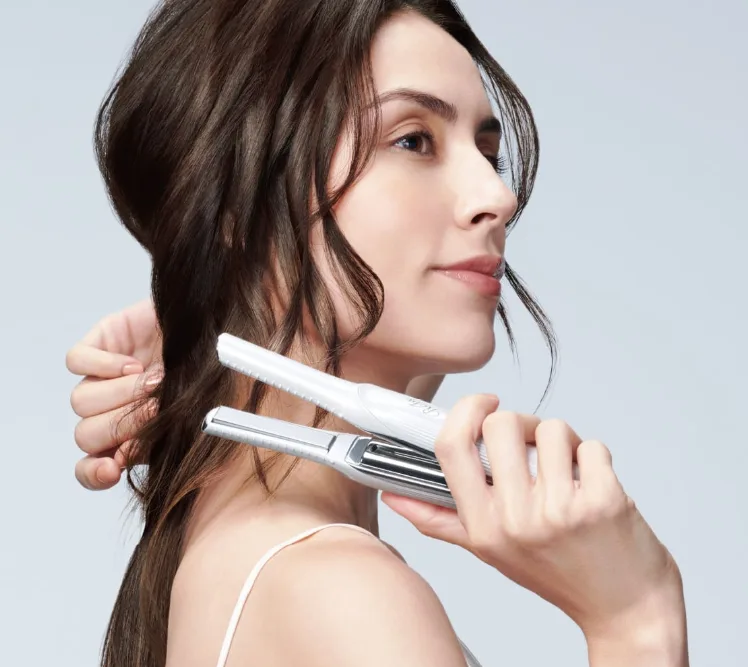
That small.
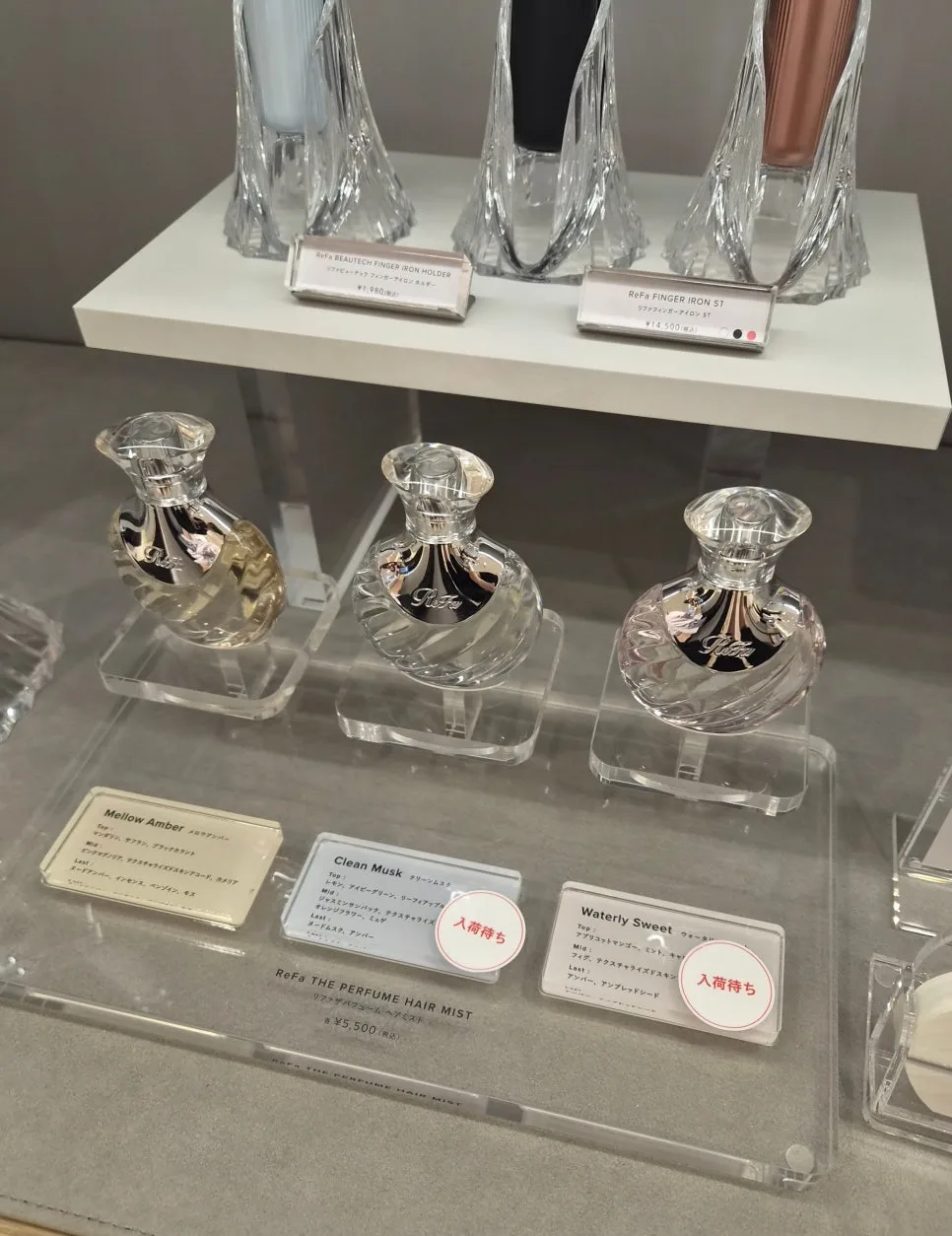
Hair mist: 5,500 yen.
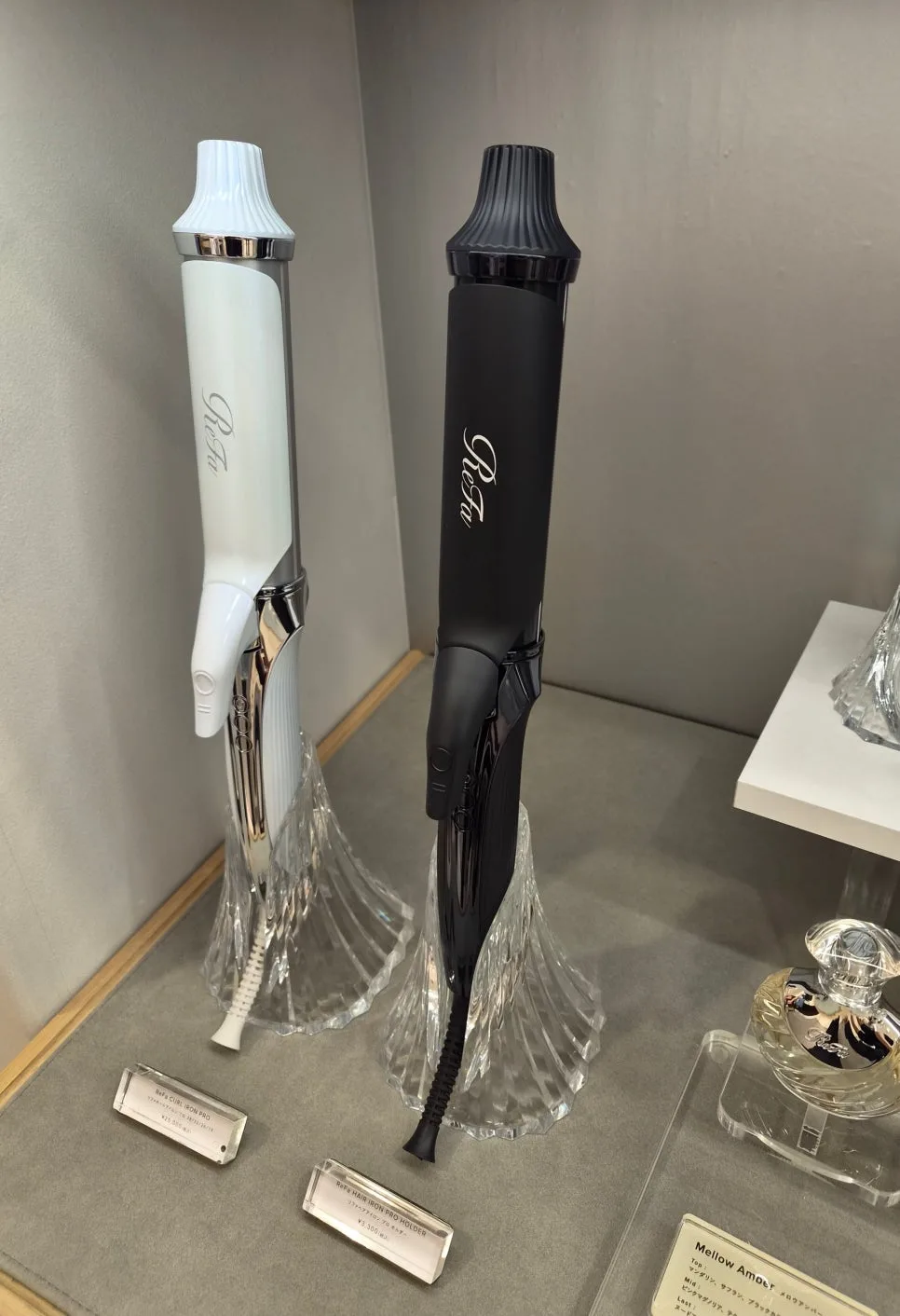
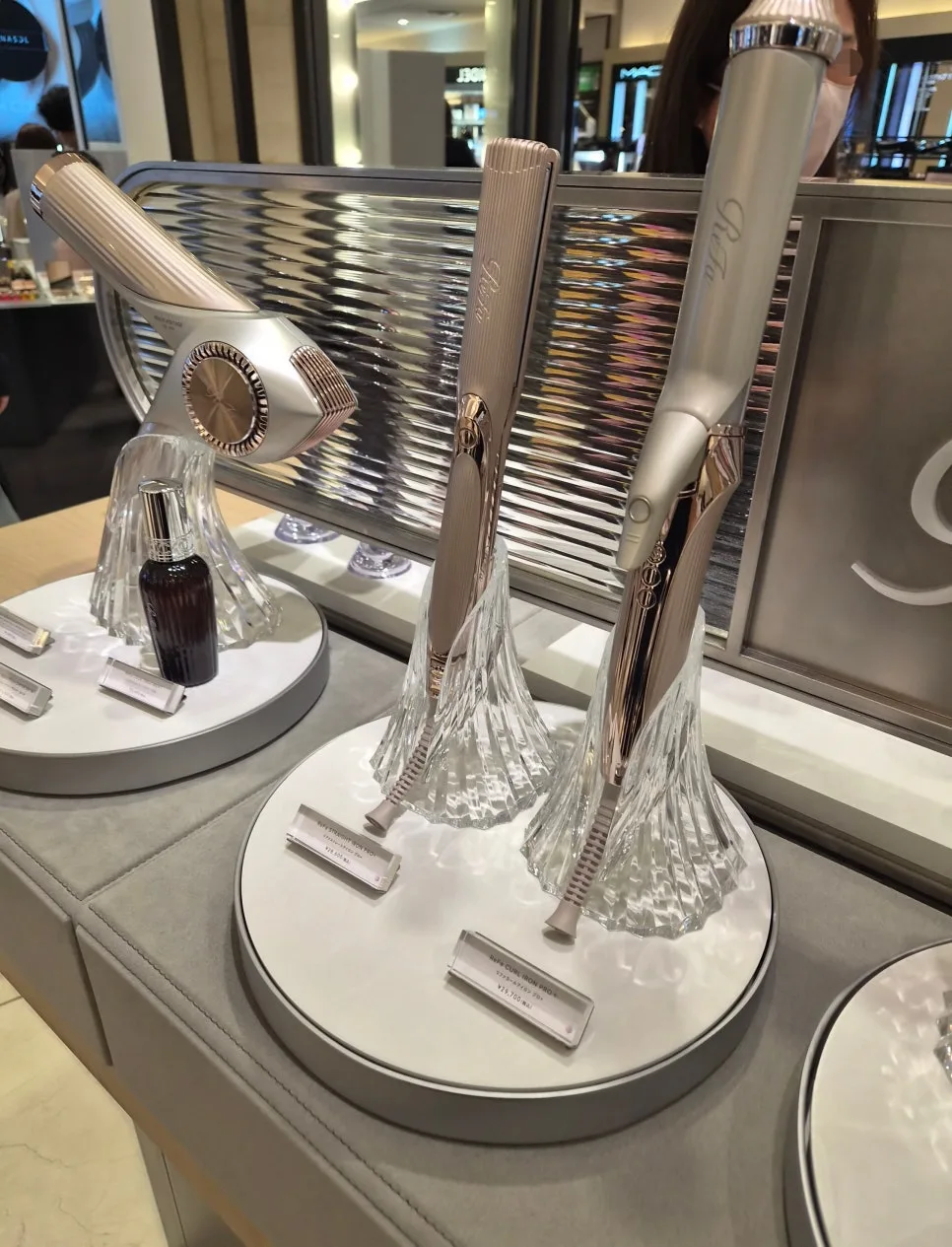
They also have a curling iron—the classic barrel iron style.
And just so you know, that stand underneath it is sold separately.
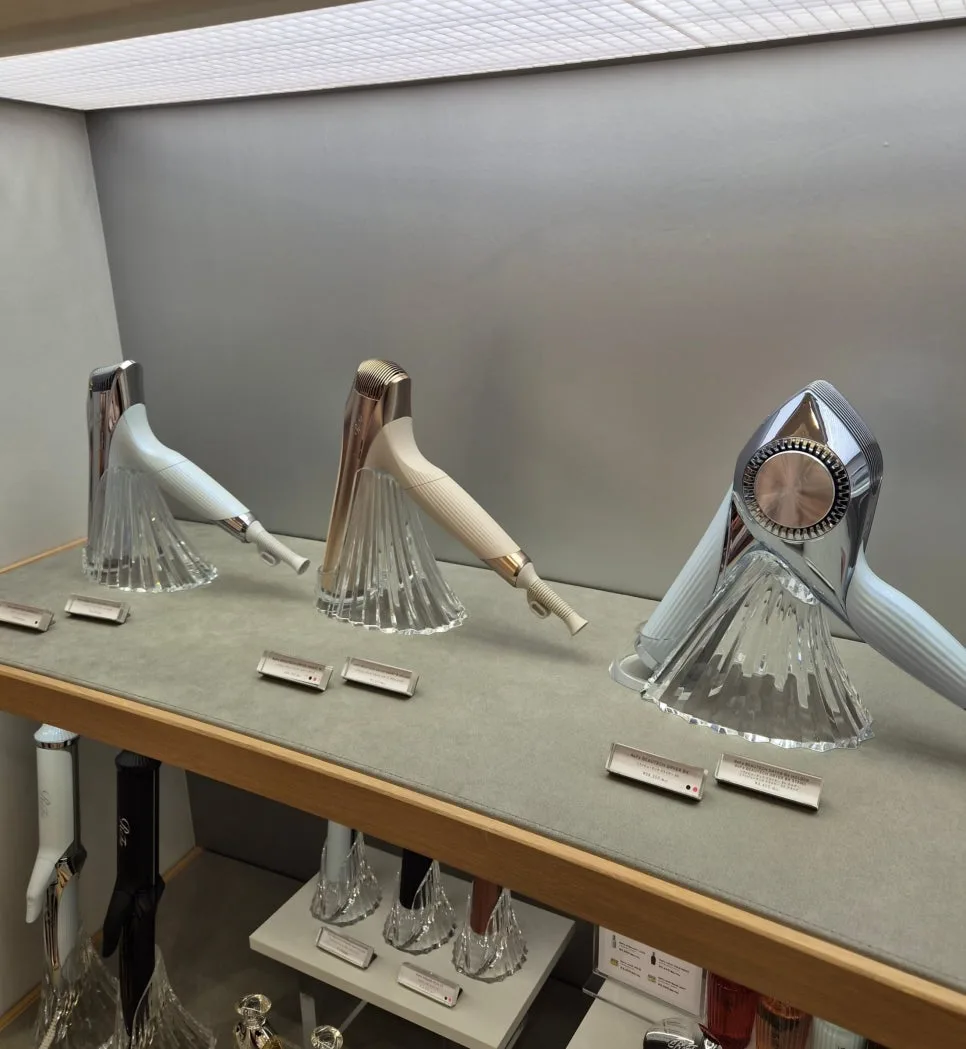
So how much is the dryer?
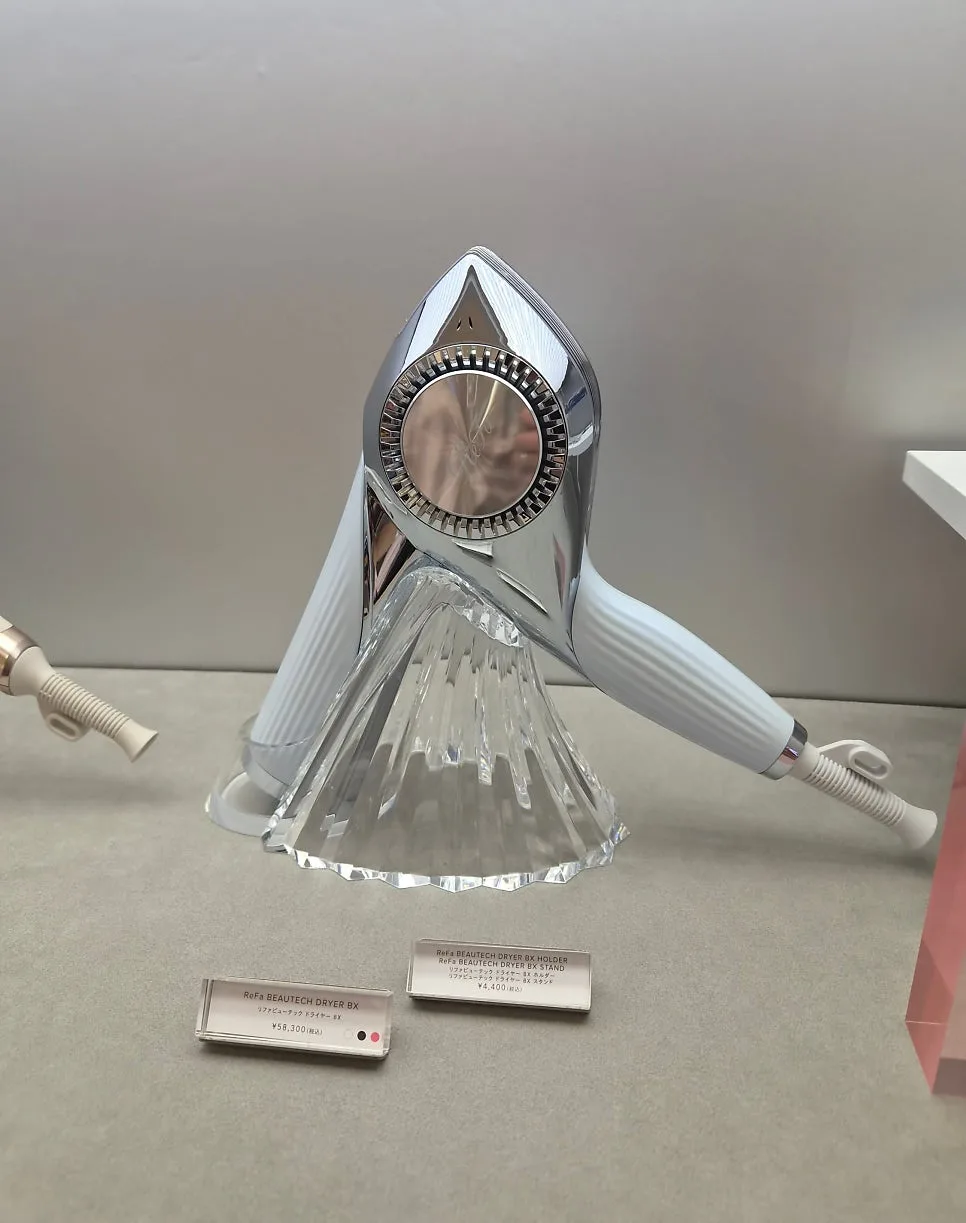
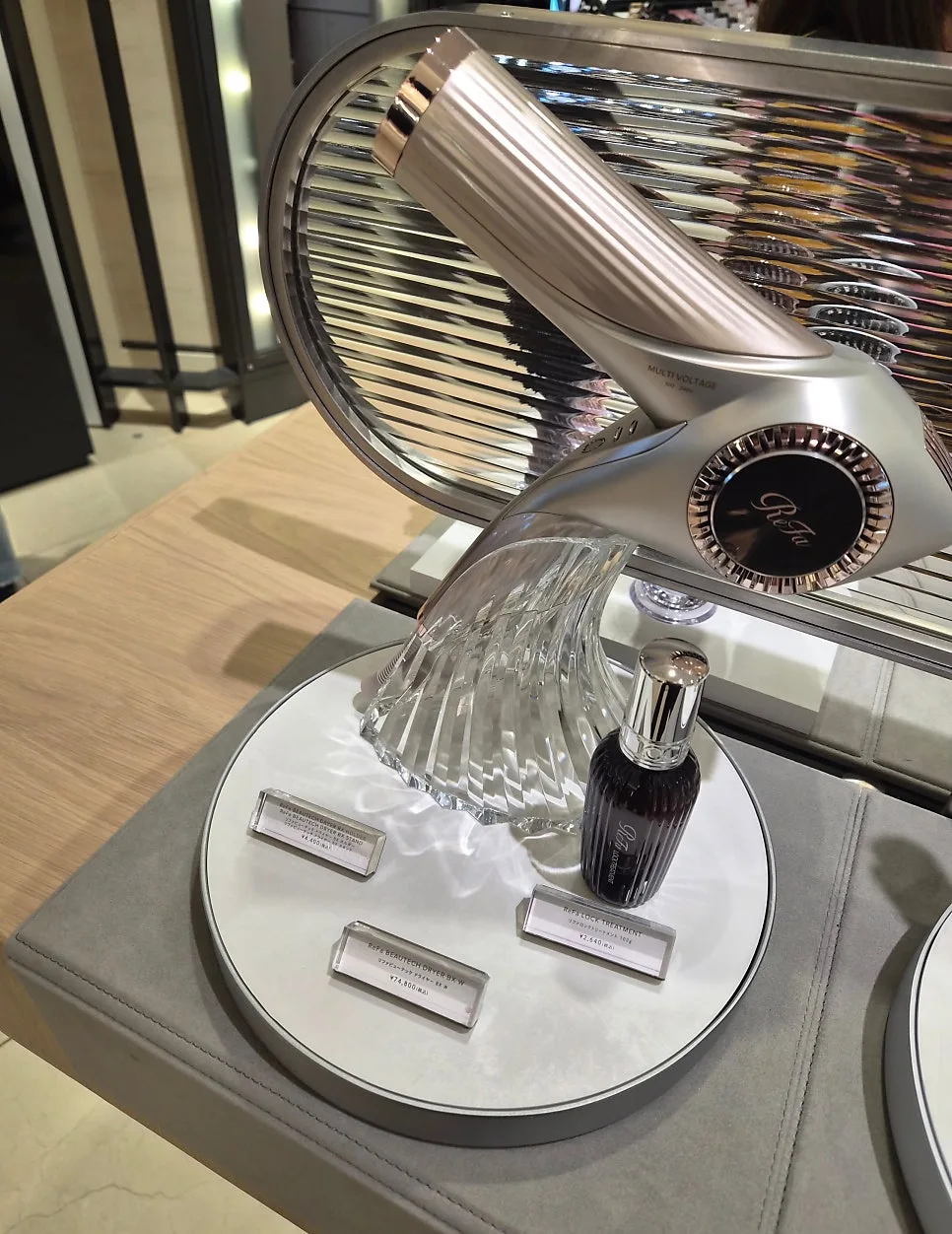
This one is the ReFa BEAUTECH DRYER BX,
and the price absolutely outdoes the Dyson Supersonic:
58,300 yen and 74,800 yen. Wow.
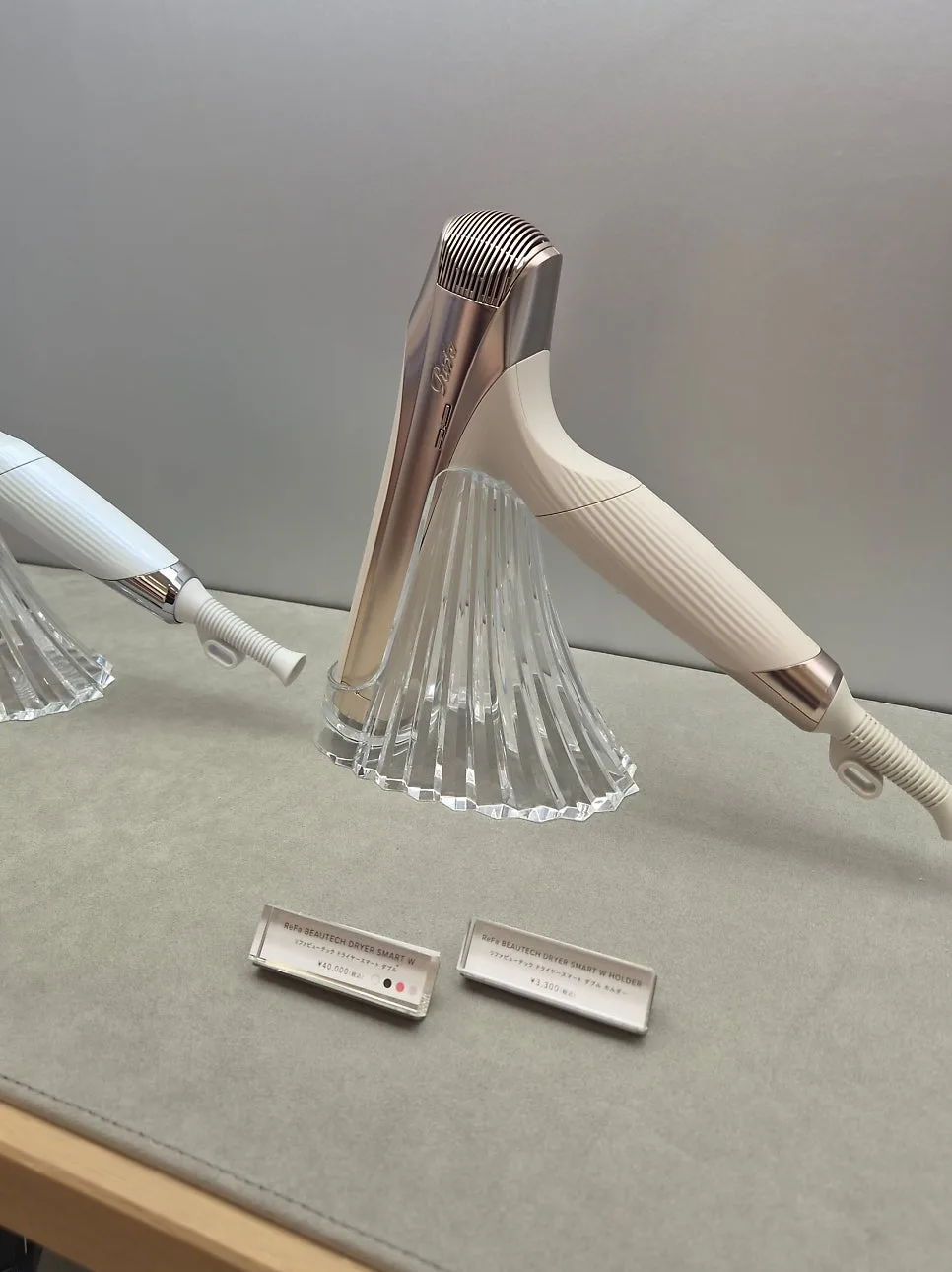
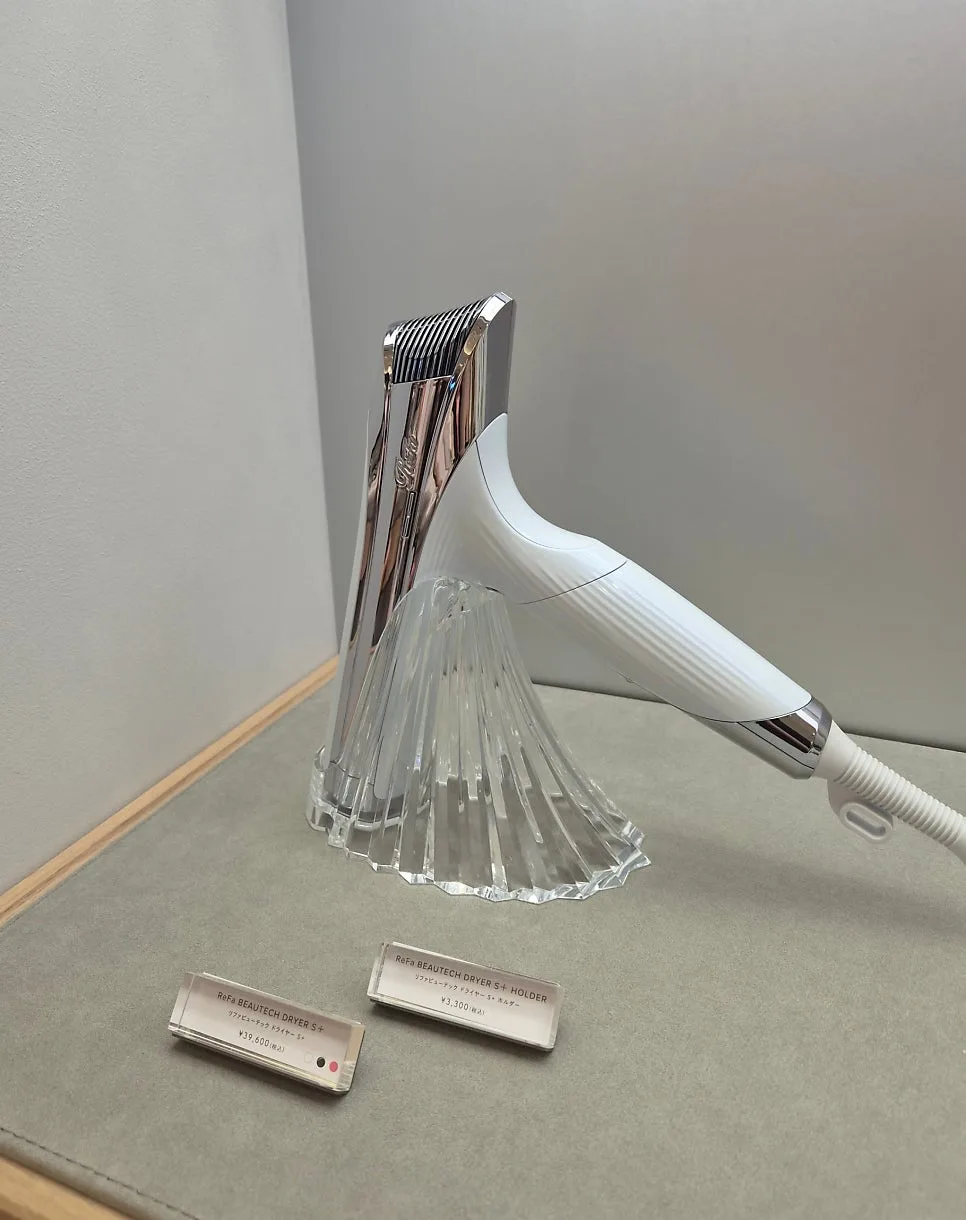
These looked a little more reasonable, in the 300,000 to 400,000 KRW range.
Is the ReFa dryer really that good too?
I already love my Supersonic, but now I’m curious.
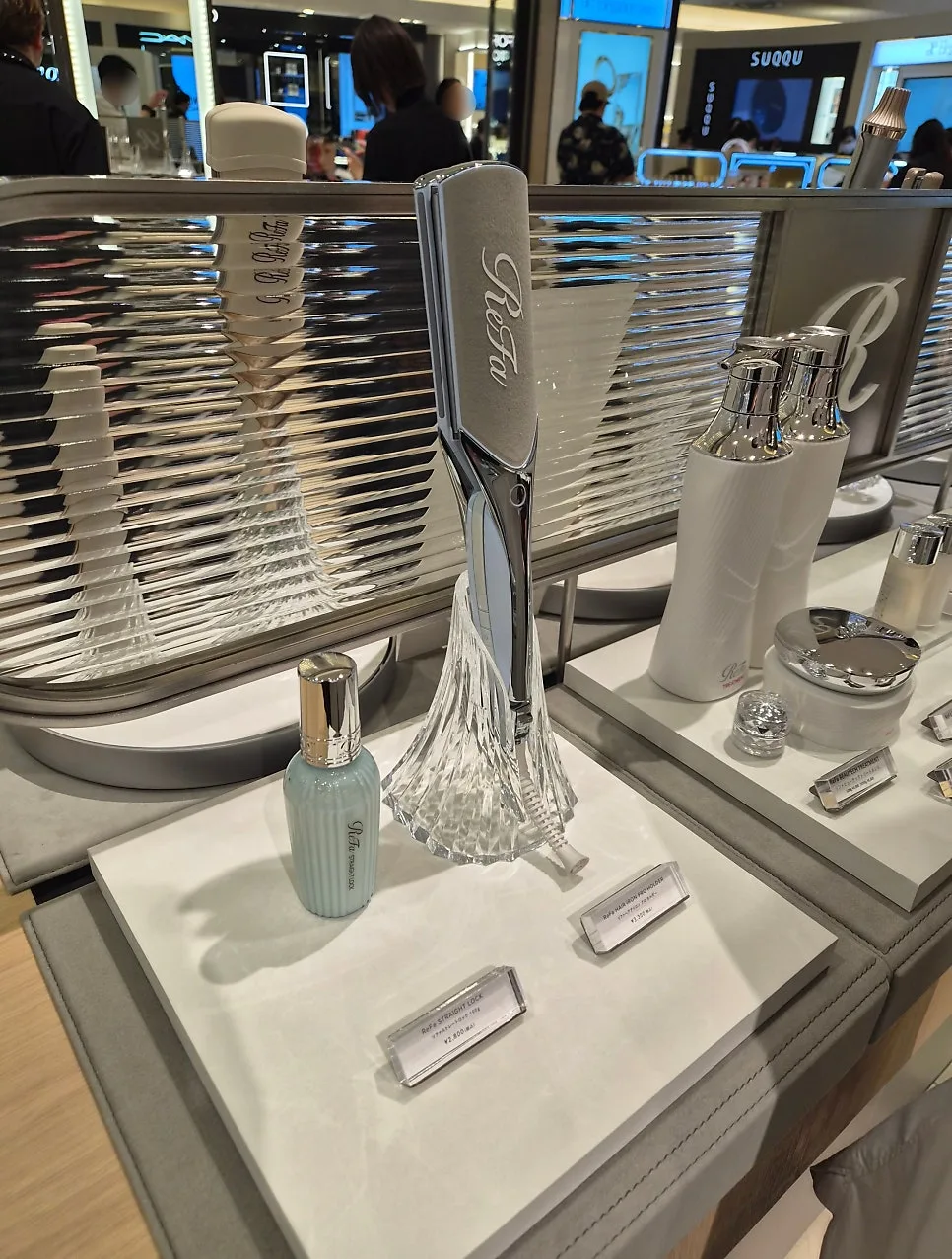
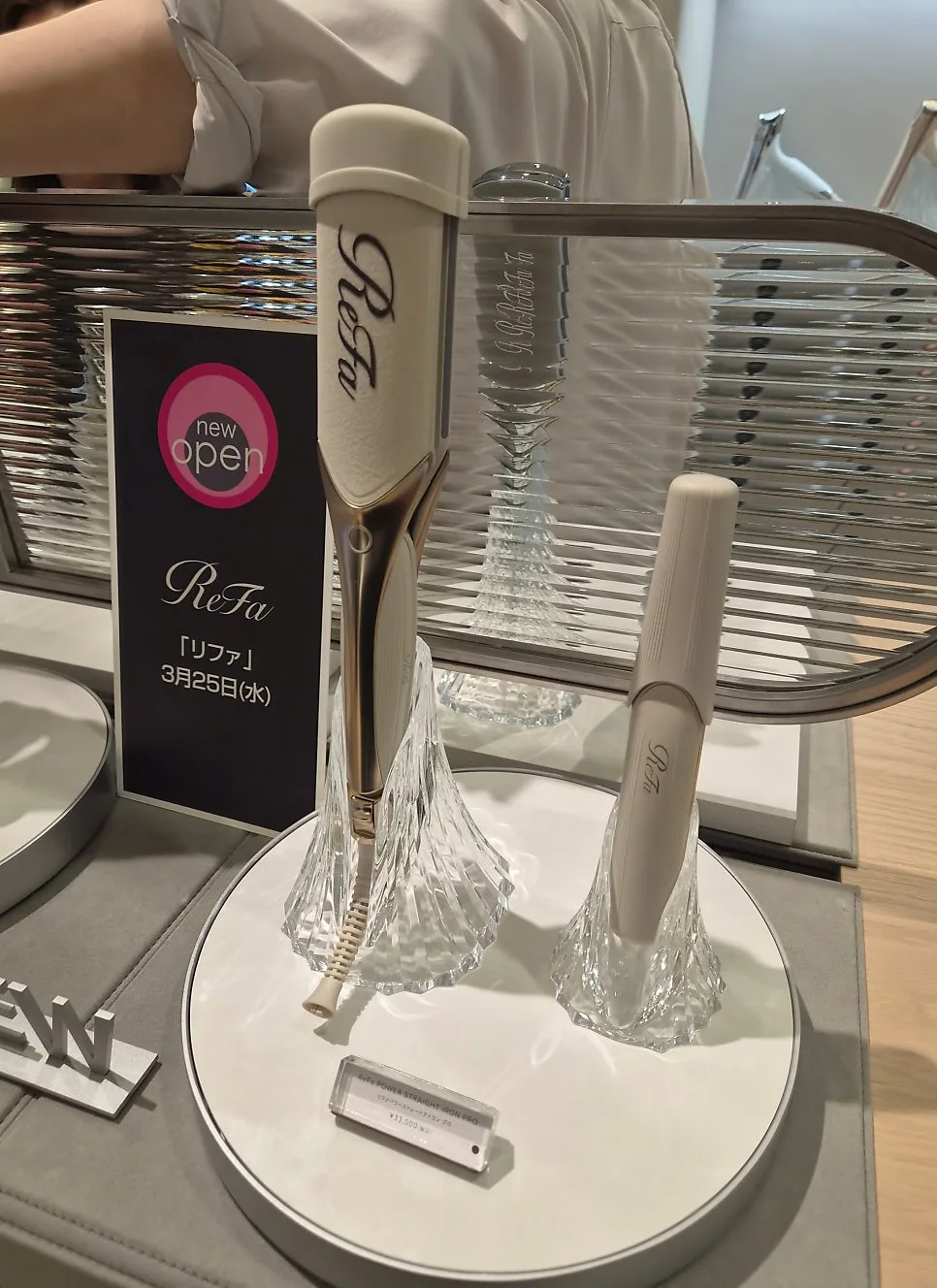
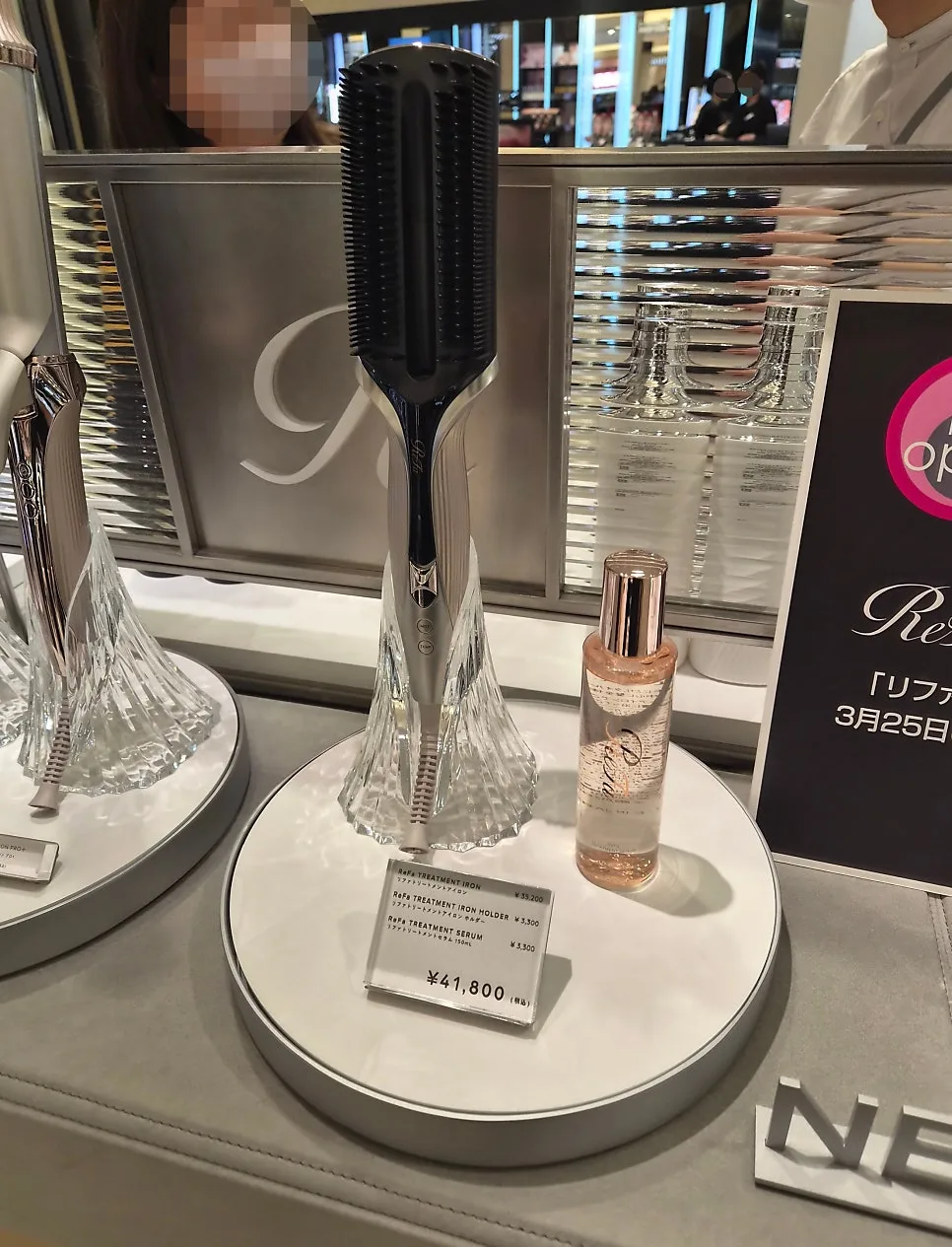
The straighteners were in the 30,000 to 40,000 yen range.
Does using this actually make your hair healthier?
My mom can keep using her Glampalm,
but I’m already thinking I should buy ReFa for my daughter later on.
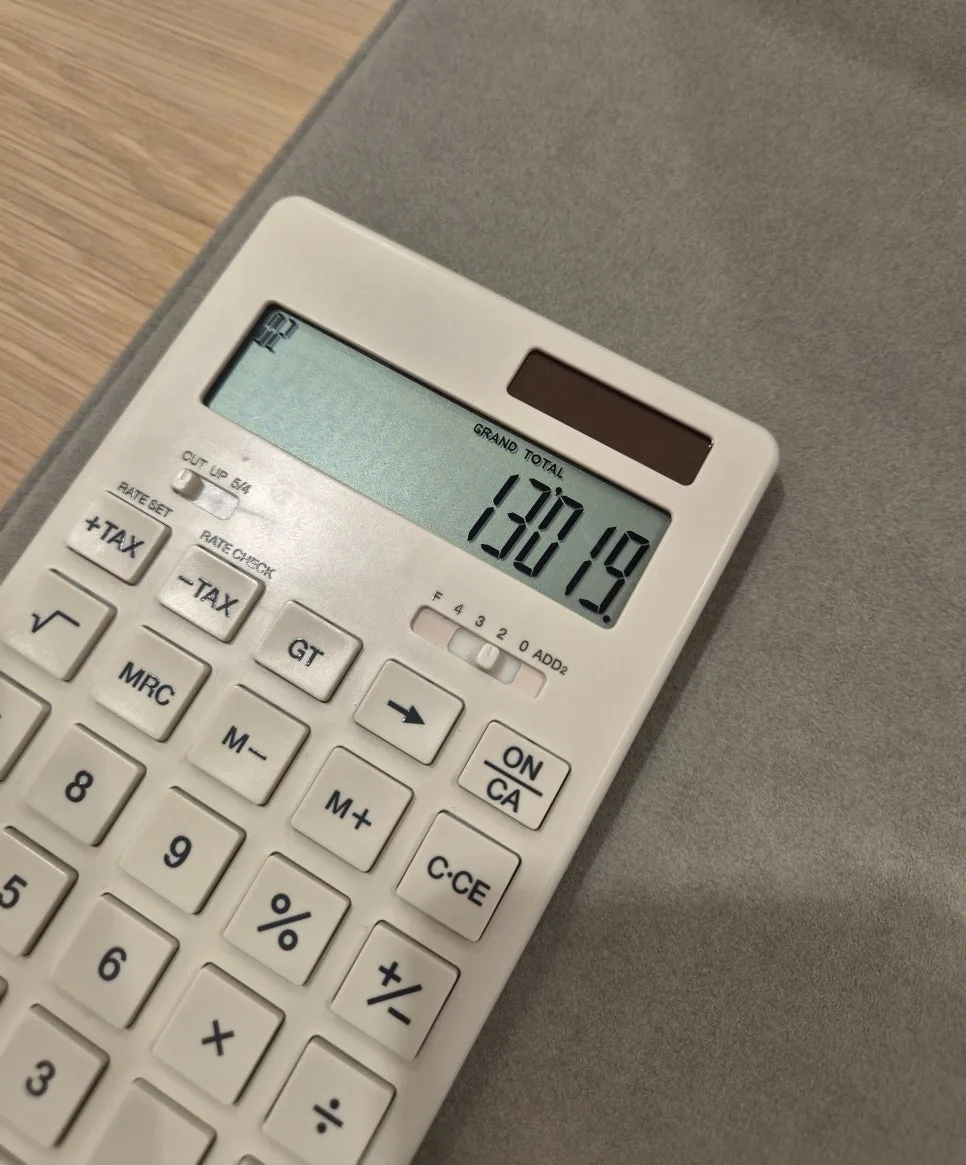
The two combs came to 14,000 yen total,
and after a 7% discount, I paid 13,019 yen.
At Hankyu Department Store, you can get both a discount and tax-free shopping,
so I was able to buy them a little cheaper.
If you have a Hyundai Card,
make sure to get the Hankyu Department Store VIP card for that 7% discount.
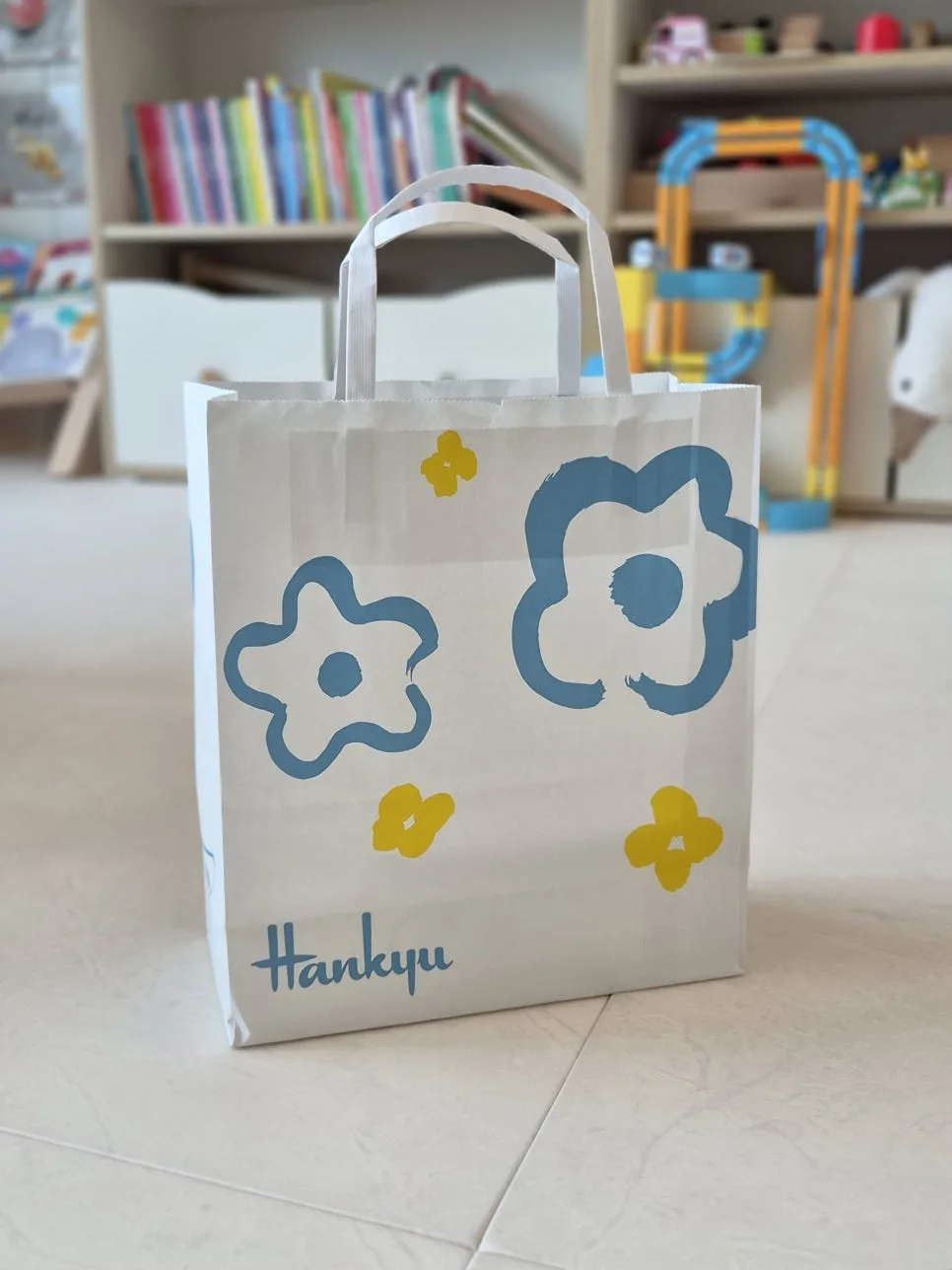
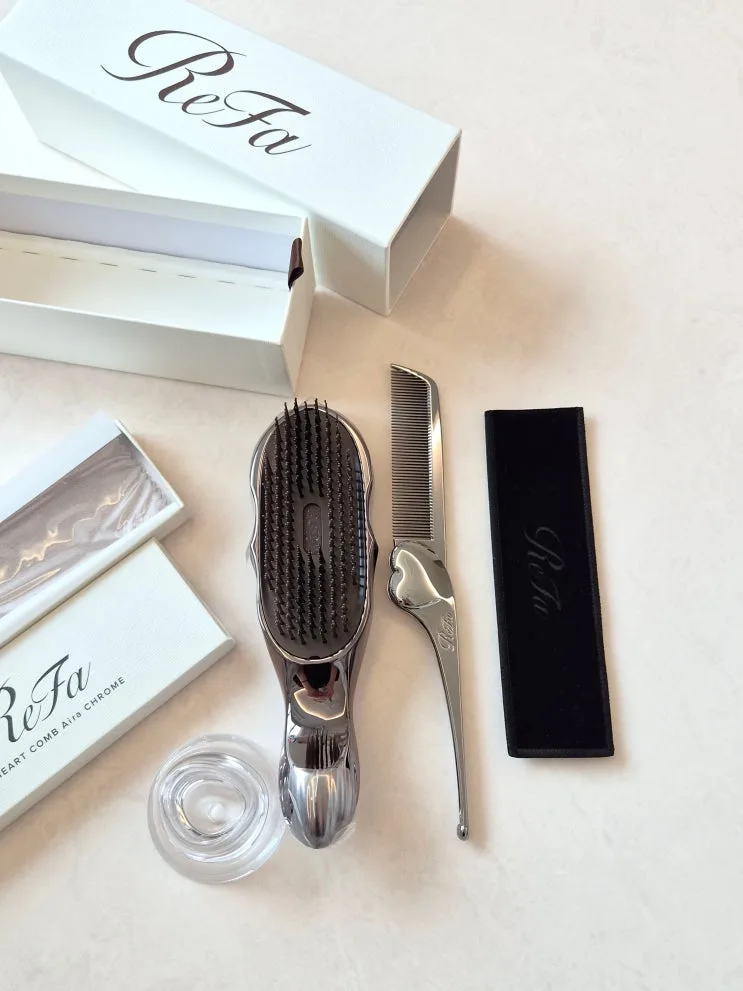
Back home with my Hankyu shopping bag and my new ReFa combs from Japan.
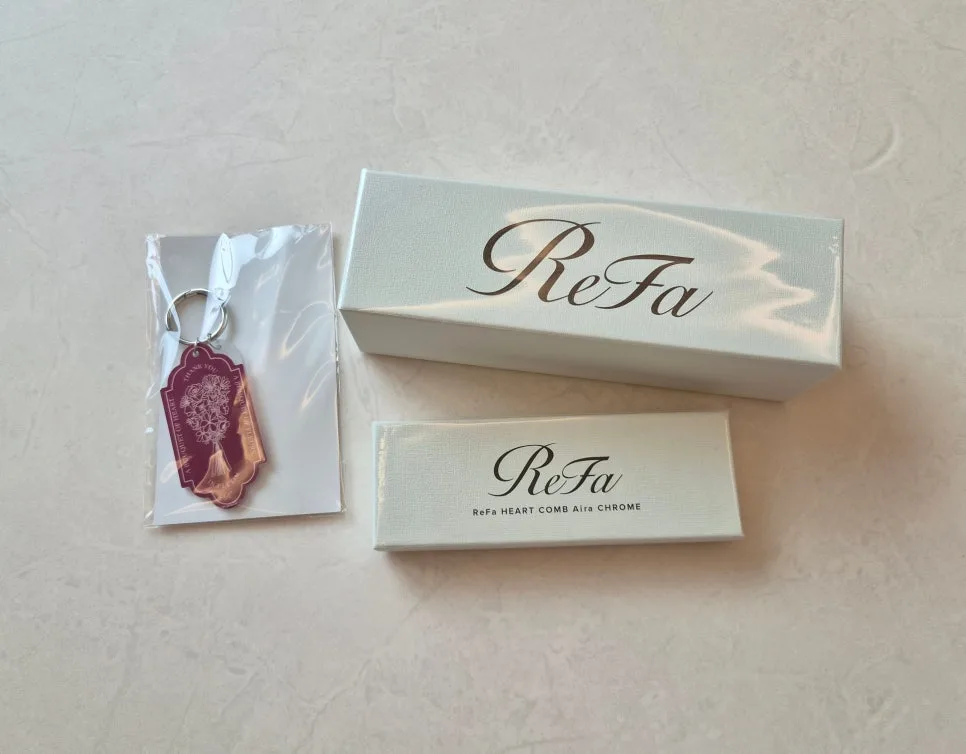
The keyring on the left was included as a gift for Mother’s Day, I think.
How did they know I was a mom?
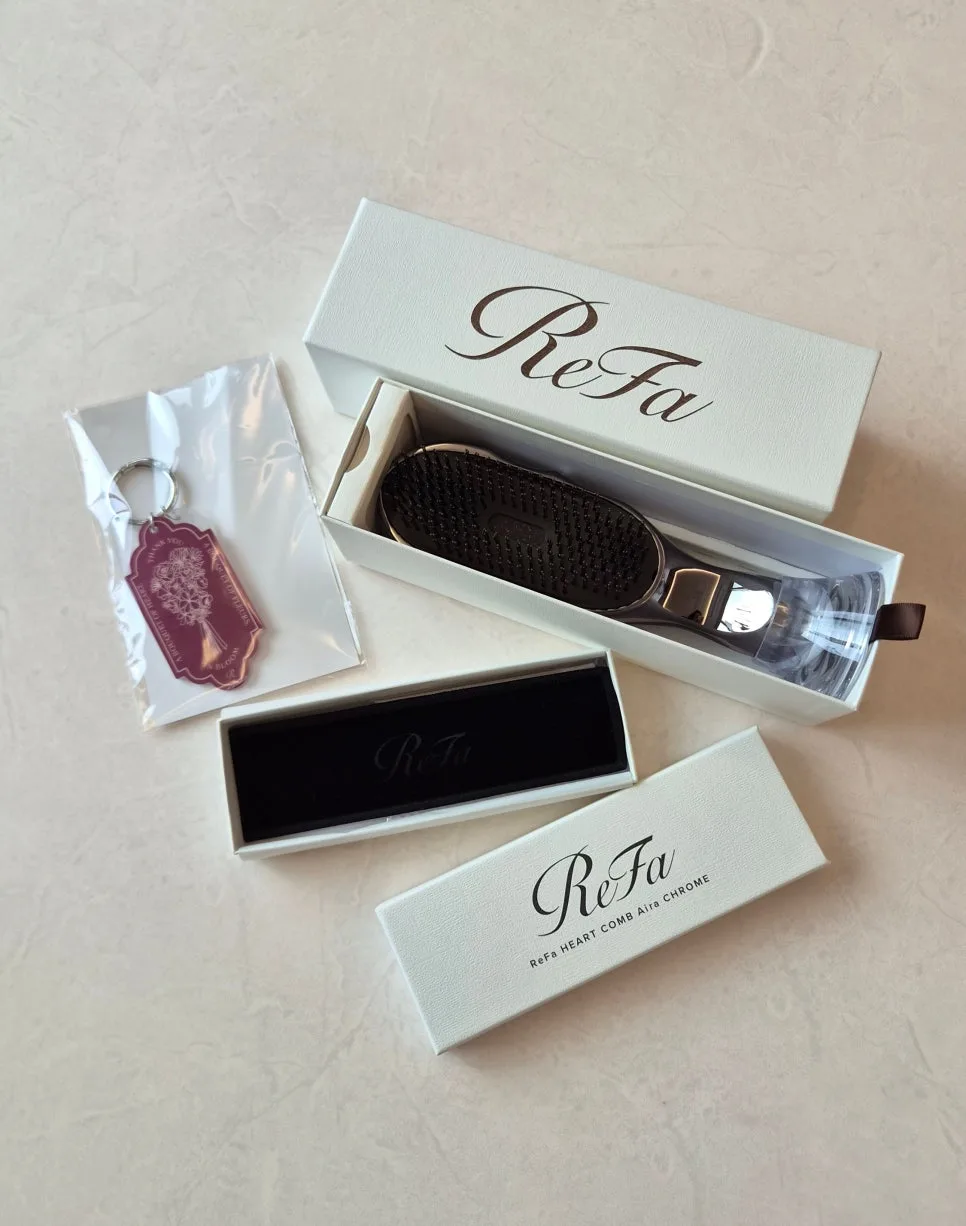
I’m officially a ReFa owner now.
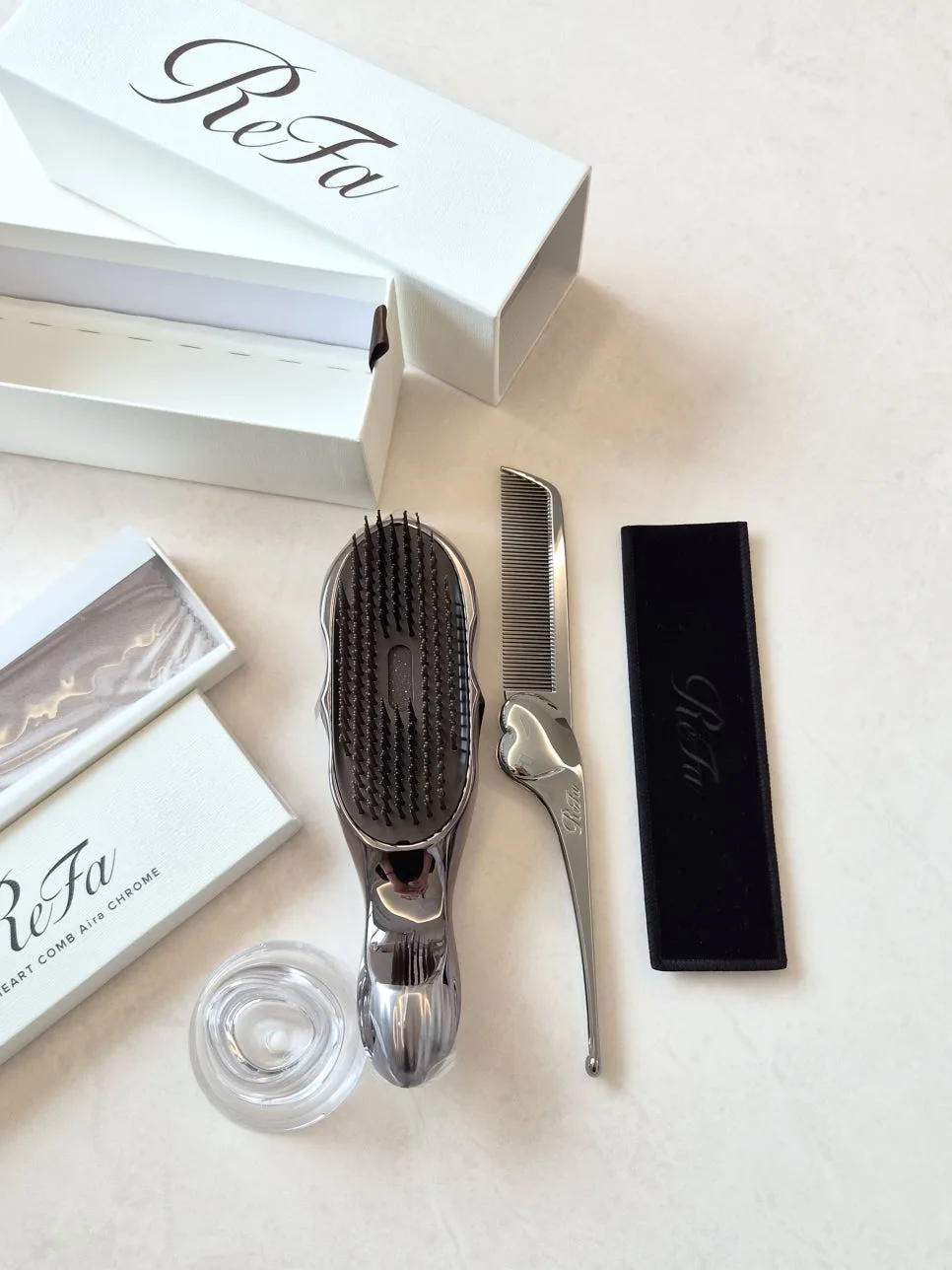
Yep, I really like it.
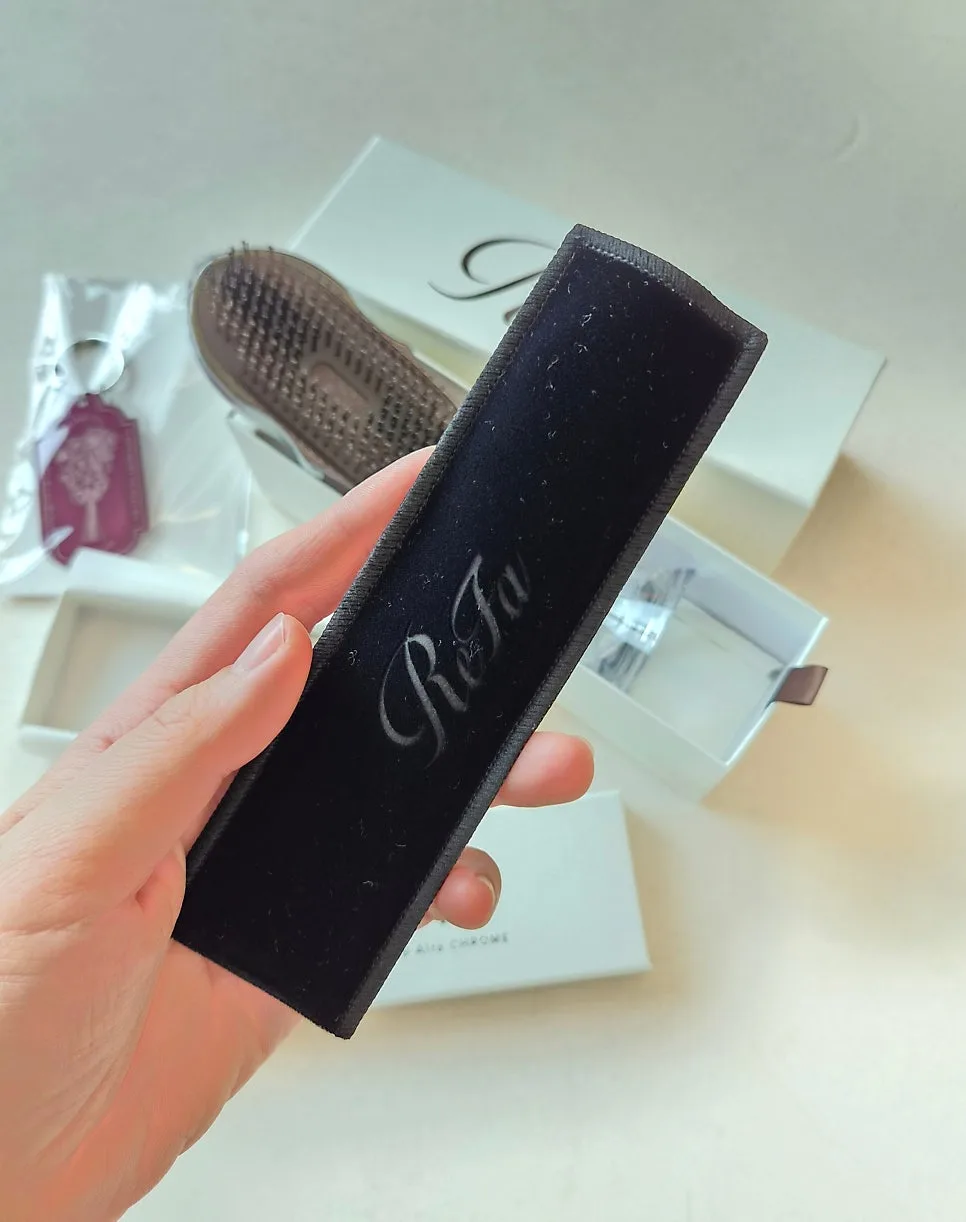
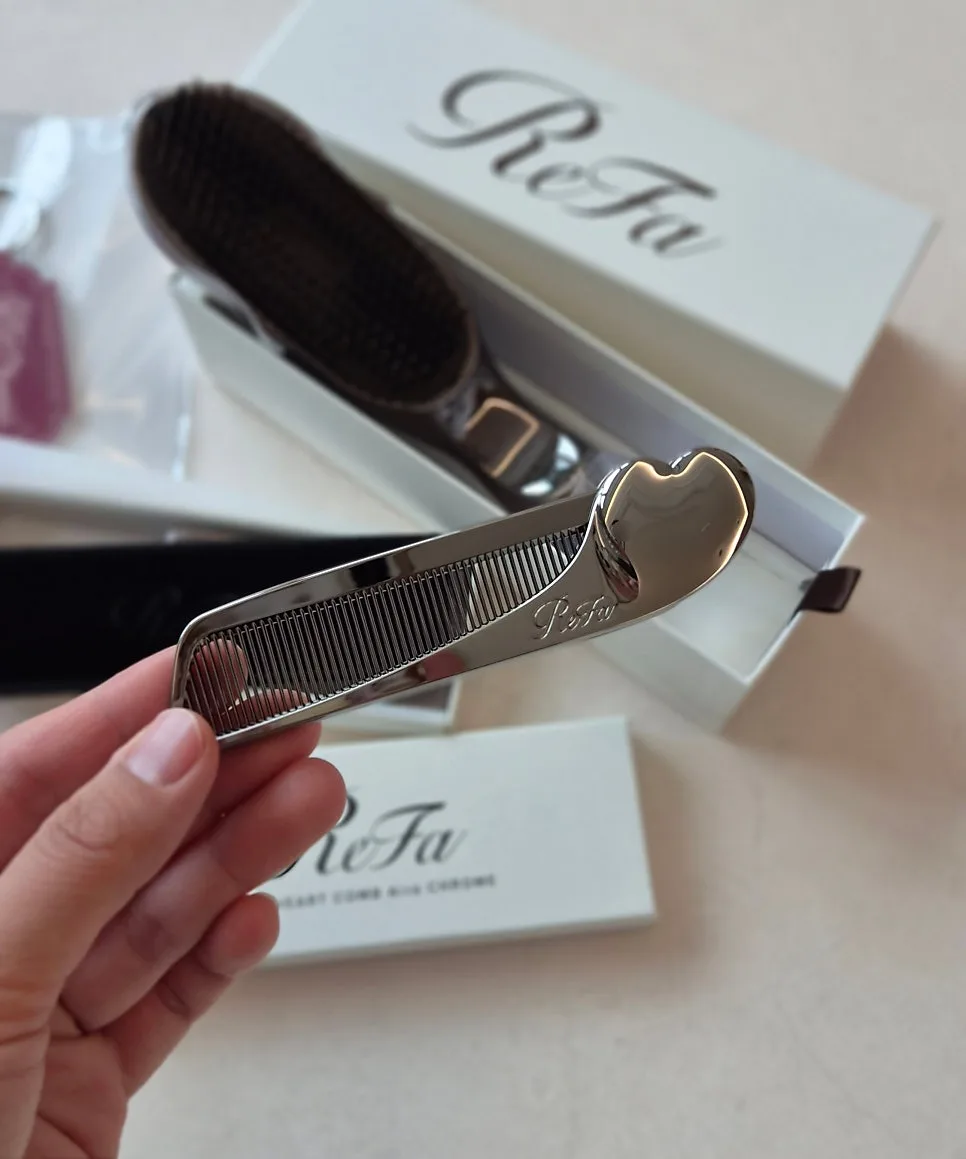
The ReFa tail comb gets a pass from me.
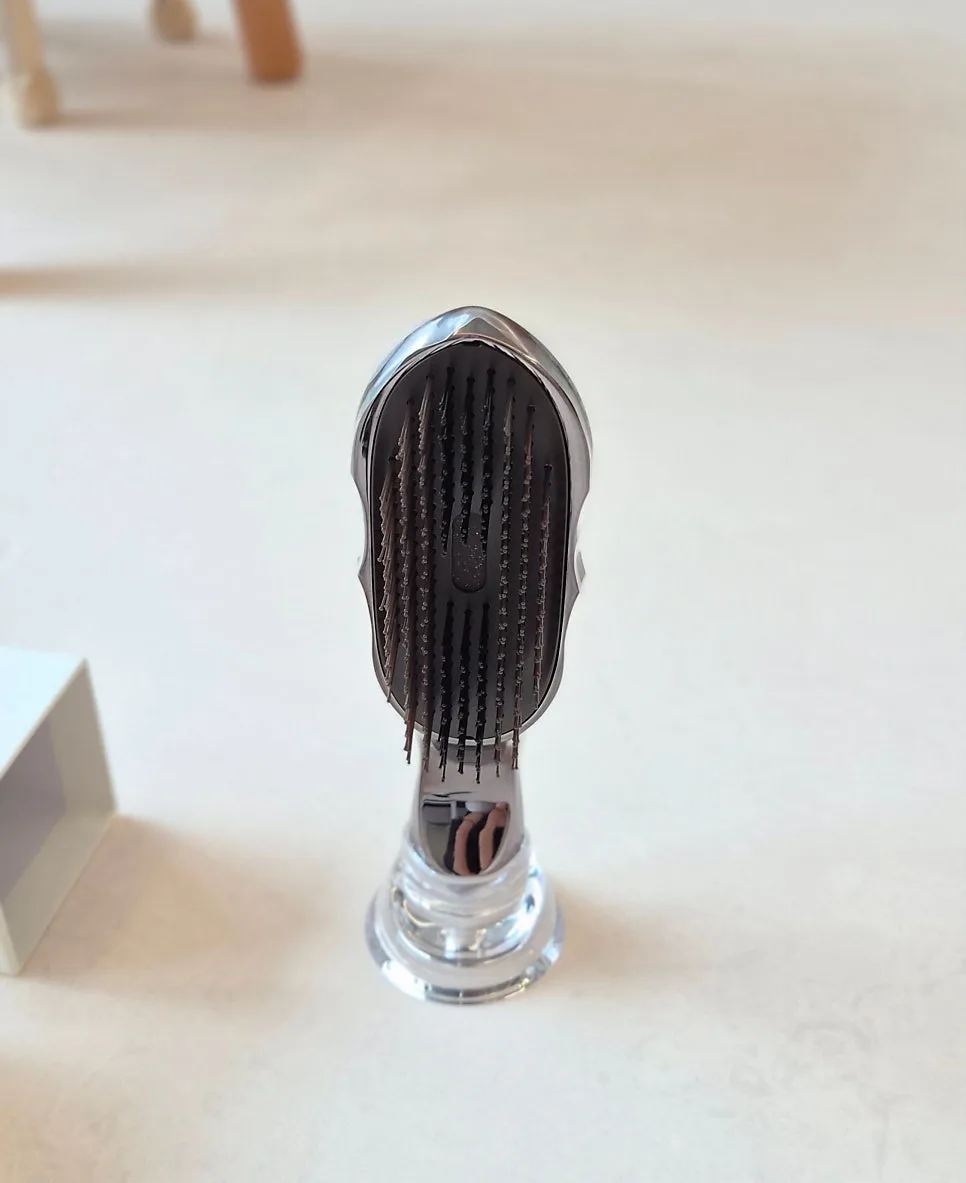
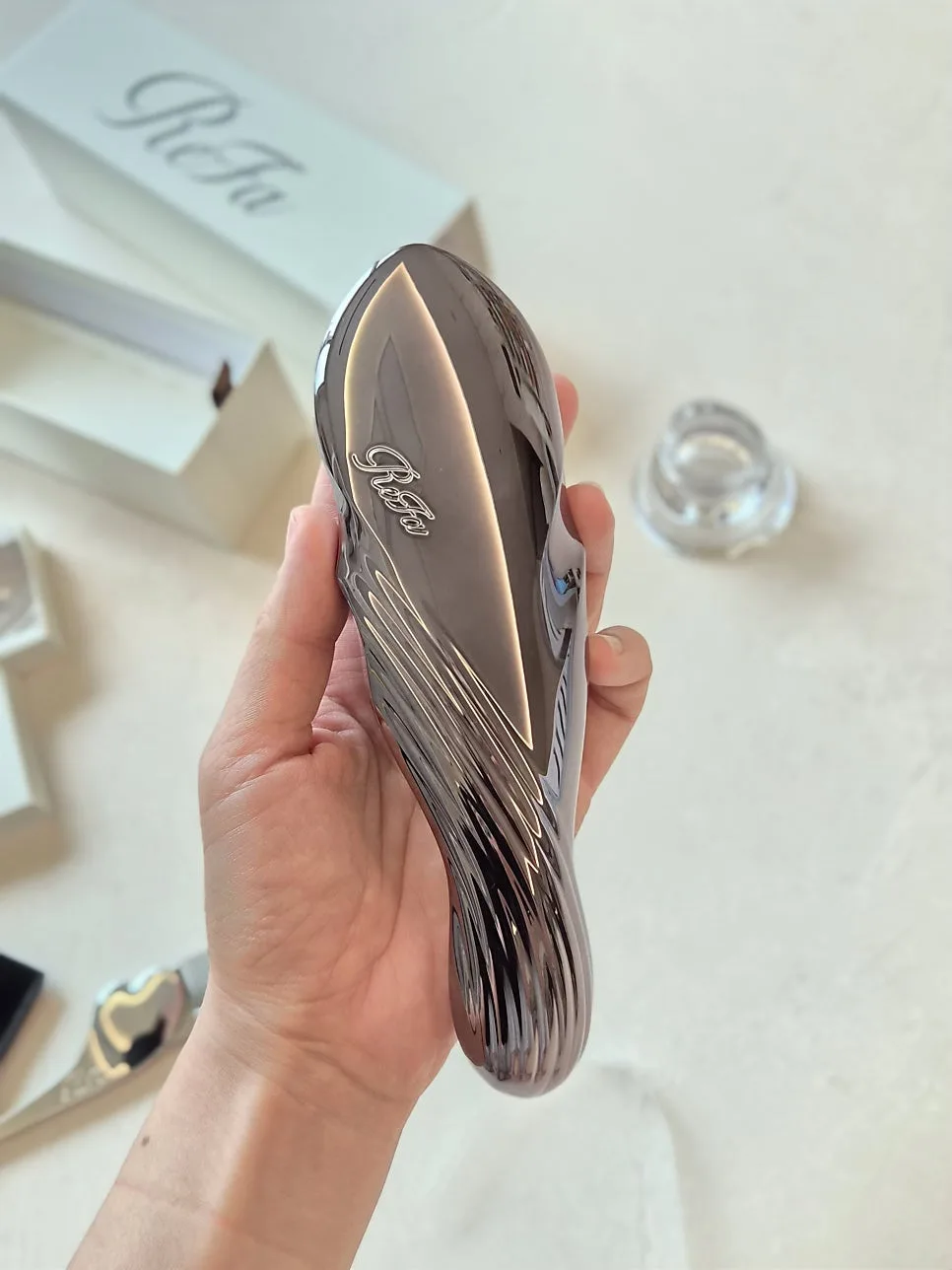
The ReFa brush also gets a yes from me.
It even came with a clear stand, which felt like a nice bonus.
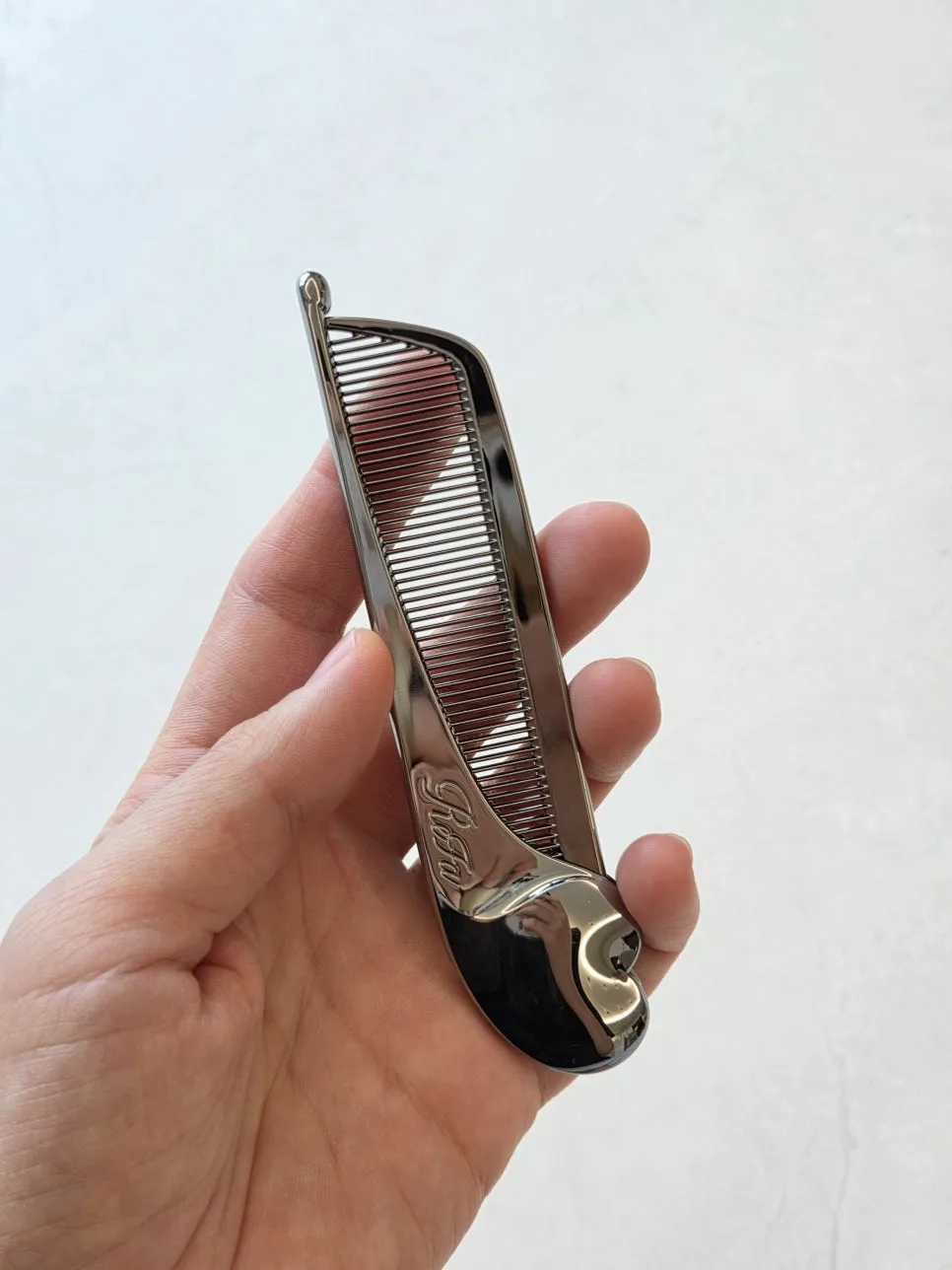
That said, when I think of a tail comb,
I expect a sharp pointed end for parting hair.
This one has a blunt tip, so it doesn’t really work for that.
It’s basically just a foldable comb—nothing more, nothing less.
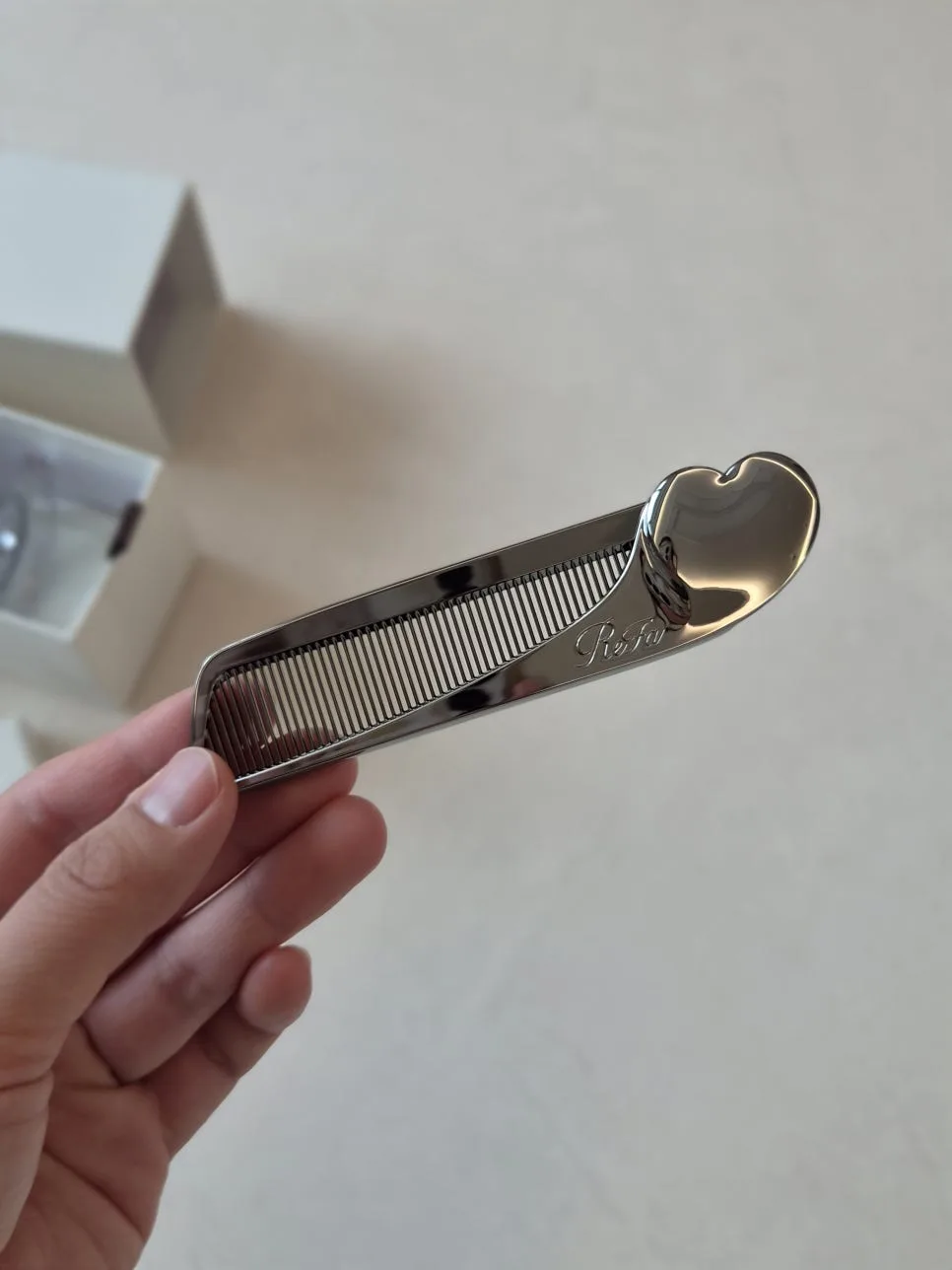
But it definitely doesn’t create static, and it’s pretty.
I’ve even been using it when I tie up my one-year-old daughter’s hair.
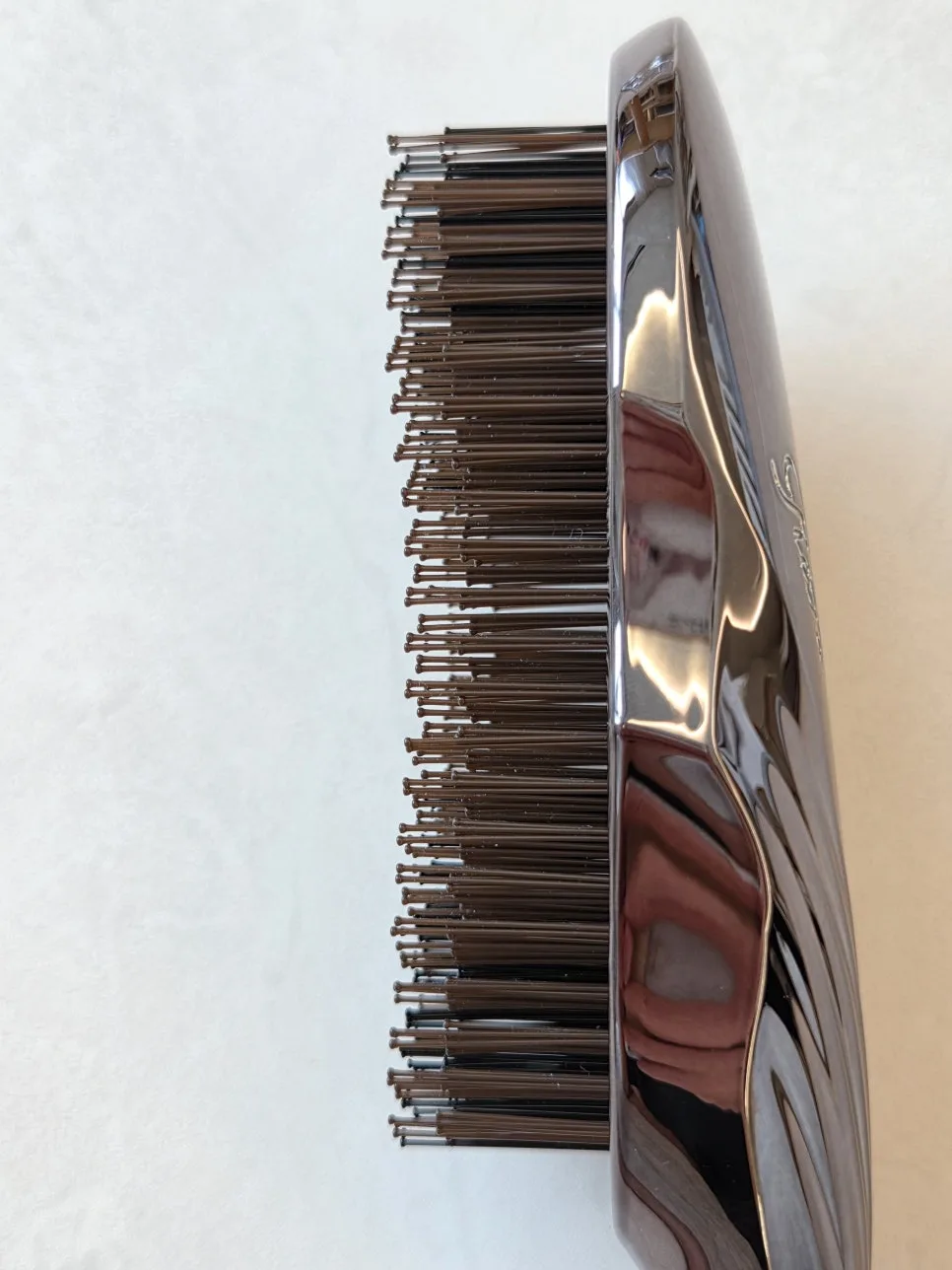
But the brush is genuinely excellent.
I’ve always liked my Tangle Teezer and other wooden brushes,
and I thought they were all pretty good,
but this one leaves my hair noticeably smoother after brushing.
When my long hair gets frizzy during the day,
I can run this through it once or twice on the go, and the outer layer looks silky again.
Of course it gets frizzy again once I keep moving around,
but I really feel like frequent brushing with this could help improve my hair over time.
My own hair is damaged, unfortunately,
but I’m determined to take great care of my daughter’s hair from an early age
so she grows up with glossy, swishy hair.
If you’re heading to Japan, I definitely recommend adding a ReFa comb or brush to your shopping list—
and it would make a great gift for a girlfriend or wife too.